

Stoschiosaurus nielseni was a temnospondyl from the Induan, the earliest age of the Triassic. Its type specimen from East Greenland preserves part of the interior of the skull, including features behind the eye sockets.
Quick facts
| Group | Temnospondyls, trematosaurids |
|---|---|
| Age | Early Triassic, Induan |
| Region | North America (East Greenland) |
| Type species | Stoschiosaurus nielseni |
| Scientific name | Stoschiosaurus |
| Diet | Undetermined |
What can the fossils tell us?
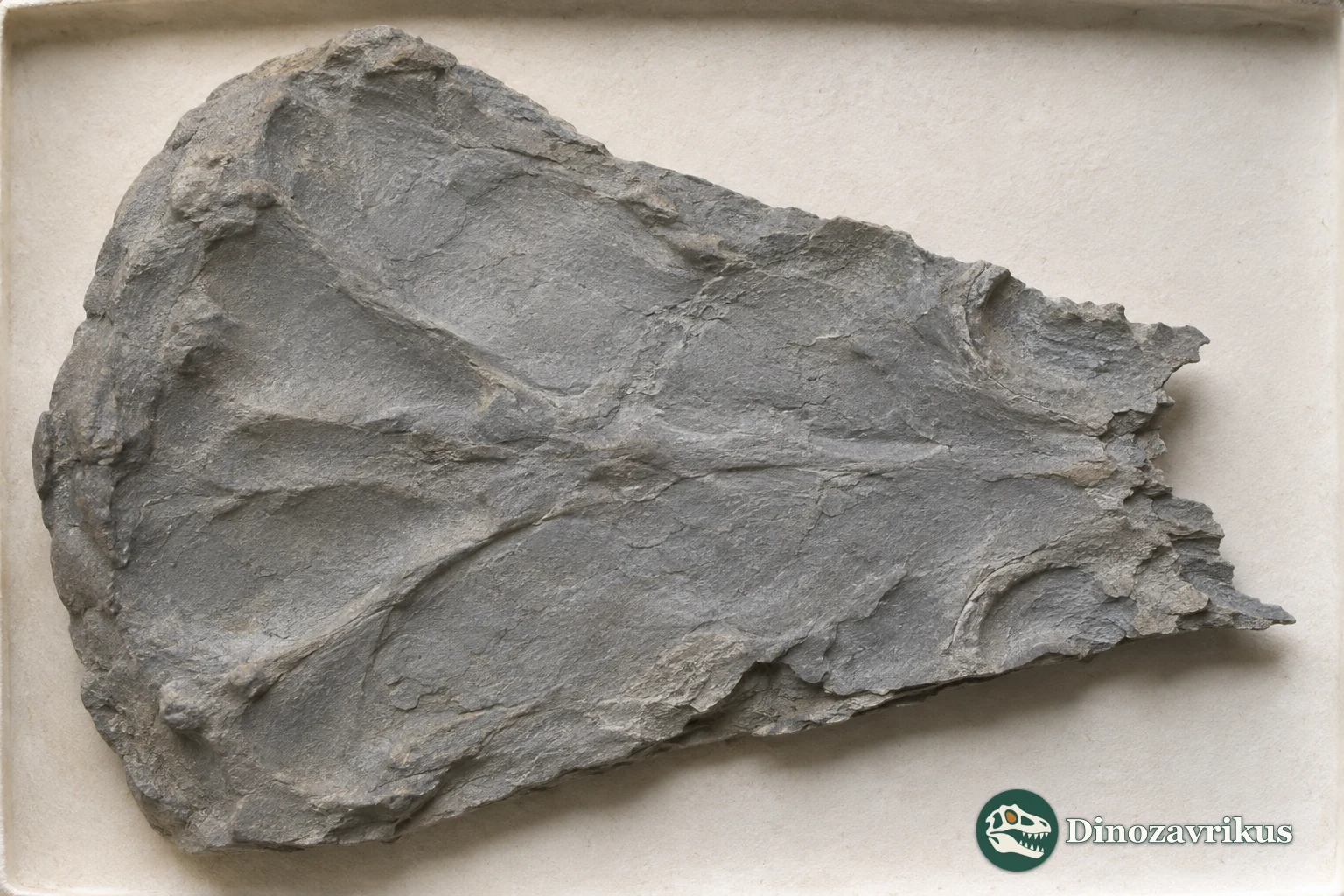
The type fossil from near Kap Stosch preserves some of the relief inside the skull. Its current specimen number is MGUH VP 7057.
Features preserved on the cast allowed comparison with other trematosaurids. The original author proposed a possible relationship with Aphaneramma.
The front of the skull is missing. The rocks establish the environment in which the specimen was buried, and the animal's diet and habitat preferences remain uncertain.
What the specimen preserves
Gunnar Säve-Söderbergh described the species in 1935. Its type specimen, formerly MGUH VP At.6, is catalogued as MGUH VP 7057. Sediment filled the skull cavity and hardened, retaining some of its relief. The cast preserves an elongate triangular area behind the eyes and part of the rear of the palate. Surface ornament and sensory grooves on the outside of the skull are unavailable for comparison.
An Induan shoreline
The specimen comes from the northeastern slope of the Stensiö Plateau, southeast of Kap Stosch. Sandstone and claystone of the Wordie Creek Group record warm, shallow coastal conditions. The fossil comes from the Myalina kochi horizon, named for a bivalve and assigned to the Induan.
Comparing early trematosaurians
Säve-Söderbergh proposed an affinity with Aphaneramma, a long-snouted trematosaurid. The front of the Greenland skull is missing, so its proportions remain unknown. In the younger marine rocks of Spitsbergen, Peltostega preserves the outside of some skull roof bones, yielding a different set of anatomical clues.
Frequently asked questions
When did Stoschiosaurus live?
The type specimen comes from the Induan, the first age of the Triassic.
Where was its type specimen found?
It was found southeast of Kap Stosch in East Greenland, on the northeastern slope of the Stensiö Plateau.
How did the skull cast form?
Sediment entered the skull cavity and hardened, preserving some of the relief of its walls.
How long was the snout?
Its length is unknown. The cast preserves mainly the region behind the eye sockets and lacks the front of the skull.