

Sunnybatrachus purbeckensis was a small frog from Early Cretaceous freshwater deposits in southern England. It takes its name from Sunnydown Farm Quarry. Hip bones from two quarries reveal how its pelvis changed during growth.
Quick facts
| Group | Frogs (Anura) |
|---|---|
| Age | Early Cretaceous, Berriasian |
| Region | Europe (Dorset, England) |
| Length | About 4–8 cm snout to vent (estimated) |
| Type species | Sunnybatrachus purbeckensis |
| Scientific name | Sunnybatrachus |
| Diet | Undetermined |
What can the fossils tell us?
The type specimen, DORCM GS159, is an incomplete right ilium. Other isolated bones from two quarries were assigned to the same species.
Using comparisons with other frogs, the original authors estimated lengths of about 4–8 cm from snout to vent for the material they studied.
The use of the deep pit above the hip socket and the precise position of Sunnybatrachus among frogs remain unresolved.
The type from Sunnydown Farm
Susan Evans and Gerard McGowan named the species in 2002. Its holotype, DORCM GS159, is an incomplete right ilium from a subadult. Material comes from Sunnydown Farm and Lovell’s quarries. The fossil-bearing freshwater strata are part of the Lulworth Formation of the Purbeck Limestone Group and date to the Berriasian.
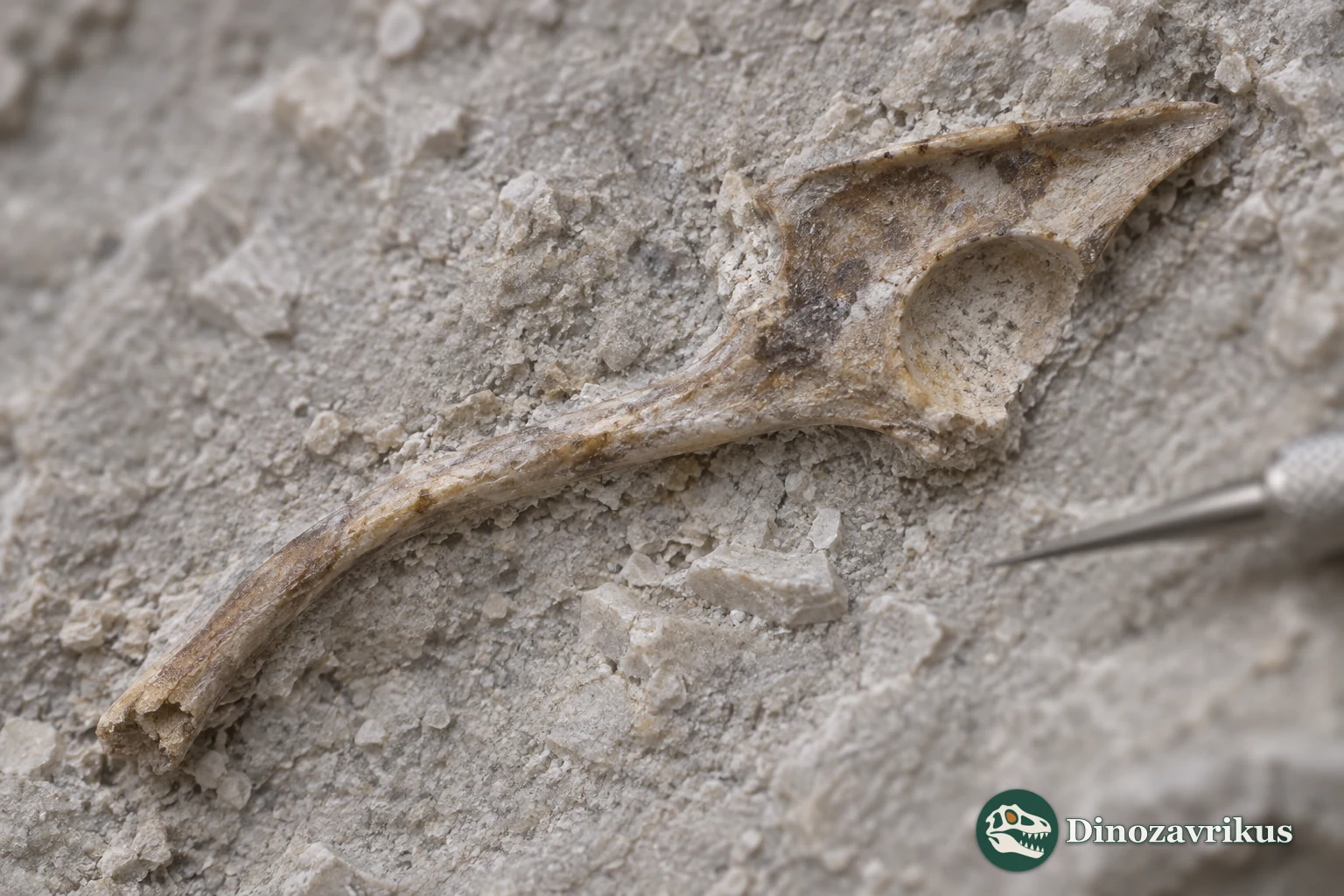
A hip bone that changed with age
The ilium has a long crest and a conspicuous pit above the hip socket. The pit is shallower in the juvenile DORCM GS180 than in the adult DORCM GS162, a distinction that matters when identifying fragments. The ilium also helped identify Paradiscoglossus in younger Cretaceous deposits of North America, where it preserves a different combination of characters.
Jaws and body size
Isolated upper jaw bones assigned to Sunnybatrachus have tiny teeth and a smooth outer surface. Vertebrae and limb bones were assigned to the species too. No joined skeleton ties these elements to one individual. Comparisons using individual bones put the largest specimens at around 8 cm from snout to vent. The position of Sunnybatrachus within Anura is uncertain.
Frequently asked questions
When did Sunnybatrachus live?
It lived in the Berriasian, at the beginning of the Cretaceous.
Where were its fossils found?
The bones come from freshwater deposits at Sunnydown Farm and Lovell’s quarries in Dorset, southern England.
How was Sunnybatrachus identified?
One useful feature is a pit on the ilium above the hip socket. It deepens as the frog grows.
Is there a complete skeleton?
The known fossils are isolated bones. They provide information on the pelvis, teeth and parts of the vertebral column.