

Tasbacka was a sea turtle of the Paleocene and Early Eocene. Its type species comes from a skull found in southern Kazakhstan. An exceptionally preserved juvenile from Denmark retained outlines of the flippers and neck and patches of dark material originally associated with its skin and shell.
Quick facts
| Group | Turtles, sea turtles (Chelonioidea) |
|---|---|
| Age | Paleocene and Early Eocene |
| Region | Asia (Kazakhstan), Europe (Denmark and southern Russia), Africa (Morocco), North America (United States) |
| Type species | Tasbacka aldabergeni |
| Holotype | TsNIGR Museum 1/12175, skull from Kazakhstan |
| Scientific name | Tasbacka |
| Diet | Exact diet unknown |
What can the fossils tell us?
The type skull of T. aldabergeni is held by the TsNIGR Museum. Its horizon is near the Paleocene–Eocene boundary.
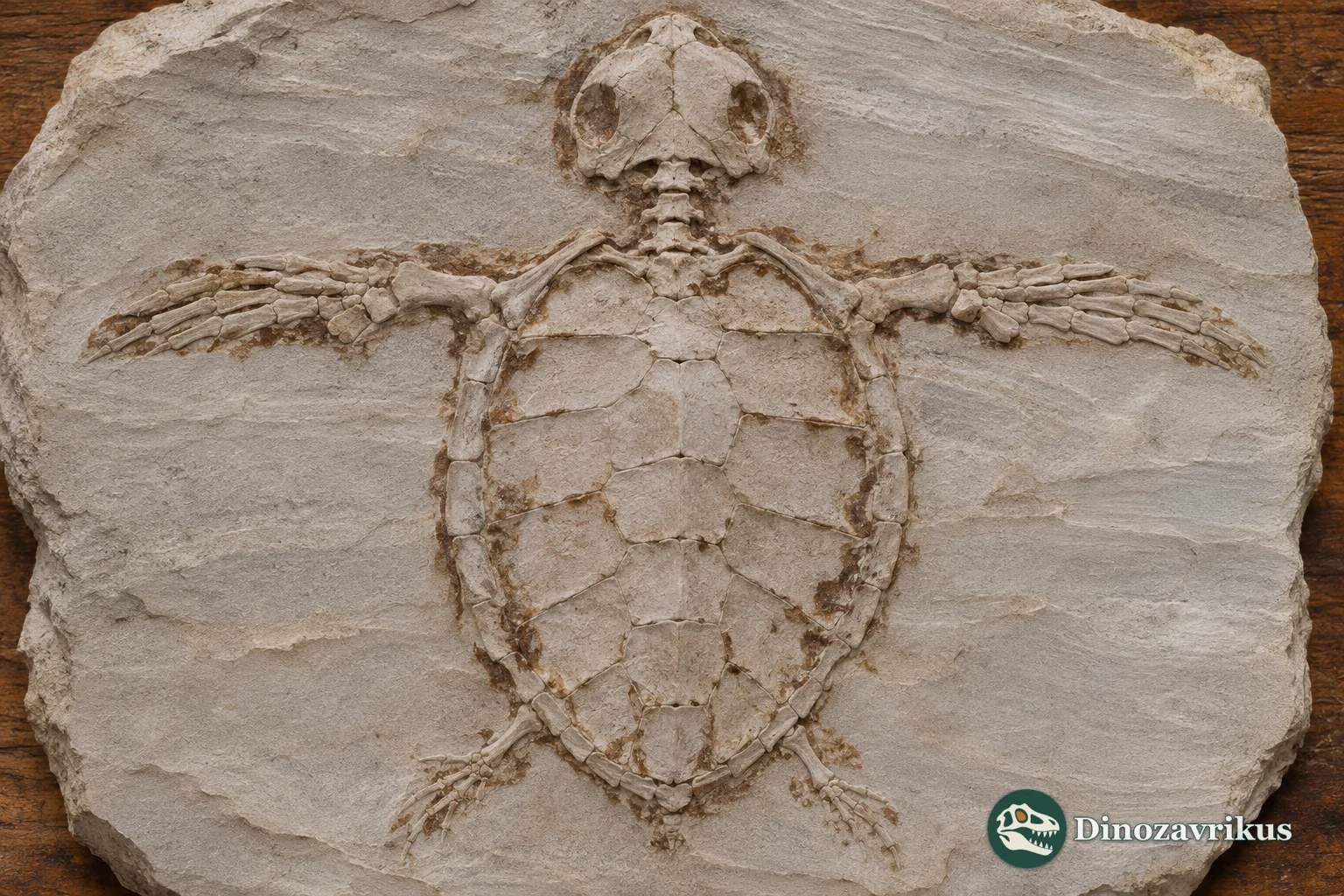
MHM-K2 preserves an articulated flippered turtle with a carapace about 74 millimetres long. There are large gaps between some shell bones.
Microscopy and chemical tests found signs of melanosomes and eumelanin in sampled dark residues. The overall pattern of the animal remains uncertain.
The skull from southern Kazakhstan
Lev Nessov named Tasbacka aldabergeni in 1987 from a skull in white quartz sands at the Zhylga locality in what is now the Turkistan Region. The holotype, TsNIGR Museum 1/12175, is Late Thanetian or Early Ypresian. The deposits therefore place it close to the Paleocene–Eocene boundary.
In 2023, E. A. Zvonok, K. S. Benitskiy and I. G. Danilov referred 16 specimens from Kudinovka in southern Russia to the same species. Some of the fossils are partly hidden inside concretions. Tomographic imaging helped reveal details of a lower jaw and humerus. Comparisons of the front of the jaw and the flat vertebral plates helped separate the material from other named species.
Two other species have been assigned to the genus: T. ouledabdounensis from the Danian of Morocco and T. ruhoffi from the Thanetian of Maryland. The former has a pronounced ridge at the front of the lower jaw, while the latter has keeled neural plates. These were useful points of comparison with the Kudinovka fossils. Eochelone represents a separate Eocene marine genus.
A small turtle with a nearly complete skeleton
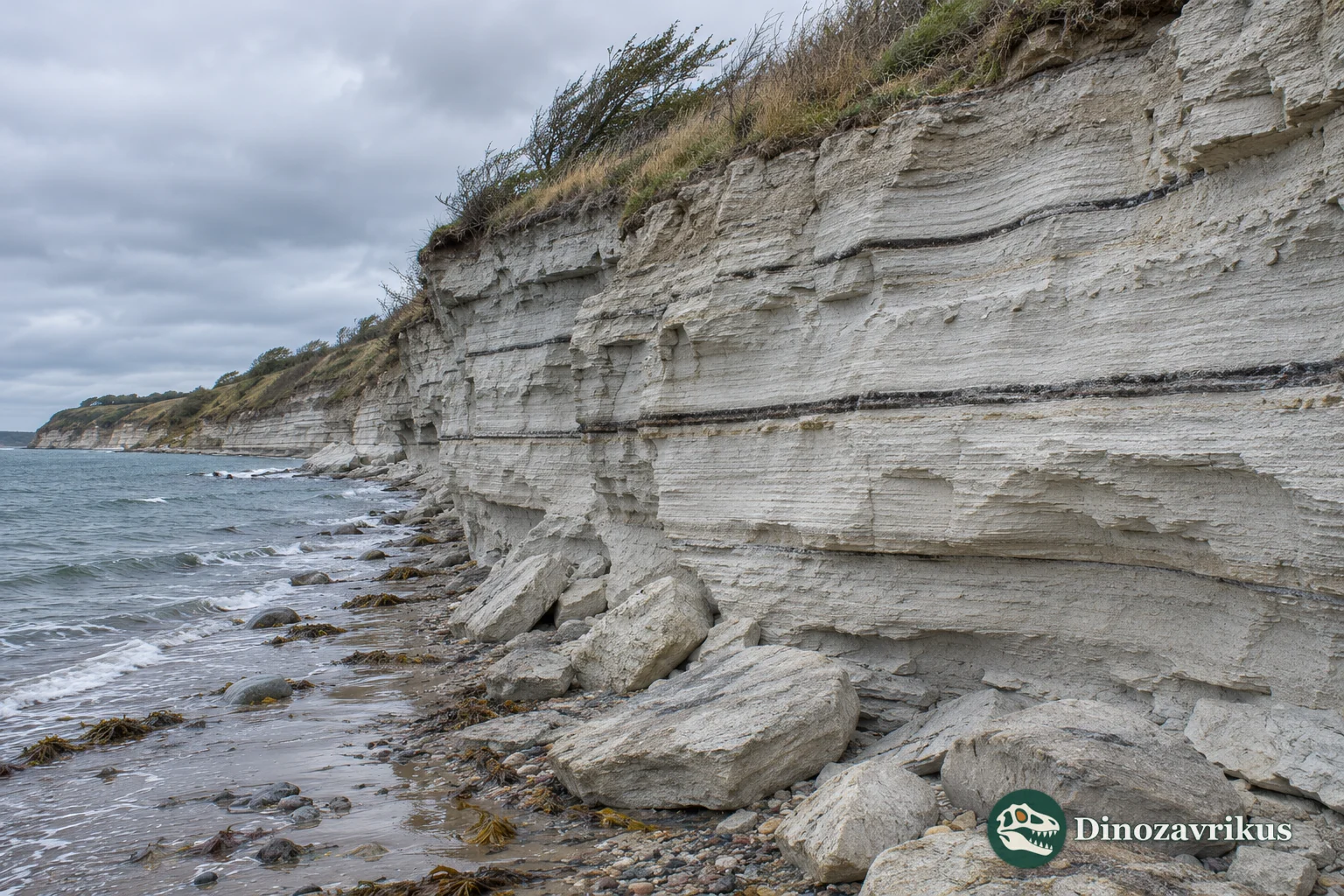
Henrik Madsen found MHM-K2 in 2008 in a limestone concretion at the Ejerslev clay pit on Mors, Denmark. Hans-Volker Karl and Madsen named it T. danica in 2012. The Fur Formation dates the find to about 54 million years ago. The carapace measures about 74 millimetres from the neck notch to the posterior edge.
Its limbs form paddles with elongate phalanges. Even so, the flippers are relatively short by sea turtle standards. The bones remain mostly connected, and several marginal scutes and soft-tissue outlines survived. Part of the preparation used a pneumatic tool after the tissue traces were recognised.
Testing a trace of colour
Johan Lindgren and colleagues examined samples of the dark material in 2017. Electron microscopy supported an identification of residual melanosomes. Chemical tests including mass spectrometry detected signatures of eumelanin. Those results provide evidence of dark pigmentation where the residues were sampled. They do not identify every marking or the colour of the underside.
Dark dorsal pigmentation in living hatchlings can increase solar heat absorption. The researchers suggested it may have served a similar purpose in the Eocene animal. The fossil records pigment directly, whereas the effect on heat absorption or growth is an inference from living turtles.
Frequently asked questions
What is the type species of Tasbacka?
Tasbacka aldabergeni. It was named in 1987 from a skull found in southern Kazakhstan.
How large was the Danish juvenile?
Its bony carapace measured about 74 millimetres. This is a measurement of a young individual.
How was dark pigment identified?
Microscopy and chemistry detected traces attributed to melanosomes and eumelanin in the fossil film.
Can the fossil reveal the entire colour pattern?
The sampled residues document dark pigment on parts of the animal. The exact markings and the colour of the underside are unknown.