

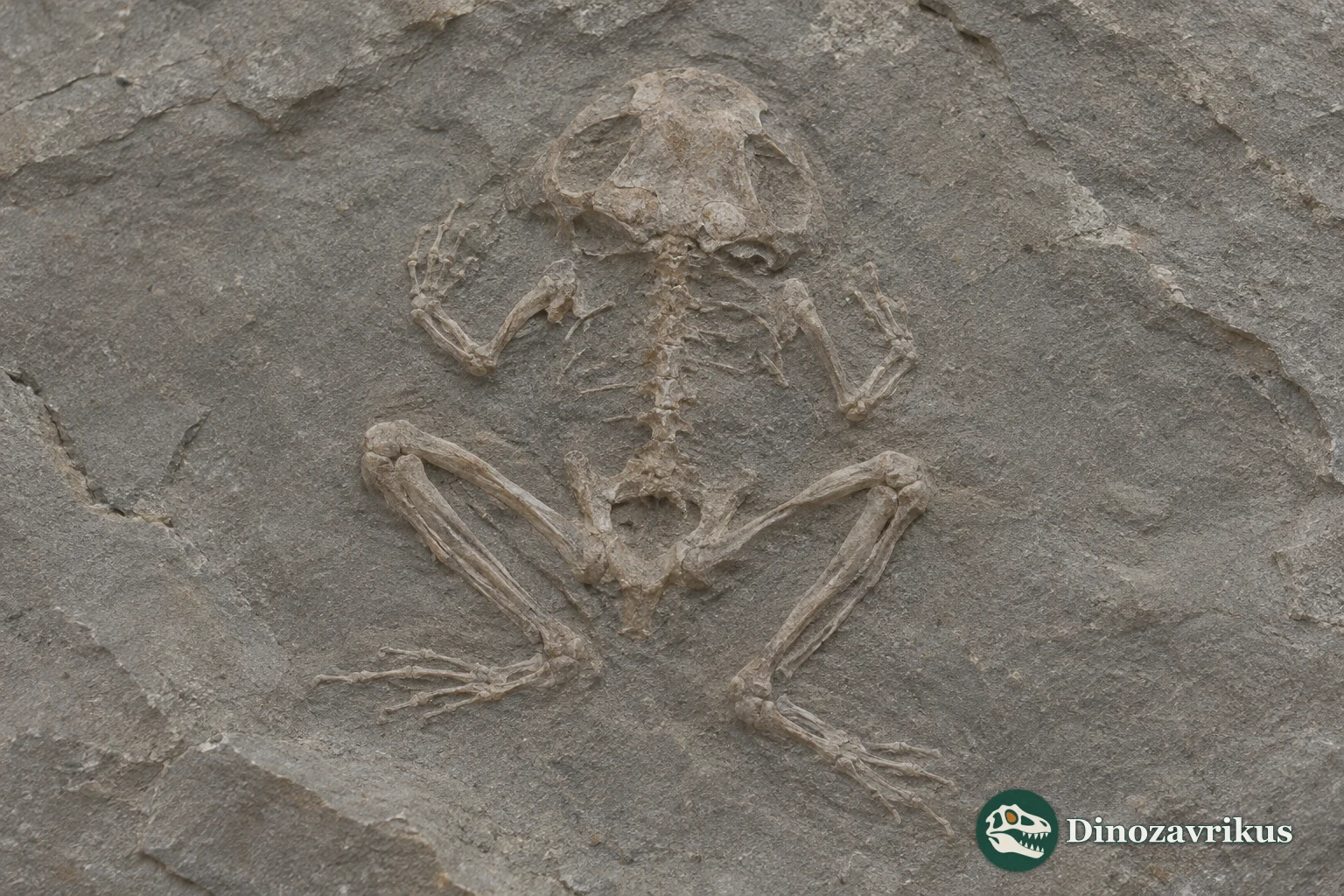
Tephrodytes brassicarvalis was a small frog from western Montana. The nearly complete type skeleton preserves skull bones and associated parts of the body, revealing the frog’s proportions and the structure of its ankle.
Quick facts
| Group | Frogs (Anura) |
|---|---|
| Age | Late Oligocene |
| Region | North America (western Montana, United States) |
| Length | About 4 cm from snout to urostyle tip in the holotype |
| Type species | Tephrodytes brassicarvalis |
| Scientific name | Tephrodytes |
| Diet | Undetermined |
What can the fossils tell us?
The holotype KU 19928 preserves bones of the skull, part of the vertebral column, the pelvis and limb elements. Its two right proximal tarsal bones are fused.
A later comparison of skeletal traits placed Tephrodytes outside the parsley-frog lineage. Its fused ankle bones may have evolved independently.
The skeleton gives some idea of body proportions. Skin color, prey and behavior remain unknown.
A skeleton from the Flint Creek Basin
Amy Henrici named the species in 1994. The holotype, KU 19928, came from the lower Cabbage Patch beds in the Flint Creek Basin, Powell County, Montana. Other finds include partial skeletons and isolated bones. Specimens also occur in the middle and upper beds. The species name brassicarvalis refers to Cabbage Patch.
Size and skeleton
The type is about 4 cm from the tip of the snout to the end of the urostyle, an elongated bone behind the sacrum. The degree of ossification suggests that the frog was an adult. The paired frontoparietal bones met along the midline of the skull roof. As with Eocene Shelania, an associated skeleton makes it possible to compare features from different parts of a single individual.
Why the family assignment changed
The two proximal tarsals, the tibiale and fibulare, are fused. This was among the characters Henrici used to place Tephrodytes with the parsley frogs. In 2013, Henrici and colleagues compared a wider set of skull, vertebral and limb characters. Their analysis placed the fossil outside the parsley-frog lineage and treated its fused ankle as a case of convergence.
Age and the meaning of the name
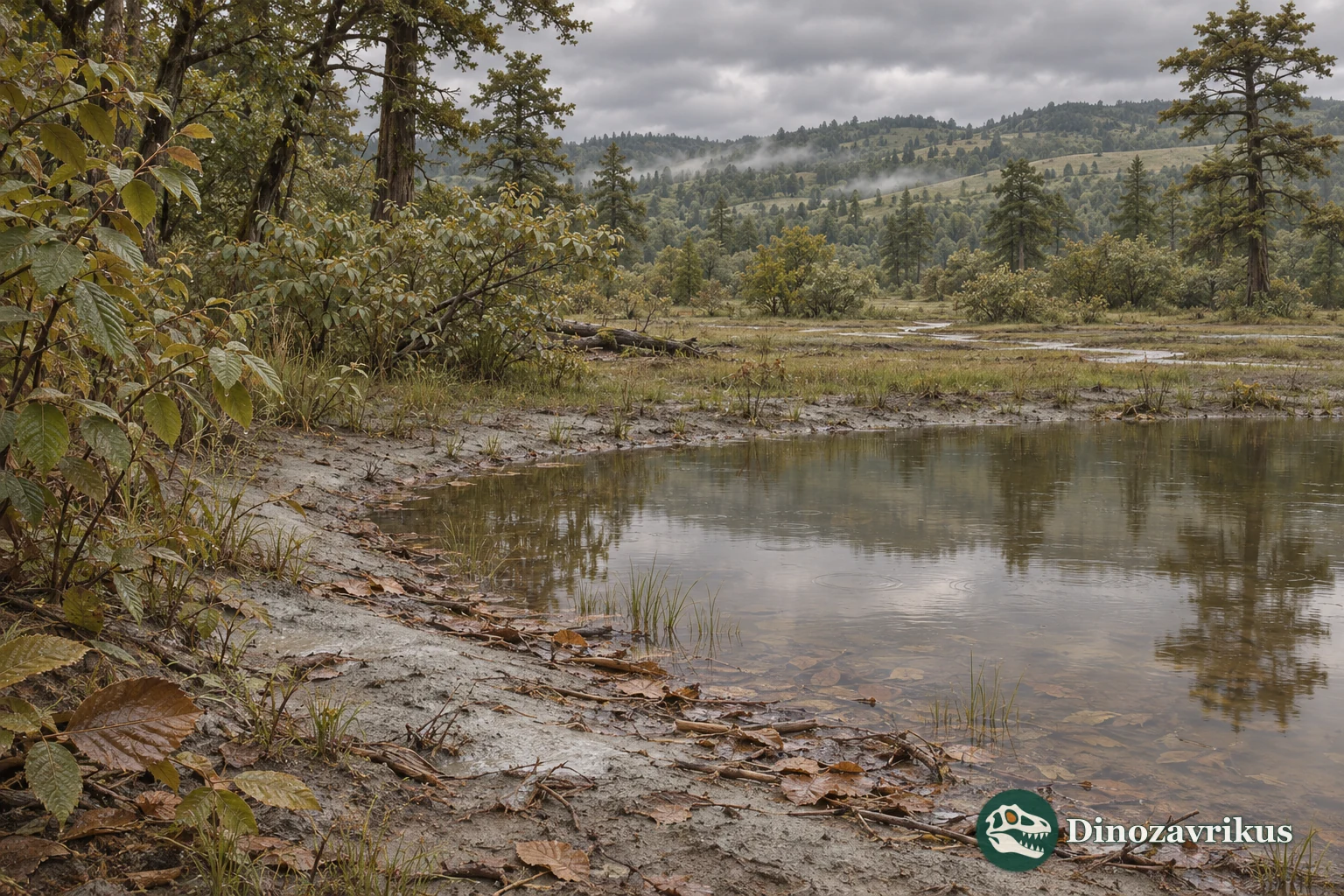
The fossil horizon is assigned to the Arikareean North American land mammal age. The later anatomical study gives the Tephrodytes locality a Late Oligocene age. The genus name refers to the volcanic ash in the sediment. The original description floated the possibility that the frog sheltered in sediment during dry periods, a behavior the fossils have yet to establish.
Frequently asked questions
Where did Tephrodytes live?
Its fossils occur in the Cabbage Patch beds of the Flint Creek Basin in western Montana.
How big was Tephrodytes?
The adult type specimen measures about 4 cm from the snout to the end of the urostyle.
Which bones were fused?
The two proximal bones of the ankle, the tibiale and fibulare, are fused in the right hind limb of the type.
What does Tephrodytes mean?
The genus name combines Greek words for ash and diver, referring to the volcanic ash in the fossil-bearing sediment.