

Theriodictis was an extinct canid genus for which a modern systematic revision recognizes T. platensis. Fossils come from Pleistocene Pampas deposits in Argentina. Skulls, jaws and a nearly complete skeleton make it more informative than a taxon known from a single tooth. Coat color and behavior in the cover are artistic choices.
Its large carnassials and reduced back molars speak to a meat-rich diet, while changes in taxonomic treatment explain why older range maps can look much wider.
Quick facts
| Group | Canidae, extinct South American genus |
|---|---|
| Recognized species | Theriodictis platensis Mercerat, 1891 |
| Secure range | Pampean Region of Argentina in the 2023 revision |
| Age | Ensenadan Pleistocene; main records about 1–0.5 Ma |
| Key specimen | Nearly complete skeleton MLP 96-IX-1-I |
| Estimated mass | About 37 kg from a morphometric model |
| Revision | Former T. tarijensis transferred to Protocyon |
What can the fossils tell us?
MLP 96-IX-1-I permits analysis beyond isolated teeth. Its roughly 37 kg mass estimate comes from a regression model, not a measurement of a living animal.
Large slicing teeth, reduced accessory cusps and small postcarnassial molars support hypercarnivory. They do not identify particular prey.
A 2023 cladistic revision transferred former T. tarijensis to Protocyon. Under this treatment Theriodictis includes T. platensis and is securely documented in the Pampas.
How one genus became narrower
Mercerat described T. platensis in 1891 from Argentine fossils. Earlier classifications also placed a Bolivian form, tarijensis, in Theriodictis. Francisco Prevosti's 2023 revision compared morphology in a cladistic analysis and moved that form to Protocyon. Under this treatment the genus includes T. platensis, with secure records concentrated in the Pampean Region. Reports from elsewhere need better-preserved material before their identity can be settled.
Its age should not be extended to the end of the ice age just because other large canids persisted. A stratigraphic study places T. platensis in the Ensenadan interval: most studied fossils are in deposits around 0.78–0.5 Ma, while the oldest are approximately 1–0.78 Ma. These are ages of sedimentary contexts, not direct precision dates for each bone. The later history of Aenocyon does not automatically extend Theriodictis' range.
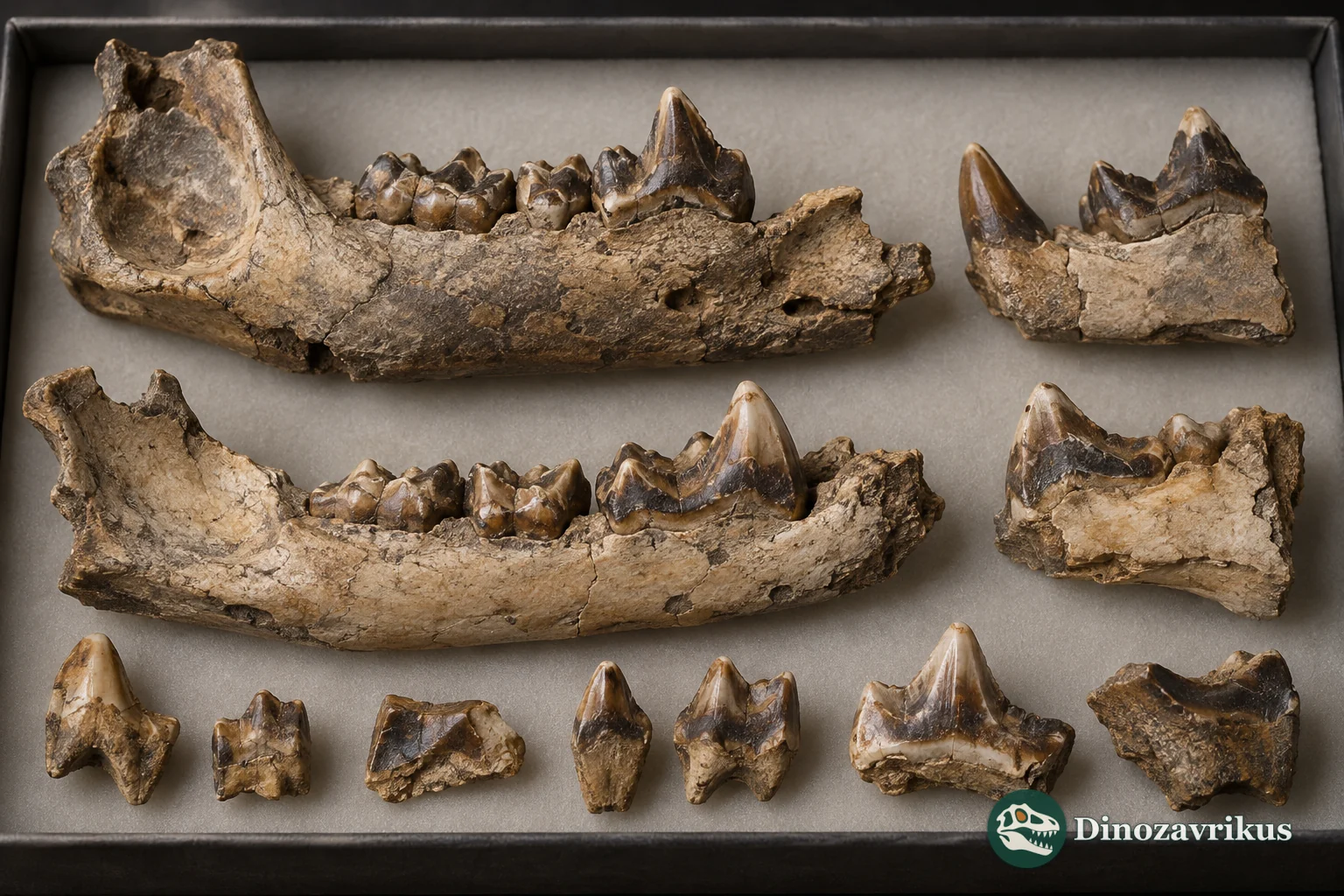
Teeth, skull and body skeleton
The species had large cutting carnassials, a broad palate and reduced postcarnassial molars. Some accessory cusps on the lower carnassial were reduced or absent. This combination supports strong specialization for meat, but it cannot name its usual prey or establish social hunting.
The nearly complete skeleton MLP 96-IX-1-I allowed researchers to compare cranial traits with body and limb proportions. Prevosti and Palmqvist used multivariate comparisons and regression to estimate body mass at about 37 kg. This is a model result for a studied species, not a uniform weight of every animal. Its anatomy motivated hypotheses about taking large prey, but fossils do not record a hunt directly.
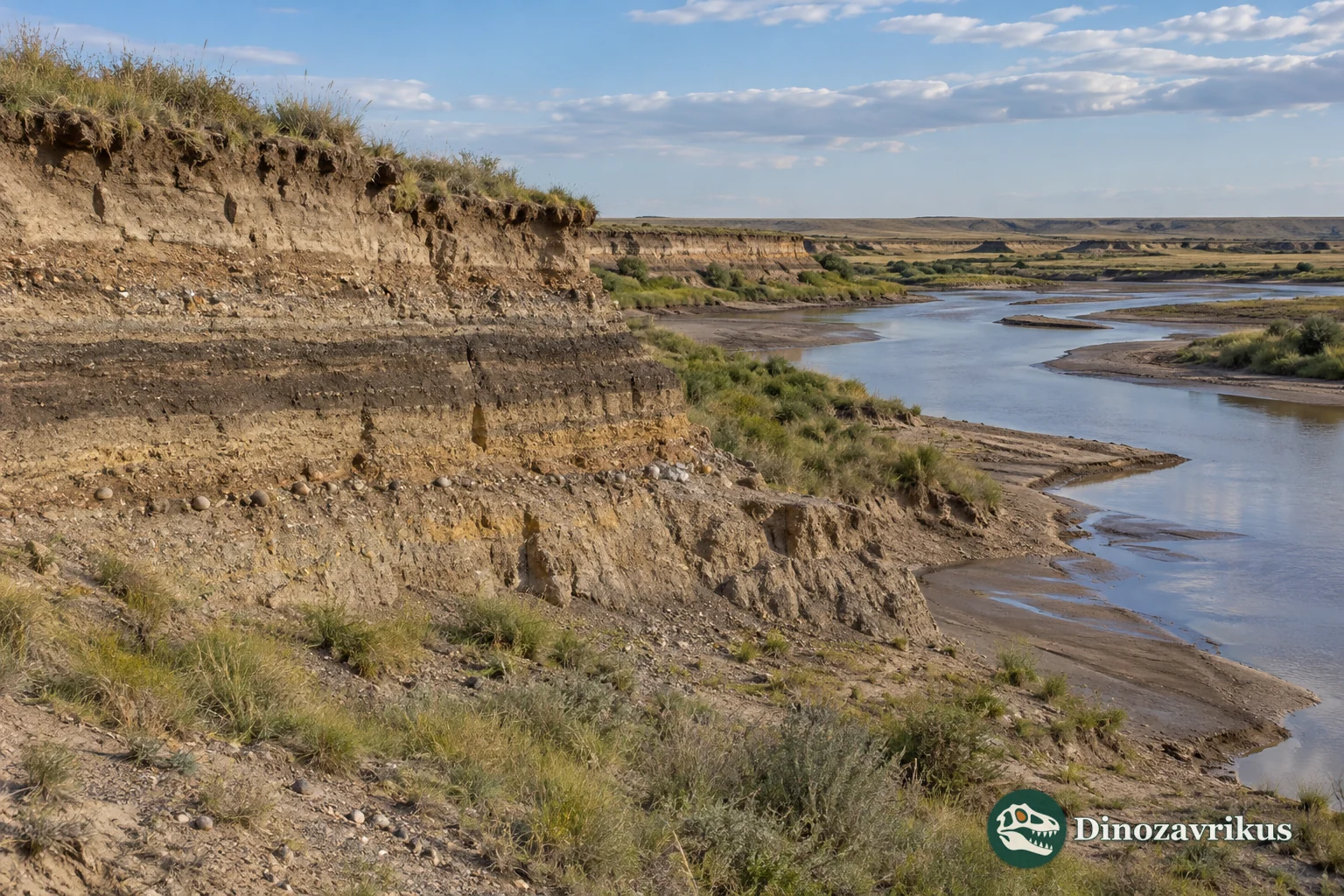
What the Pampas setting can show
The Argentine finds occur in Pleistocene sediments of the Pampean Region. Stratigraphy and associated fauna help order the appearances of South America's large predators. The grassland scene is one plausible habitat element, not a documentary image of the skeleton locality. Vegetation and climate changed through the Quaternary.
Carnassial form does not supply a complete prey list. Coat color, group size, reproduction and the reason for extinction remain unknown. Transferring the Bolivian form to another genus means older distribution maps must be read alongside the classification they used.
Frequently asked questions
Was Theriodictis a wolf?
It was a canid and may have looked wolf-like, but it was a distinct extinct genus rather than a living wolf species.
How much did it weigh?
An ecomorphological model estimated about 37 kg for T. platensis. This is calculated from bones, not directly weighed.
Why is the Bolivian form excluded?
A 2023 revision transferred former T. tarijensis to Protocyon after comparing characters and phylogeny.
What prey did it catch?
Its teeth support strong meat specialization, but the exact prey list and any group hunting remain unproven.