

Thylacinus was an Australian lineage of predatory marsupials. Its final known species, T. cynocephalus, resembled a dog but was not a canid. Museum skins, photographs and film document the striped hindquarters and long stiff tail of the recent animal, while fossils show the genus had a much older and more diverse history.
The genus belongs in the ice-age animal catalogue because its history includes Pleistocene Australia. Thylacoleo represents another, quite different, predatory marsupial lineage.
Quick facts
| Family | Thylacinidae, predatory marsupials |
|---|---|
| Recent species | Thylacinus cynocephalus |
| Older species | T. potens, T. megiriani and T. yorkellus |
| Pleistocene range | Mainland Australia and New Guinea |
| Historical range | Tasmania |
| Last confirmed record | 7 September 1936, Hobart Zoo |
What can the fossils tell us?
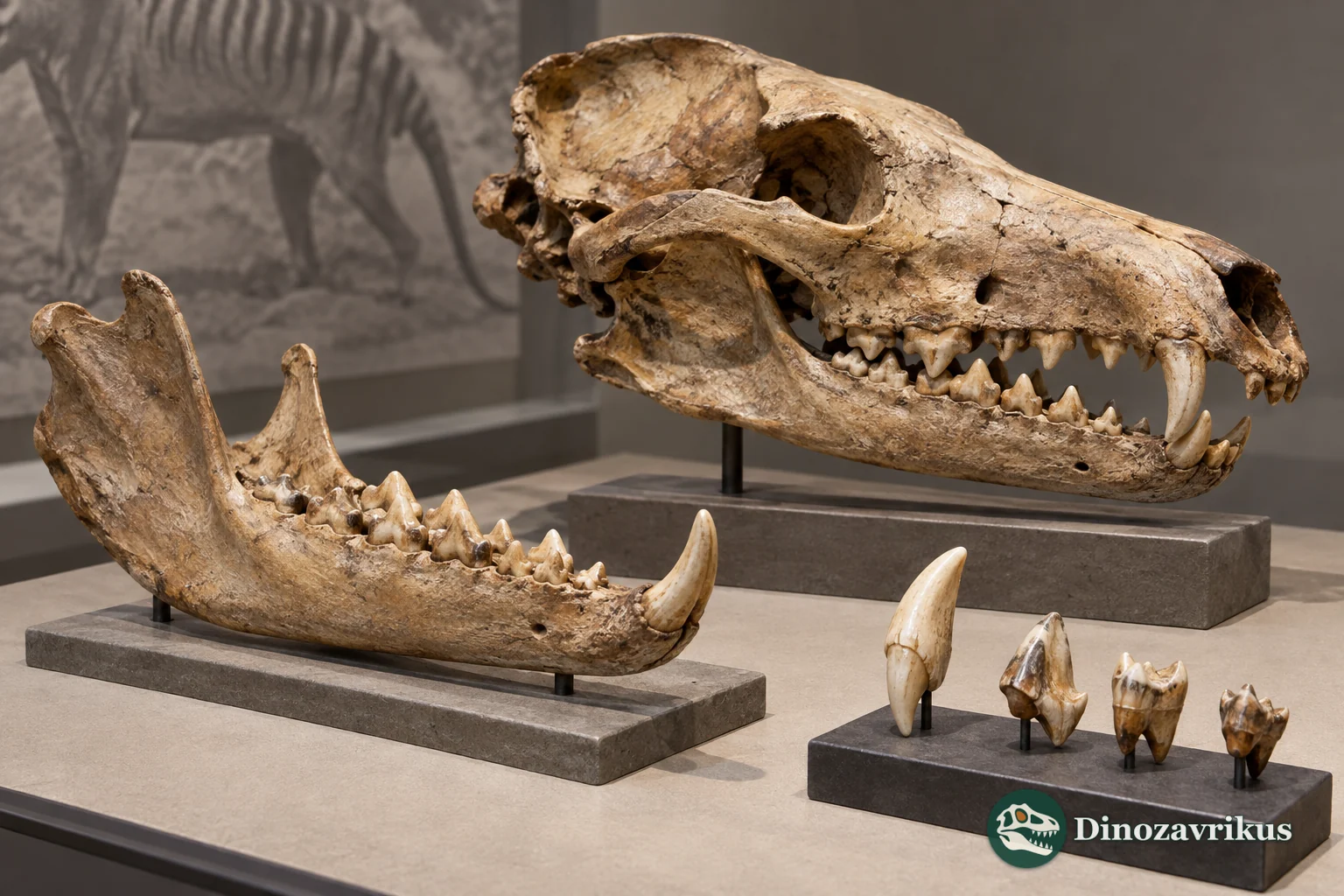
Late Miocene and early Pliocene T. potens, T. megiriani and T. yorkellus show a more diverse genus than its recent survivor. Their relationships come from comparative anatomy.
A quality-filtered radiocarbon study including new thylacine dates estimated mainland extinction at roughly 3,200 years ago. Tasmania's population survived much later.
Museum skins, skeletons, photographs, film and records document T. cynocephalus. The last known captive animal died in Hobart in 1936; unverified sighting reports are not equivalent evidence.
Older species beyond the Tasmanian tiger
A systematic study described T. yorkellus from South Australia at the latest Miocene or earliest Pliocene boundary using distinctive lower-tooth characters. Jaw comparisons placed it near the recent T. cynocephalus and apart from roughly contemporary T. megiriani of the Northern Territory. The older T. potens was also assessed. Fossils therefore show the genus did not suddenly originate in Tasmania.
The recent species has much richer anatomical evidence: skulls, skeletons and skins. Photographs establish stripe pattern and proportions, but they cannot by themselves recover population size, running speed or the prey taken by each wild animal.
Two different extinctions
Late Pleistocene thylacines occupied mainland Australia, and finds and depictions also indicate a New Guinea presence. A radiocarbon analysis added 20 new thylacine dates, filtered earlier results for reliability and placed mainland extinction around 3,200 years ago. This is a statistical interval for a population, not the death date of a known last individual. Dingo competition, human activity and environmental change remain debated contributors.
Thylacines persisted on Tasmania into recorded history. Settlers persecuted them as a perceived livestock threat and bounties were paid. The last reliably known animal died in Hobart Zoo on 7 September 1936. Later archival work clarified its museum remains and corrected stories that confused the last animal with an earlier photographed individual. Reports of sightings after 1936 have not produced a confirmed live record.
Food and limits of observation
Cutting teeth and skull anatomy establish carnivory. Computer simulations of T. cynocephalus skull stresses compared it with the Tasmanian devil and spotted-tailed quoll; the results favored prey relatively small for the animal's size. That is a mechanical inference rather than a systematic field observation of wild hunting, which was never undertaken before extinction.
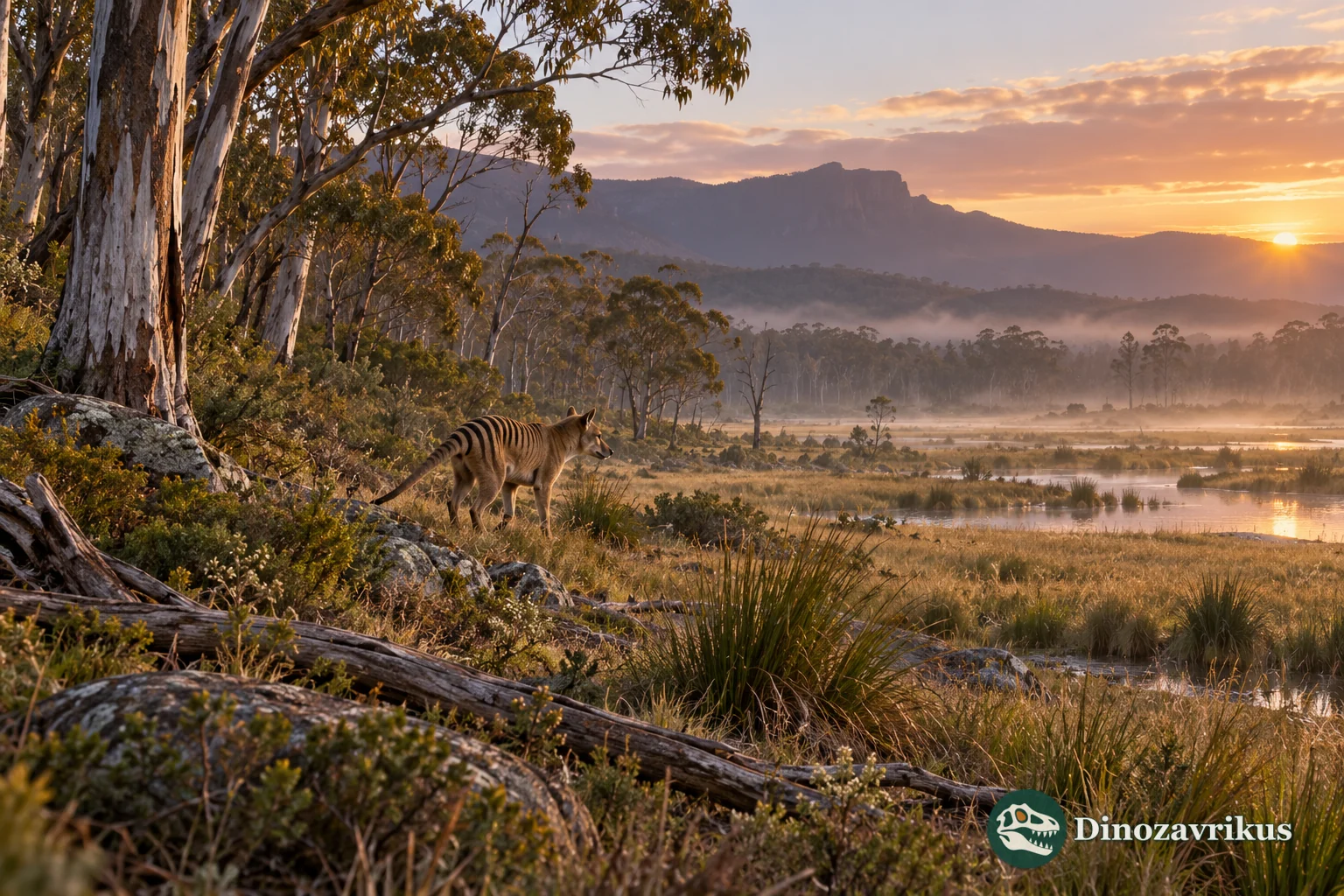
The cover uses the historically documented striped form, while its landscape and pose are artistic. It should not be treated as a portrait of older species such as T. potens, known from far less complete remains.
Frequently asked questions
Was the thylacine a dog or wolf?
No. It was a predatory marsupial; its dog-like appearance evolved in a distant mammal lineage.
Did every Thylacinus species live only in Tasmania?
No. Older fossil species come from mainland Australia, and recent T. cynocephalus also lived there before Tasmania became its last known refuge.
When did mainland thylacines disappear?
A study of reliable radiocarbon dates estimated mainland extinction around 3,200 years ago. The Tasmanian population survived until the 1930s.
Is there a confirmed live thylacine record after 1936?
No. Sightings have been reported, but no generally accepted confirmed live record follows the last known captive animal's death.