

Tinamisornis parvulus is the original name of a small fossil tinamou from Argentina. Cayetano Rovereto described it in 1914 from the Monte Hermoso area. A later revision found that the original collection may contain material from several birds. Subsequent studies often use the combination Nothura parvula for the extinct form.
Quick facts
| Original name | Tinamisornis parvulus |
|---|---|
| Later combination | Nothura parvula |
| Family | Tinamidae |
| Age | Pliocene |
| Original locality | Monte Hermoso area, Buenos Aires Province |
| Comparative material | Wing bones, femur and tarsometatarsus |
What can the fossils tell us?
The description brought together wing and hindlimb bones. Their association is too uncertain to use them all to reconstruct a single bird.
Tonni separated the humerus from the two hindlimb bones. Comparisons with living Nothura emphasised the sturdier tarsometatarsus of the fossil form.
MLP-68-XII-3-1, from the Chapadmalal Formation, includes a tarsometatarsus, portions of the thigh and shin, and toe bones.
Reexamining the original bones
In 1977 Eduardo Tonni compared the original material with other fossils and living tinamous. He identified the right humerus as belonging to the spotted nothura, Nothura maculosa. He proposed retaining the femur and tarsometatarsus for the fossil species. The identification of several other wing elements remained uncertain.
The combination Cayetanornis parvulus also appears in twentieth-century classifications. Later studies generally discussed the fossil form as Nothura parvula. The names used for the old collections do not establish that the same set of bones was assigned to the species each time.
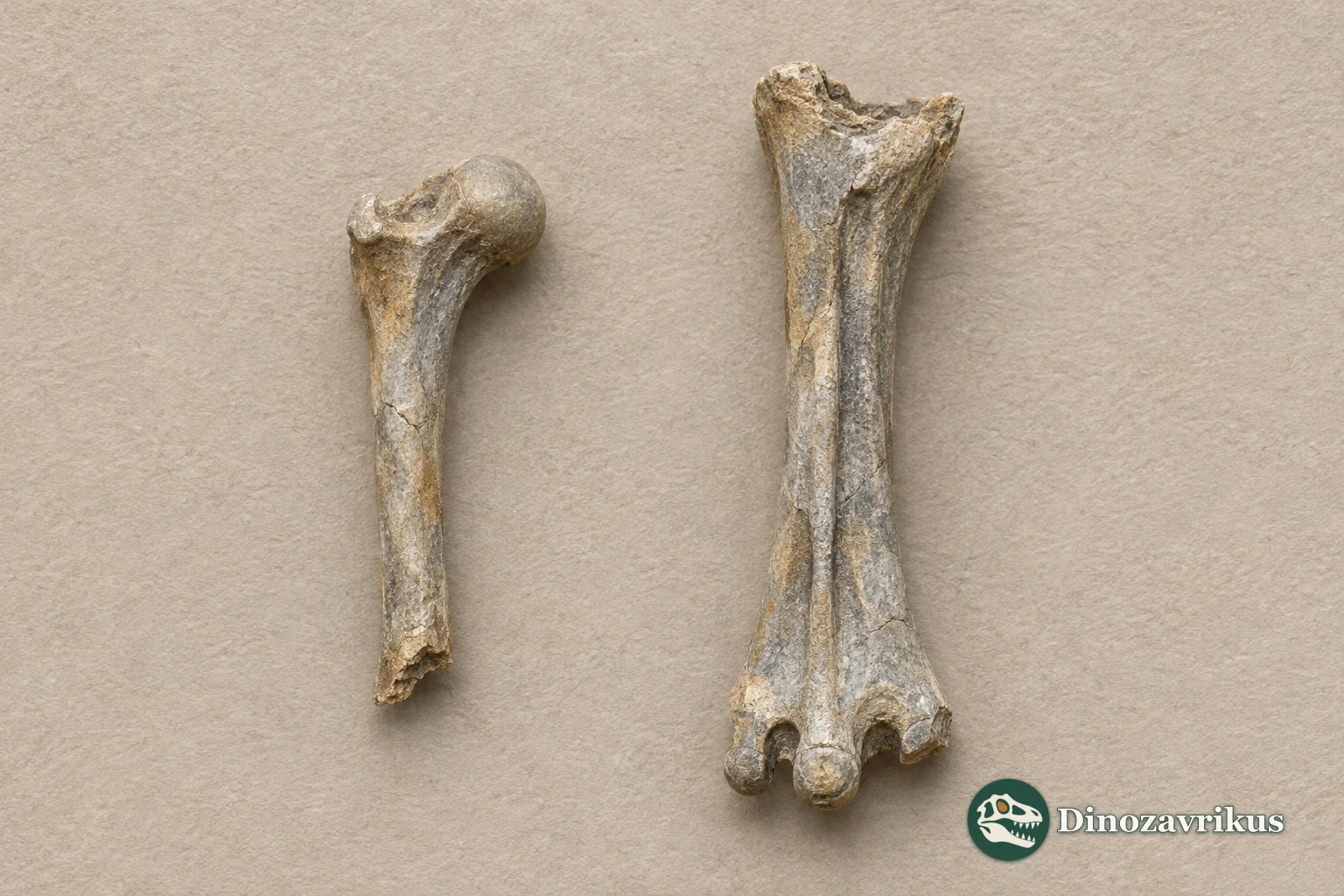
What the lower leg preserves
Researchers examining specimen MLP-68-XII-3-1 in the La Plata Museum described a well-developed opening near the lower end of the tarsometatarsus. The joint for the second toe ends above the joint for the fourth. Those traits occur in other tinamous too, so researchers assess relationships using a combination of characters from across the skeleton.
Tinamous are palaeognaths, a broad group that also includes the little fossil kiwi relative Proapteryx from New Zealand. The Argentine limb bones provide details for comparing tinamous, while the colour of the plumage and the extinct bird’s particular flight behaviour remain unknown.
Frequently asked questions
Which scientific name is used today?
Later studies often use Nothura parvula. Tinamisornis parvulus is the original combination.
Did all the original bones belong to one bird?
That association has not been established. Tonni proposed separating the pieces among several forms.
Which bone helps distinguish the fossil?
The tarsometatarsus of the fossil form is stouter than that of closely related living nothuras.
Which deposits produced the fossils?
The original finds came from Pliocene deposits around Monte Hermoso. Referred fossils are also known from the Chapadmalal Formation.