

Nearly complete Cambrian exoskeletons from Nevada show Tonopahella with a long jointed trunk and a small tail shield. The nearly straight front rim of the type species is visible in the head material. Canadian cranidia with a slightly more curved margin made the two named species harder to distinguish.
Quick facts
| Group | Trilobites |
|---|---|
| Age | Cambrian, early Miaolingian |
| Region | North America (United States and Canada) |
| Diet | Unknown |
| Type species | Tonopahella goldfieldensis |
| Type specimen | Partly articulated shield USNM 517665, Nevada |
What can the fossils tell us?
USNM 517665 preserves much of the exoskeleton. Together with articulated paratypes, it shows the proportions of the trunk and head. Compaction can alter the profile of the fossil.
Articulated material shows sixteen thoracic segments. Known tail shields have a short axis with three rings. Neither feature records the original colour or diet.
The Little Bear River cranidia have a slightly curved front margin. That intermediate shape makes it harder to use rim curvature to separate the two named species.
The Emigrant and Monola occurrences are from outer-shelf rocks. The evidence describes the sediments where the shields accumulated. It cannot determine the animal’s diet.
The Emigrant and Mount Cap formations
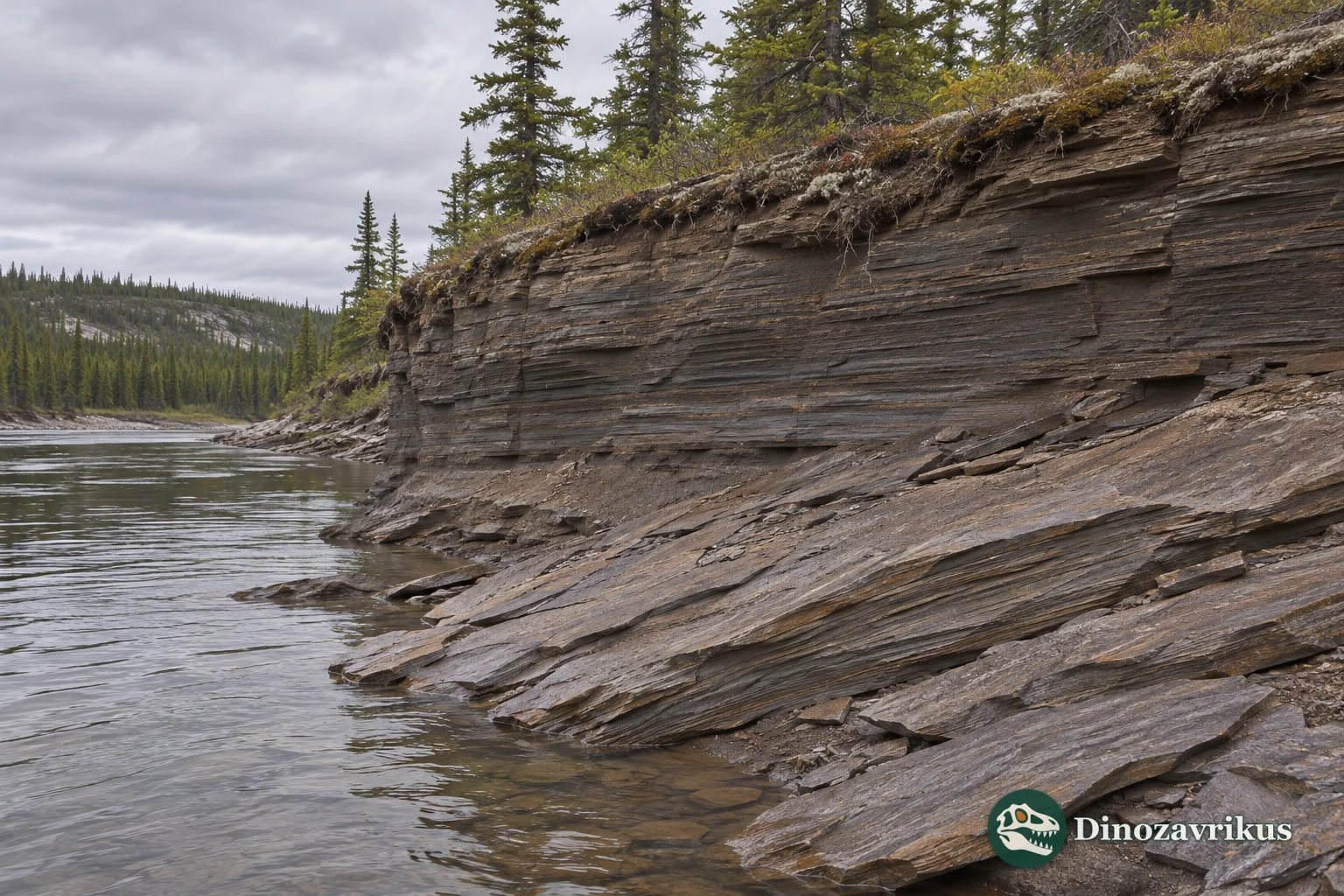
Frederick Sundberg and Linda McCollum established Tonopahella in 2003. USNM 517665, the partly articulated and nearly complete holotype of T. goldfieldensis, is from the Emigrant Formation in Nevada’s Goldfield Hills. It comes from the Amecephalus arrojosensis Zone, as does material from California’s Monola Formation. The same study described a species of Onchocephalites from the western United States.
The Canadian fossils are three cranidia from silty mudstone along the Little Bear River, Northwest Territories. They occur in the Amecephalus arrojosensis–Eokochaspis nodosa Zone of the Mount Cap Formation. Two of the specimens, GSC 142440 and 142442, are illustrated in the Canadian study.
Comparing the head shields
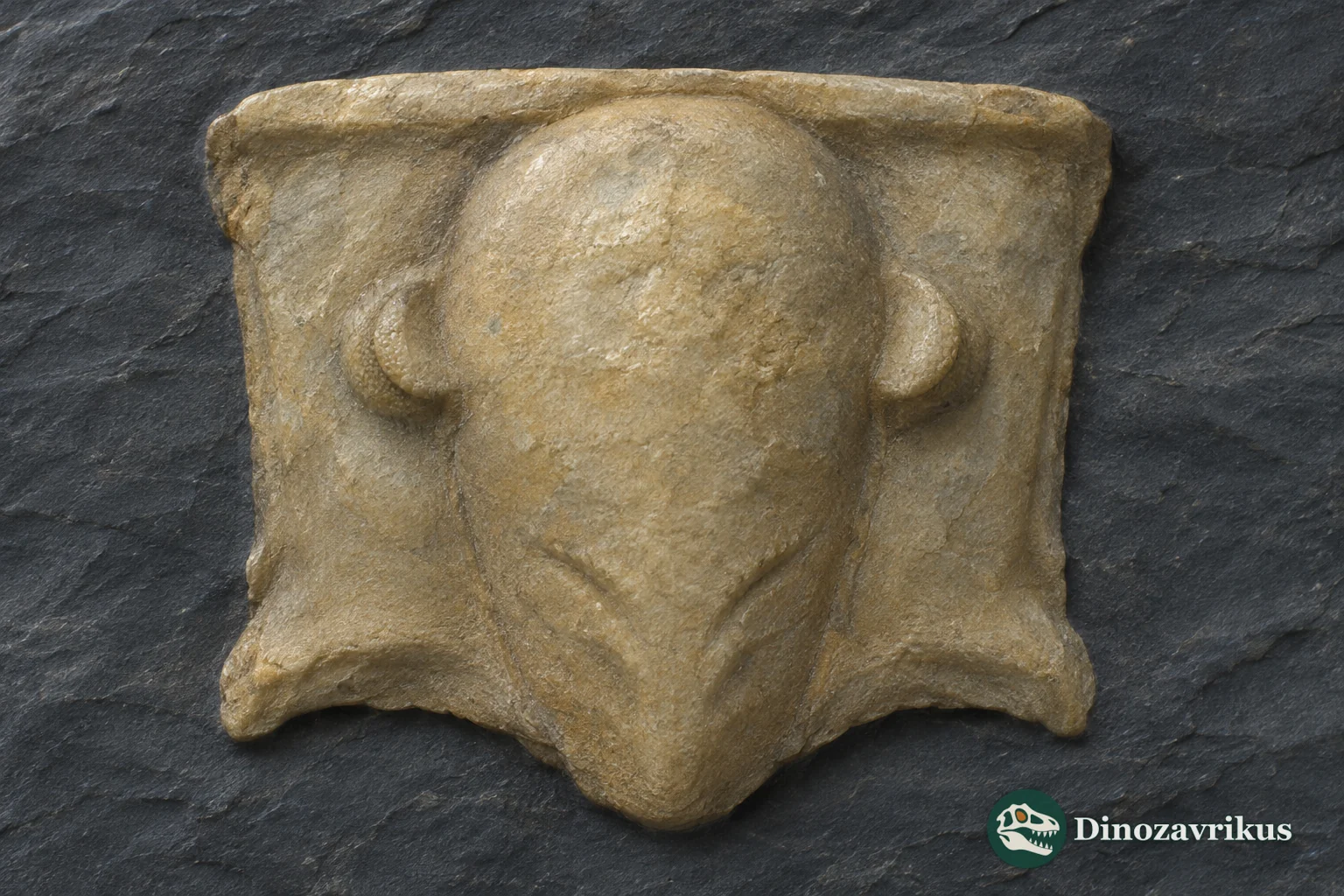
The cranidium is the central portion of the exoskeleton of the head. In Tonopahella, the furrow along the glabella bends inward at the level of the second pair of lateral grooves. Compared with Amecephalus, the area between the glabella and eye lobe is narrower, the posterior limb of the fixed cheek is shorter, and the front rim lacks the extra groove seen in that other genus.
Tonopahella goldfieldensis was distinguished from T. walcotti by its straighter front rim and less sharply defined border furrow. The Canadian sample was assigned to T. goldfieldensis, but its slightly curved outline is intermediate. The authors proposed that the two names could refer to the same species. Their observations document the intermediate shape, leaving the synonymy open.
The articulated exoskeletons
Nearly complete paratypes from the Goldfield Hills include USNM 517671. The thorax of T. goldfieldensis carries sixteen segments whose side branches terminate in short points directed outwards and backwards. The small oval tail shield has a smooth rim and three rings down the axis. In the original series, measured cranidia ranged from 3.5 to 9.3 mm in length and separate pygidia from 1.7 to 3.5 mm. Those ranges describe parts of the exoskeleton measured across different individuals.
The nearly complete holotype of T. walcotti, USNM 497954, comes from the Pioche Formation of Nevada. The Canadian work records two nearly complete exoskeletons in material from the Mount Cap and Mount Clark formations. The authors took compaction into account when comparing the front rim and its furrows in fossils preserved in siltstone and mudstone.
Articulated shells give a basis for reconstructing the animal’s shape. The colours chosen for the illustration are conjectural, and the described specimens leave the animal’s diet unresolved.
Frequently asked questions
Where did the type specimen come from?
The nearly complete, partly articulated holotype USNM 517665 was found in the Emigrant Formation of the Goldfield Hills, Nevada.
What Tonopahella fossils came from Canada?
The Mount Cap Formation yielded three cranidia of the type species. The Canadian material of T. walcotti includes two nearly complete exoskeletons.
Why might the two names refer to one species?
The Canadian cranidia have a front margin that is intermediate between the almost straight rim of T. goldfieldensis and the more rounded outline of T. walcotti.
How many thoracic segments did T. goldfieldensis have?
The articulated material described for this species shows sixteen thoracic segments followed by a small tail shield.