

Toxochelys was a Late Cretaceous sea turtle from North America. Some specimens preserve the skull and nearly complete front flippers, while others consist of shell fragments and scattered limb bones. Those fragments proved useful for distinguishing two related species.
Quick facts
| Group | Turtles, sea turtles |
|---|---|
| Age | Late Cretaceous |
| Region | North America: Canada and the United States |
| Type species | Toxochelys latiremis |
| Type material | AMNH 2362, lower jaw and partial coracoid |
| Scientific name | Toxochelys |
| Diet | No direct evidence |
What can the fossils tell us?
The name of the type species rests on AMNH 2362, which preserves the left branch of the lower jaw and part of the coracoid.
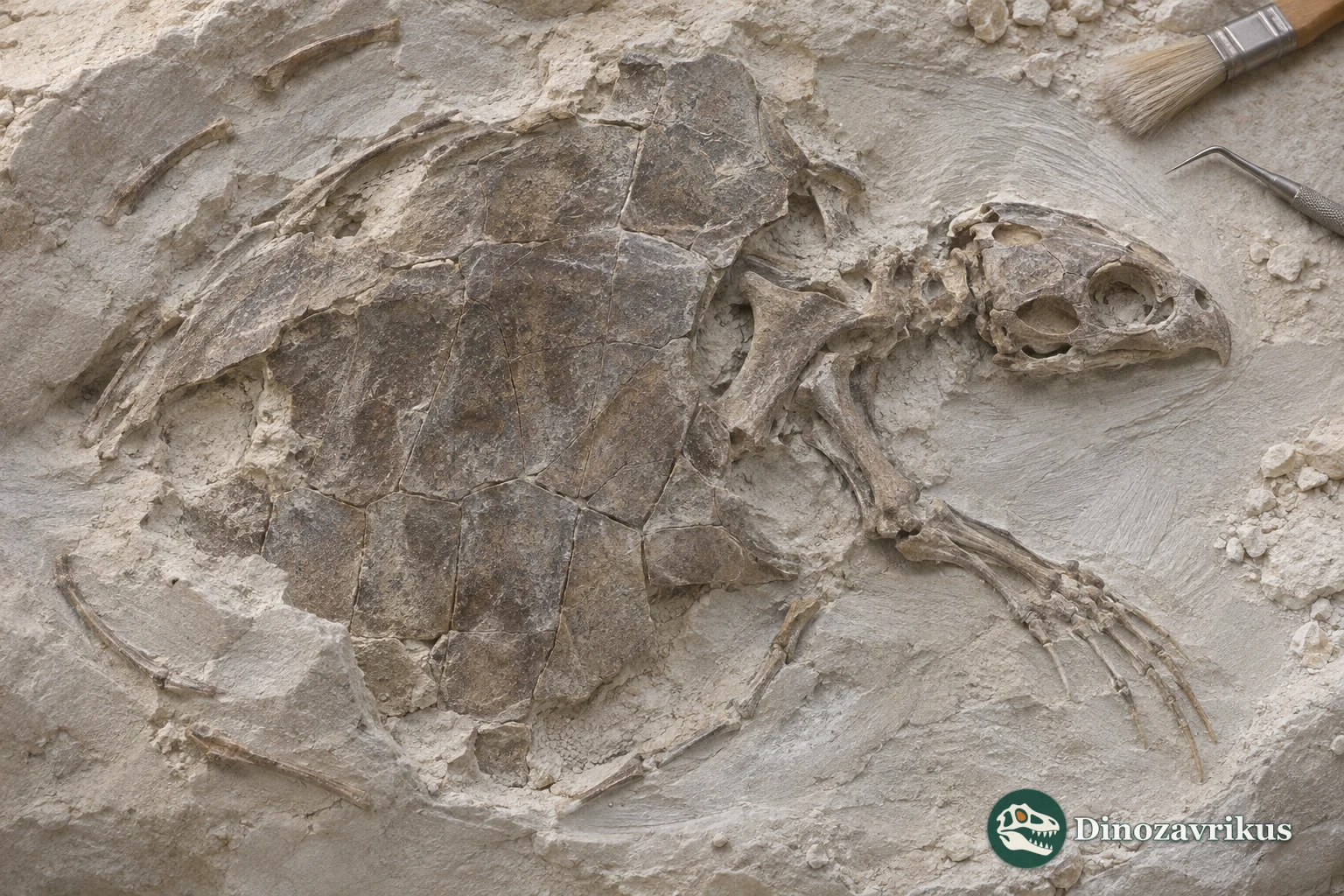
Kansas specimen YPM 2491 preserves both front limbs almost completely. Their bones give an outline of the flippers.
Rear peripheral bones of the type species are more elongate than in the second species. This remains useful when the shell is incomplete.
Fossils from a seaway
Edward Drinker Cope named Toxochelys latiremis in 1873. AMNH 2362 preserves the left branch of the lower jaw and part of a coracoid, one of the bones of the shoulder girdle. This material is attributed to the Campanian Pierre Shale of Kansas. The age and anatomy of other individuals can be compared using material from several formations.
Specimen YPM 2491 from the Cretaceous Niobrara of Kansas includes a skull, lower jaw, cervical vertebrae, the front of the shell and two nearly complete foreflippers. Additional Niobrara material includes a juvenile that provides a separate view of the anatomy.
Distinguishing the two species
Researchers identified differences in the position of the cervical scute groove at the front of the shell and the proportions of peripheral bones at the rear. In T. latiremis, the posterior peripherals are never wider than they are long. Some in T. moorevillensis are wider than long.
A 2009 study of the skulls by Andreas Matzke described differences in the bones at the base of the skull and in openings for blood vessels. The distinctions complement those seen in the shells. In another fossil sea turtle, Euclastes, the skull likewise supplies important evidence for identification, though the features used are different.
The importance of the Alabama finds
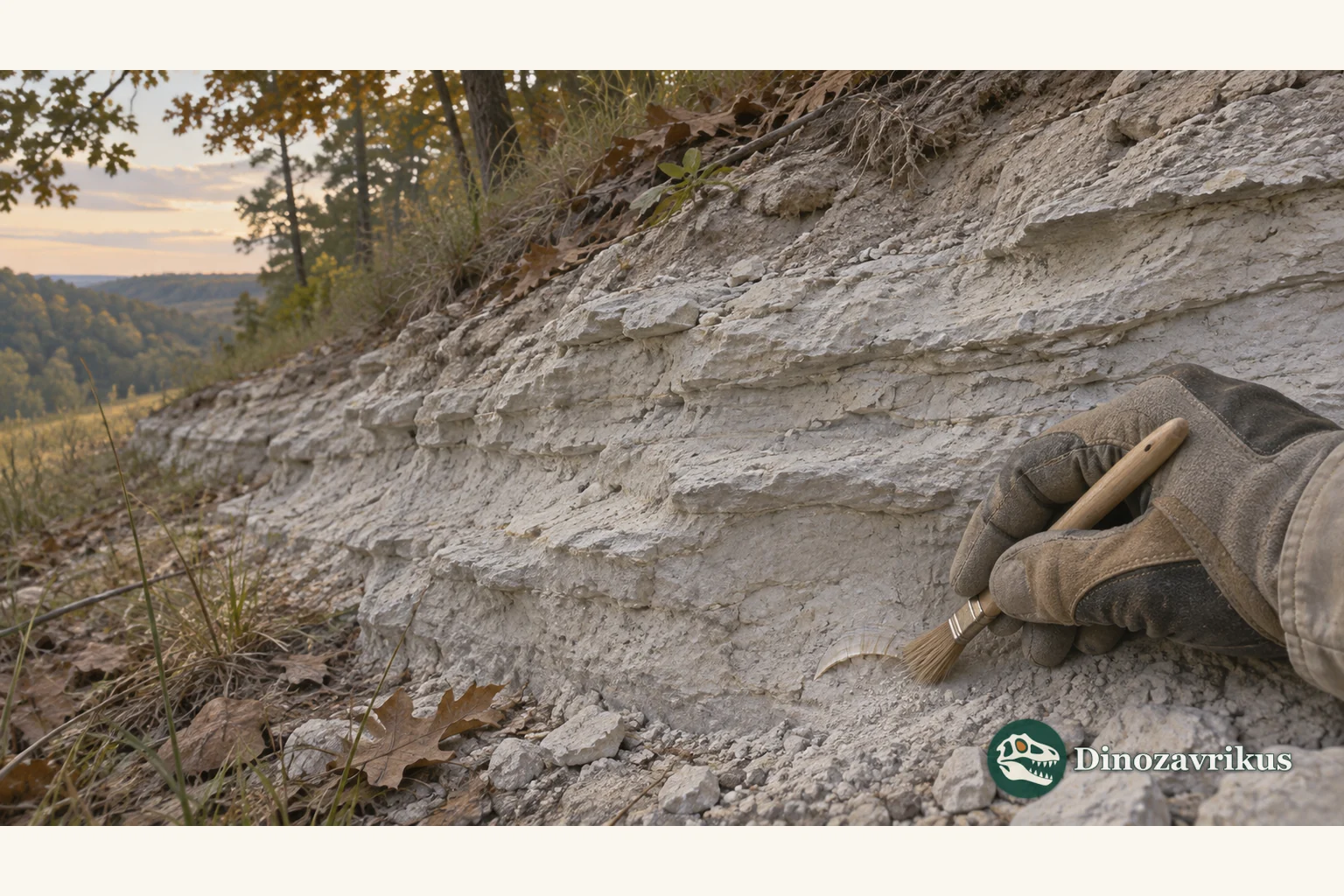
A different species of Toxochelys was long known from the Mooreville Chalk of Alabama. In 2018, a study of the McWane Science Center collection identified two specimens of T. latiremis there. RMM 5614 consists in part of the front shell bone and a partial humerus. RMM 5615 preserves pieces of the shell, three neck vertebrae and fragments of the limb girdles.
Both were dated to the early Campanian. The finds extended the documented distribution of the type species southwards to an embayment of the Western Interior Seaway. They place both species in the same formation without establishing how frequently the turtles actually met.
Frequently asked questions
What fossils gave Toxochelys its name?
AMNH 2362 preserves part of the lower jaw and coracoid and is attributed to the Campanian of Kansas.
What evidence shows that Toxochelys had flippers?
A Niobrara specimen from Kansas preserves both foreflippers almost completely, including the bones that supported them.
How many species are distinguished in the Alabama study?
The study recognises Toxochelys latiremis and Toxochelys moorevillensis.
What did the Alabama finds add?
Two specimens confirmed the type species in the Mooreville Chalk, a formation where the other species was already known.