

Trachyaspis was a hard-shelled sea turtle with ridged shell bones and conspicuously serrated jaws. The name goes back to a fossil from Switzerland. Better-preserved specimens from the United States and Japan were long known as Syllomus, until comparisons of the shell brought those records together under the older name.
Quick facts
| Group | Turtles, sea turtle lineage (Pan-Cheloniidae) |
|---|---|
| Age | Miocene and Pliocene |
| Region | Europe: Switzerland and Italy. North America: USA. Africa: Egypt. Asia: Japan |
| Type species | Trachyaspis lardyi |
| Type material | A costal plate from the Swiss marine molasse |
| Scientific name | Trachyaspis |
| Diet | No direct evidence |
What can the fossils tell us?
Shallow winding ridges and valleys decorate the outer faces of shell plates. Anatomical comparisons used this pattern to link material from different localities.
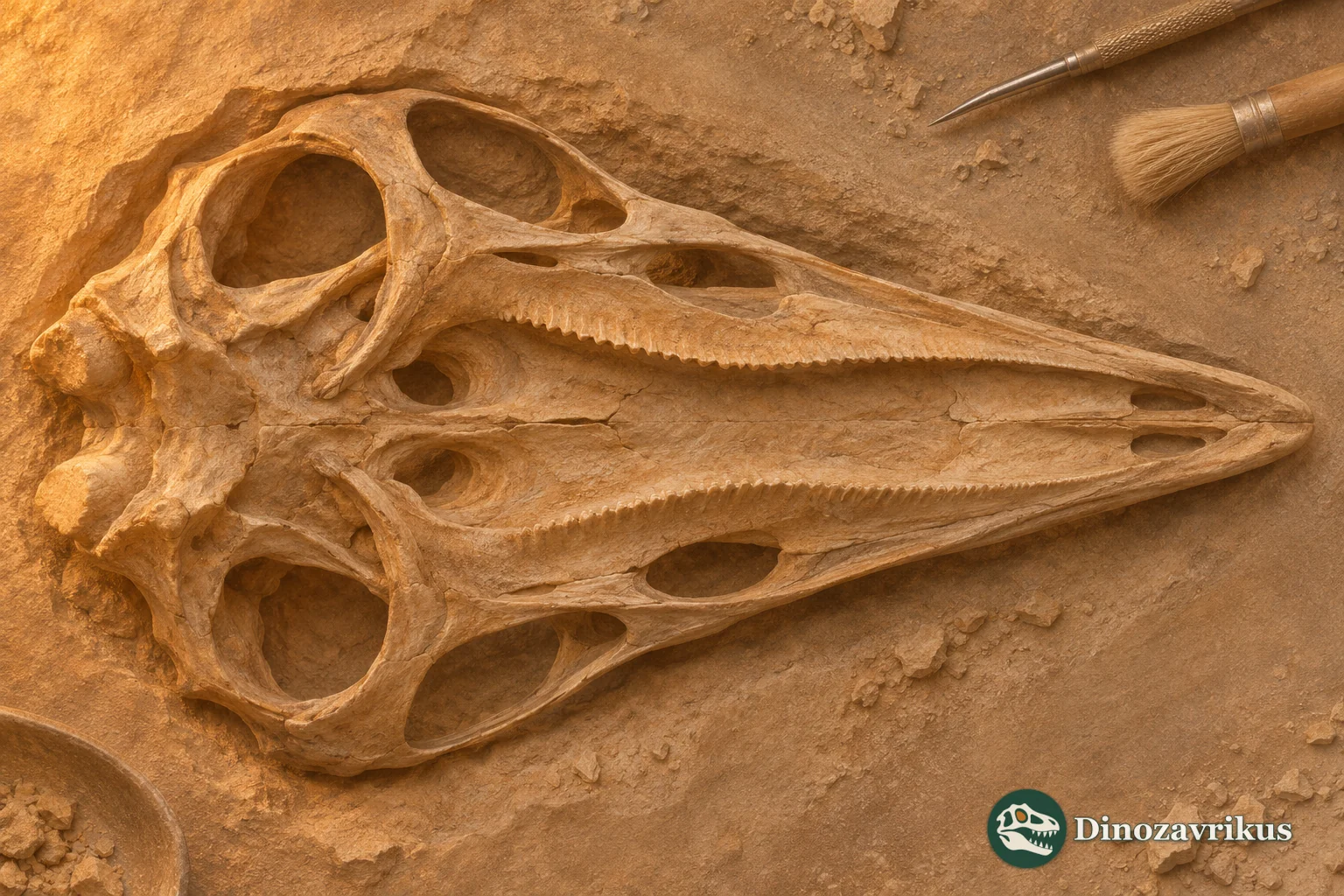
The Virginia specimen USNM 187382 has serrations on the bony chewing surfaces in both jaws. They indicate how the mouth was built, with the exact diet unresolved.
Shell comparisons led researchers to assign material called Syllomus to Trachyaspis lardyi, a name already in use for the Swiss turtle.
Reading the pattern on the shell
Hermann von Meyer named Trachyaspis lardyi in 1843 from a costal plate from Mont La Molière, Switzerland. The fossil comes from marine molasse of Burdigalian age. More complete specimens show a flattened shell with meandering ridges and grooves on several plates. The length and height of the longitudinal keels vary.
Later descriptions applied Syllomus to North American material and used Syllomus aegyptiacus for specimens from Egypt and Japan. Robert Weems’s later treatment of the Calvert material uses the older Trachyaspis lardyi. The distinctive surface texture supplied a way to compare the American shells with the Swiss material.
What the Calvert skull reveals
USNM 187382, from the Calvert Formation in Virginia, includes most of a skull, a lower jaw and parts of the skeleton. The dentary, maxillae and palatines bear sharply crenulated ridges along the chewing surfaces. The serrations are part of the bone, giving the turtle its pseudodont or false-toothed appearance.
The unusual surfaces offer clues to grasping and processing food. They leave the precise diet unresolved. The region’s marine strata also preserve Psephophorus, a leatherback relative with a shell built from a mosaic of small bones.
A record beyond the Calvert cliffs
Several skeletons from the middle Miocene Haratajino Formation in Gunma, Japan, were described as Syllomus. They offered substantially more information about the carapace and limbs than the Swiss type plate alone.
Shell pieces from the Stirone River deposits in northern Italy have also been assigned to Trachyaspis lardyi on the basis of surface ornament. Their late Pliocene age extends the known record beyond the Miocene.
Frequently asked questions
Why are there two names for this turtle?
Syllomus was coined for material recognised later. When those fossils are assigned to the same species as the Swiss material, the older name Trachyaspis lardyi has priority.
Did it have teeth?
The false teeth were projections of the bony jaw ridges.
What does the Swiss type preserve?
It consists of a costal plate, one of the bones along the sides of the upper shell.
Which fossils extend its range into the Pliocene?
Decorated shell pieces from late Pliocene strata along Italy’s Stirone River have been referred to the species.