

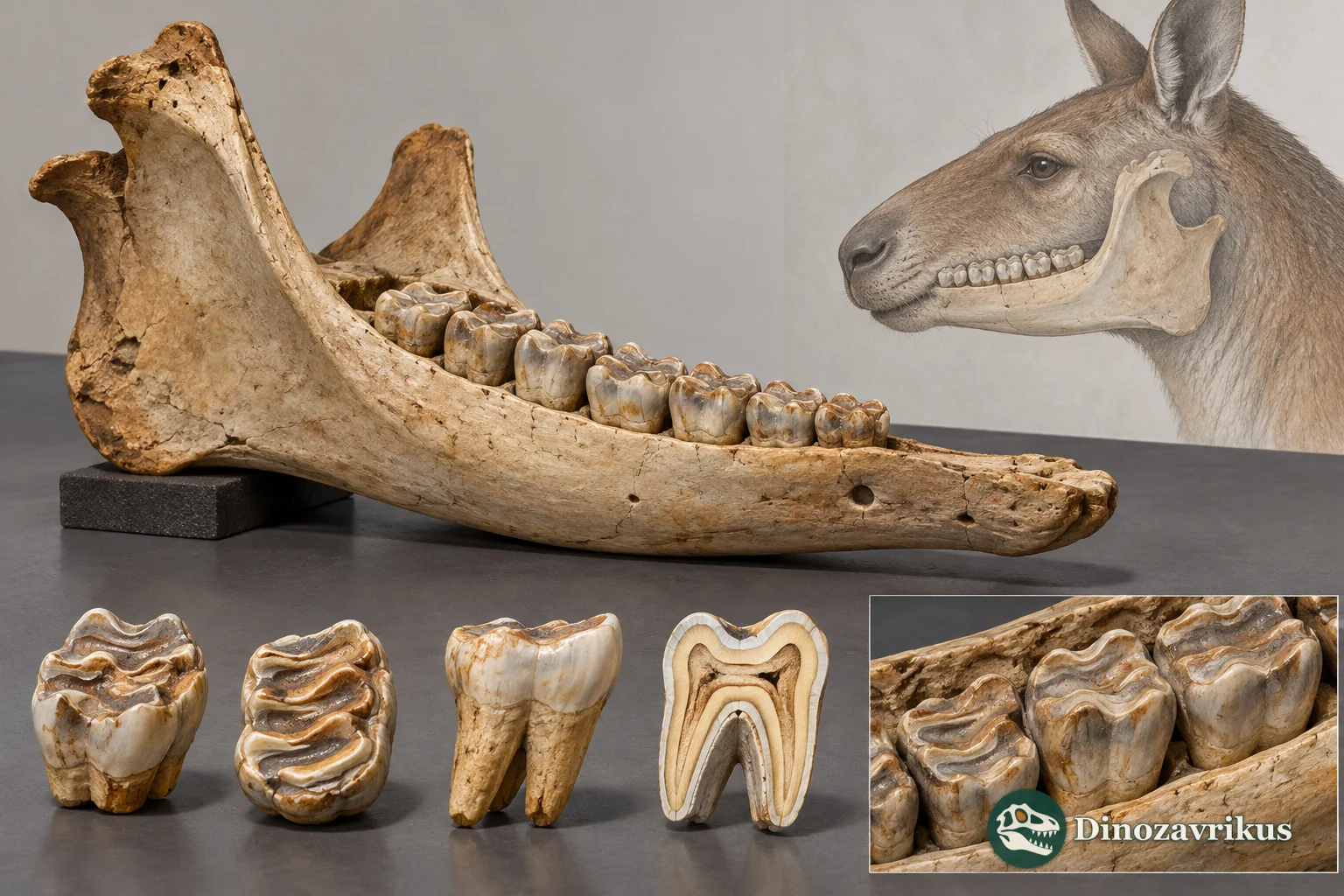
Troposodon is an extinct kangaroo genus from Australian Pliocene and Pleistocene deposits. Alan Bartholomai introduced the genus in 1967. Tim Flannery and Michael Archer revised its species in 1983 using fossils from several regions. Jaws, teeth and some other bones inform its identity; the cover is an artistic reconstruction, not the known coat of a fossil individual.
The older species name minor was originally used under Sthenurus. A later genus assignment does not change the age of the fossil itself.
Quick facts
| Genus | Troposodon Bartholomai, 1967 |
|---|---|
| Group | Macropodidae, Sthenurinae |
| Type species | T. minor |
| Species in 1983 revision | Five |
| Finds | Queensland, New South Wales, South Australia |
| Age | Pliocene to Pleistocene |
What can the fossils tell us?
The 1983 revision compared incisors and molars. Wear and tooth position must be considered when assigning an isolated fossil.
Bow and Chinchilla yield Pliocene material; T. kenti includes an Early Pleistocene record. These are not one associated skeleton.
Flannery and Archer recognized five species in 1983 and assessed the genus among sthenurine kangaroos.
A genus reexamined
Bartholomai's genus was reassessed by Flannery and Archer, who recognized T. minor, T. bluffensis, T. kenti, T. bowensis and T. gurar. Their comparison involved incisors, cheek teeth, the front of the skull and available limb elements. Dental wear can erase useful detail, so an isolated tooth needs careful positional and geological context.
Simosthenurus is another sthenurine kangaroo. Shared group characters invite comparison, but do not make fossils of the two genera interchangeable.
A fossil record across Australia
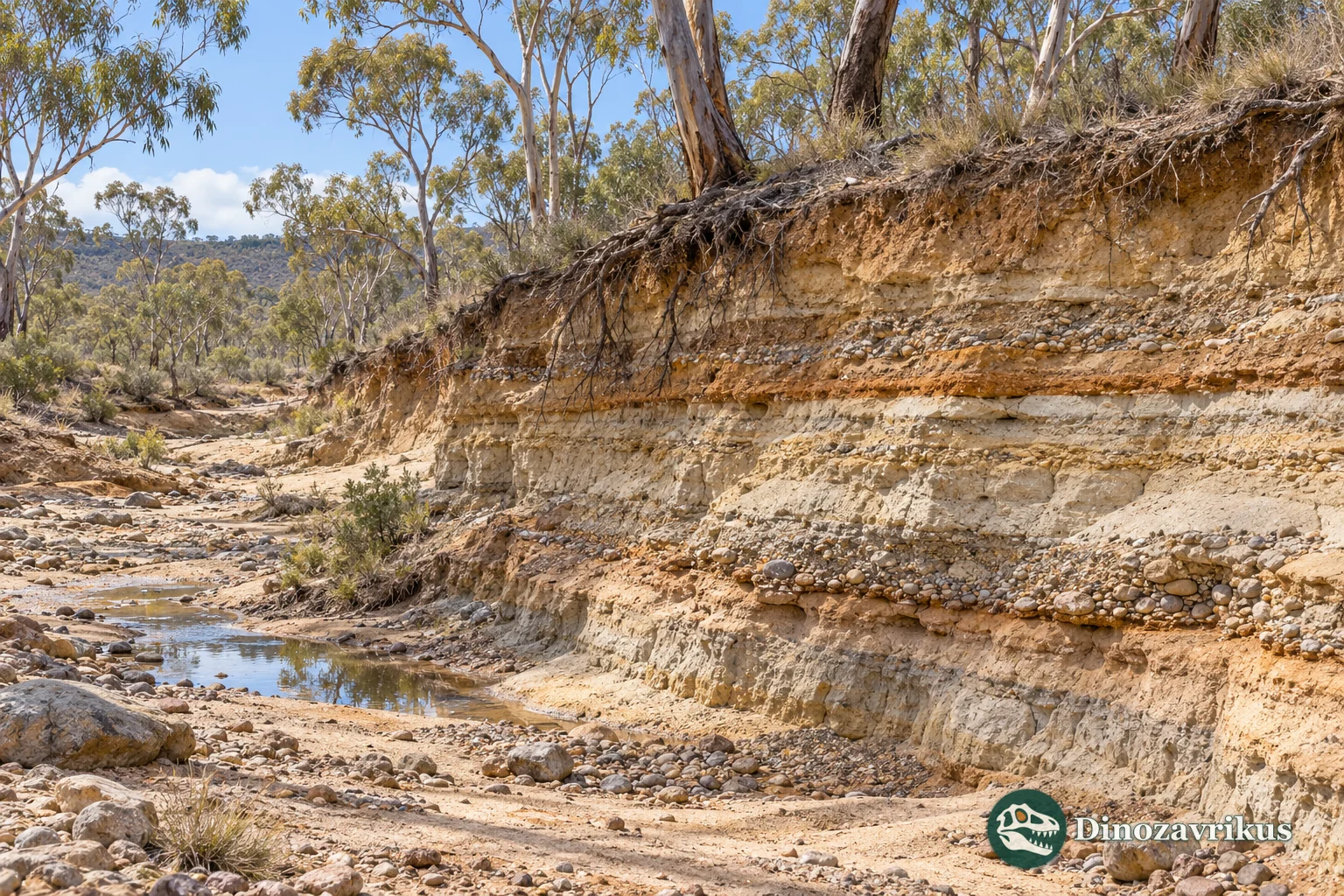
The early Pliocene Bow fauna in New South Wales includes T. bowensis, while T. gurar was reported from Pliocene Chinchilla in Queensland. T. kenti is known from Early Pleistocene Katipiri Sands near Lake Kanunka, South Australia; the revision also discussed Darling Downs and Wellington Caves material. The localities document a broad sample, not one simultaneous population.
The youngest part of the record falls within the Quaternary. A broad deposit age does not provide the date of the genus's last individual. Australian fossil faunas also included animals such as Propleopus, but the separate finds do not prove an encounter.
Diet, movement and uncertainty
Cheek teeth and kangaroo kinship permit study of plant processing. A precise menu for each species requires direct dental wear or related evidence. Fragmentary limb bones are informative for comparisons, yet estimates of mass, speed or locomotion depend on skeletal completeness and explicit models.
The 1983 revision compared Troposodon with other sthenurines and the living banded hare-wallaby. Such comparison does not establish a direct ancestor of the living species. Fur color and social behavior remain unknown. The jaw and landscape images here are illustrative, not photographs of type fossils or excavations.
Frequently asked questions
Was Troposodon a dinosaur?
No. It was an extinct marsupial mammal in the kangaroo family.
How many species were recognized?
Flannery and Archer recognized five species in their 1983 revision.
Where were its fossils found?
Published material spans New South Wales, Queensland and South Australia.
Is its exact coat or mass known?
No. Fossil teeth and bones do not preserve coat color, and one mass cannot describe every species.