

Tryphosuchus was a Permian temnospondyl. Its type species comes from Isheevo in the Volga region of European Russia. A skull-base element, part of the lower jaw and isolated limb bones were recovered separately, complicating comparisons between them.
Quick facts
| Group | Temnospondyls |
|---|---|
| Age | Middle Permian (Isheevo assemblage correlation) |
| Region | Europe (Volga region and western Cis-Urals, Russia) |
| Type species | Tryphosuchus paucidens |
| Scientific name | Tryphosuchus |
| Diet | Undetermined |
What can the fossils tell us?
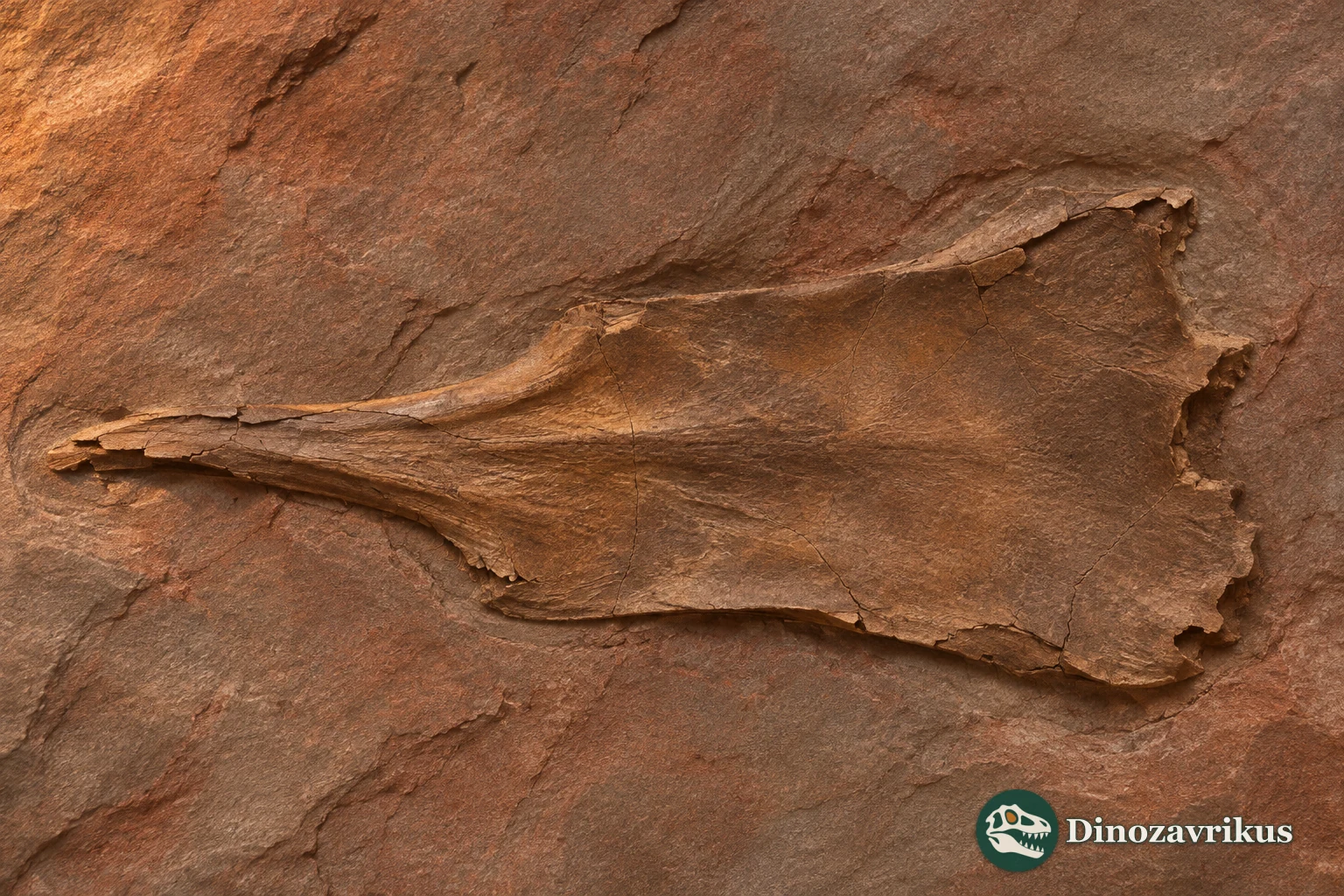
PIN 157/107, a parasphenoid from Isheevo, is the lectotype of Tryphosuchus paucidens. It was chosen from the isolated fragments in the original description.
Comparisons of the joint at the skull base and of parts of the pelvis helped separate specimens from Isheevo and Malaya Kinel.
The 2017 analysis questioned whether the incomplete material reliably distinguishes T. paucidens. This also complicates the assignment of other bones from Isheevo.
The name rests on a skull-base bone
Elena Konzhukova described Tryphosuchus paucidens in 1955 from the Isheevo site in what is now Tatarstan. The original type material comprised seven unconnected fragments. In 1991 Yuri Gubin designated one of these, the parasphenoid PIN 157/107, as the lectotype. The elongated bone lay at the base of the skull. A lower jaw, PIN 157/112, and isolated bones from the body and limbs were also assigned to the species.
Material from the Malaya Kinel River
Gubin also recognised T. kinelensis, based on the right half of a pelvis from the Orenburg region, PIN 272/52. In his comparison, the front process of the ilium pointed almost vertically in the Isheevo material and inclined inward in the Malaya Kinel material. The two sites are part of the Isheevo assemblage, correlated in one biostratigraphic scheme with the late Wordian to Capitanian. Older accounts used the regional Permian divisions.
A disputed identification
A 2017 analysis grouped T. paucidens with species of Konzhukovia. The authors found the diagnosis unclear and proposed treating the species as a nomen dubium. The arrangement of these amphibians differed among trees in a subsequent analysis. The isolated fossils reveal individual features of the skull and skeleton, while the proportions of the animal remain unresolved.
Frequently asked questions
Where was the type material of Tryphosuchus found?
It came from Isheevo in what is now the Apastovo district of Tatarstan, European Russia.
What is the lectotype of Tryphosuchus?
It is the parasphenoid PIN 157/107, chosen from the original fossils to fix the application of the species name.
Where did the material of the second named species come from?
Its name-bearing specimen is the right half of a pelvis from the Malaya Kinel River in the Orenburg region.
Why was the name considered doubtful?
One analysis found that the available fragments give too few clear characters to distinguish the type species from closely related amphibians.