

Uktenadactylus wadleighi is an Early Cretaceous pterosaur from the Paw Paw Formation of Texas. Its only secure specimen, SMU 73058, is the front of an upper jaw with a distinctive arrangement of tooth sockets. It is not a complete skull, and no wing or body skeleton is known for the species.
The genus is listed in the pterosaur catalogue among toothed pterodactyloids with very different fossil records. Comparing its rostrum with Aerodraco or Coloborhynchus helps explain its changing classification, but cannot supply the missing anatomy of Uktenadactylus.
Quick facts
| Scientific name | Uktenadactylus wadleighi |
|---|---|
| Group | Pterodactyloid; Anhangueridae in the 2020 review |
| Age | Early Cretaceous, Albian |
| Locality | Tarrant County, Texas, USA |
| Formation | Paw Paw Formation |
| Holotype | SMU 73058 |
| Known material | Anterior rostrum with eight pairs of upper tooth sockets |
| Body size | No reliable wingspan or body length is established |
| Catalogue | Pterosaur catalogue |
What can the fossils tell us?
The specimen preserves an anterior part of the rostrum with alveoli for the first through eighth pairs of upper teeth. No associated wing or body skeleton is known for the species.
The 2020 revision discusses a deep oval depression above the first tooth pair, a sharp palatal projection and the position of the second alveoli. Identification relies on their combination.
The British IWCMS 2014.82 was named Uktenadactylus rodriguesae in 2020. A 2026 reassessment erected Tylodorhynchus rodriguesae for it; this does not alter the Texas type species.
Wingspan, mass, colour, crest, complete tooth count, diet and behaviour cannot be read directly from the single rostrum.
From Coloborhynchus to Uktenadactylus
Yuong-Nam Lee named the Texas fossil Coloborhynchus wadleighi in 1994. Taissa Rodrigues and Alexander Kellner reassessed the group in 2008 and placed the species in a distinct genus, Uktenadactylus. Its name commemorates Jay Wadleigh, who collected the specimen in Tarrant County.
Holgado and Pêgas retained Uktenadactylus among anhanguerids in their 2020 review of coloborhynchine pterosaurs. Their comparisons focused on the shape of the jaw tip, tooth positions and palatal anatomy. The analysis reflects a particular character matrix and taxon sample; relationships among fragmentary anhanguerids remain open to revision.
What the Texas rostrum preserves
SMU 73058 is an anterior portion of the rostrum, the upper jaw tip. It displays the alveoli for eight pairs of upper teeth. The spacing and orientation of those sockets, together with the bone surface around them, are the most useful evidence for identifying the species. A drawing of a complete skull would necessarily add anatomy not preserved in this specimen.
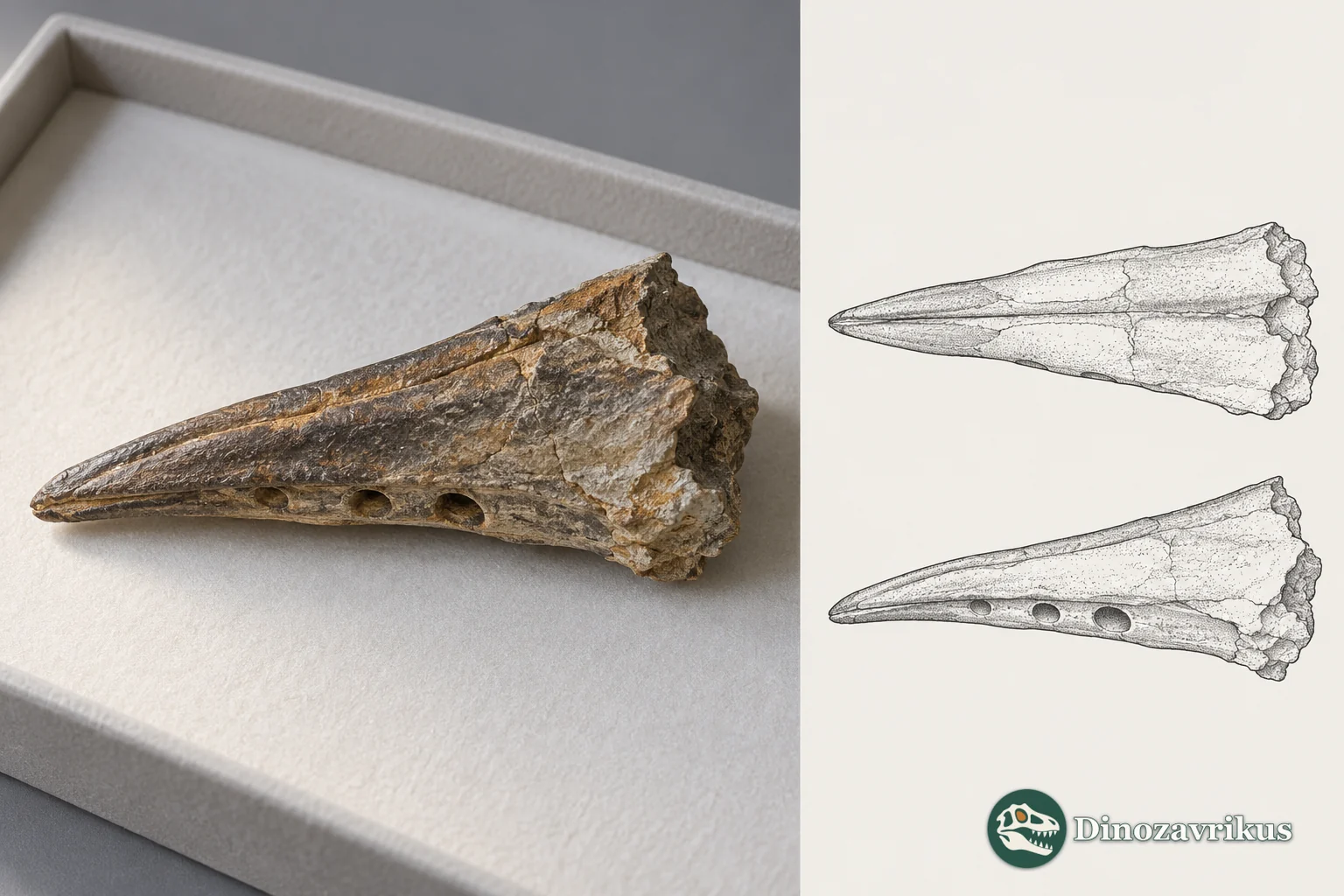
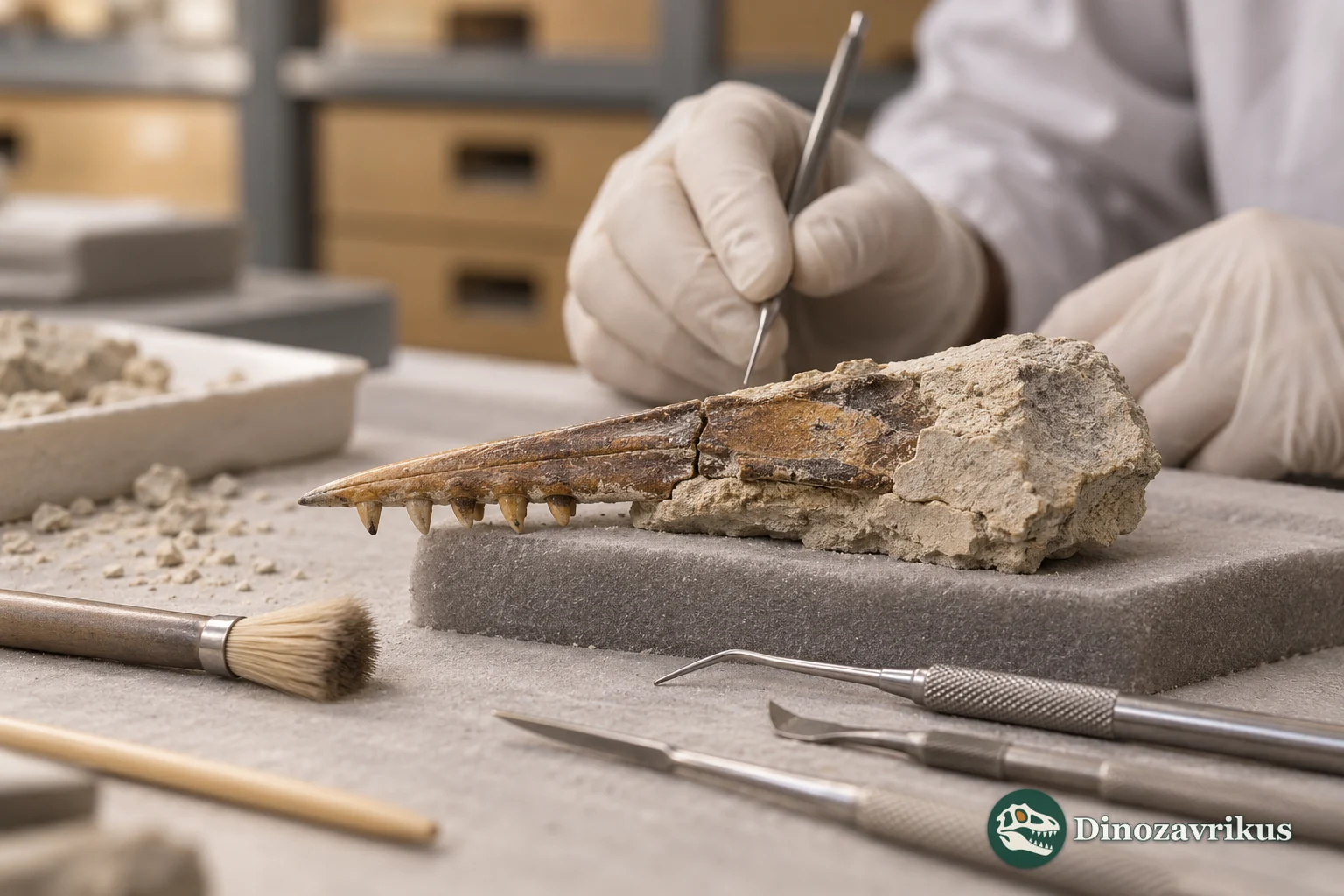
The 2020 emended diagnosis highlights a deep, oval depression above the first tooth pair, a sharp raised feature on the palate and the relative position of the second pair of alveoli. No single shape should be treated as a universal marker by itself. The diagnosis depends on comparing several preserved traits with other pterosaur jaws.
A 2026 change concerns a different specimen
IWCMS 2014.82, from the Wessex Formation of the Isle of Wight, was described as Uktenadactylus rodriguesae in the 2020 review. In 2026, Pêgas and Holgado reassessed that British rostrum and established the genus Tylodorhynchus for it. Differences in the palate and rostral surface separate it from the Texas holotype of U. wadleighi.
The revision changes the name applied to the British material, not the identity of SMU 73058. The secure record of Uktenadactylus therefore remains tied to its Albian Texas type specimen. It should not be described as a genus with a confirmed Texas-and-England range on the basis of the former assignment.
Paw Paw Formation and the wider setting
The Paw Paw Formation records an Early Cretaceous coastal and marine basin in what is now Texas. Its fossil assemblage supplies regional context, but species found in one formation may come from different layers, habitats and times. The deposit is not a snapshot of one community.
The long, toothed jaw is compatible with prey capture, but no stomach contents, associated prey or complete tooth rows have been reported for U. wadleighi. A marine or coastal setting does not prove that the animal hunted over open water, and the shape of the snout alone cannot establish an exact menu.
Why its wingspan is unknown
Only the front of the upper jaw is known. The wings, shoulder, torso, legs and tail of this species have not been described. Scaling a complete pterosaur from a related genus would depend on assumed proportions and could not be presented as a measured wingspan for Uktenadactylus.
The cover illustration uses a plausible toothed pterosaur silhouette to make the animal easier to picture. Its body outline, head beyond the preserved tip, pose, colour and landscape are artistic choices. The directly supported description remains narrower: a Texas pterosaur whose jaw characters allow it to be distinguished from similar forms.
Frequently asked questions
Where was Uktenadactylus found?
Its holotype SMU 73058 comes from the Paw Paw Formation in Tarrant County, Texas.
What fossils are known?
The secure material is an anterior rostrum with alveoli for eight pairs of upper teeth. No associated complete skeleton is known.
Why was it once called Coloborhynchus?
Lee named the species within Coloborhynchus in 1994. Rodrigues and Kellner reassigned it to the separate genus Uktenadactylus in 2008.
How large was Uktenadactylus?
A reliable wingspan and body length cannot be calculated from the single jaw fragment.