

Uromystrum was an Ordovician bathyurid trilobite. The furrows along the sides of its glabella, the raised middle of the head, curve inward near the eye lobes. That feature helped researchers reidentify a fragmentary head shield from Nevada.
Quick facts
| Group | Trilobita, Bathyuridae |
|---|---|
| Period | Ordovician |
| Genus named | Harry Whittington, 1953 |
| Type species | Uromystrum validum |
| Type beds | Table Head Group, western Newfoundland |
| Museum specimen | MCZ:IP:107716, Port au Port |
What can the fossils tell us?
The axial grooves bend at this level. The type species of Bathyurellus has more nearly parallel grooves.
The original Bathyurellus identification survives alongside the revised name of the Newfoundland specimen.
The rock formation was identified, while its original position within the section is unknown.
From Bathyurellus to Uromystrum
Elkanah Billings described Bathyurellus validus in 1865 from western Newfoundland. Harry Whittington established Uromystrum in 1953 with that species as its type. The resulting combination is Uromystrum validum.
Specimen MCZ:IP:107716 from the Port au Port area is held at Harvard's Museum of Comparative Zoology. Whittington figured it in his study. The museum catalogue also preserves its former identification, allowing both names to be traced to the same fossil.
Curved grooves beside the eyes
The axial furrows curve along both sides of the glabella. They pinch inward at the level of the eye lobes. In the type species the furrow by the occipital ring is faint along the middle and fades farther toward the sides.
The furrows of the type species of Bathyurellus are nearly parallel and give the glabella a more rectangular outline. Comparisons of these structures helped shift some previously uncertain specimens to Uromystrum.
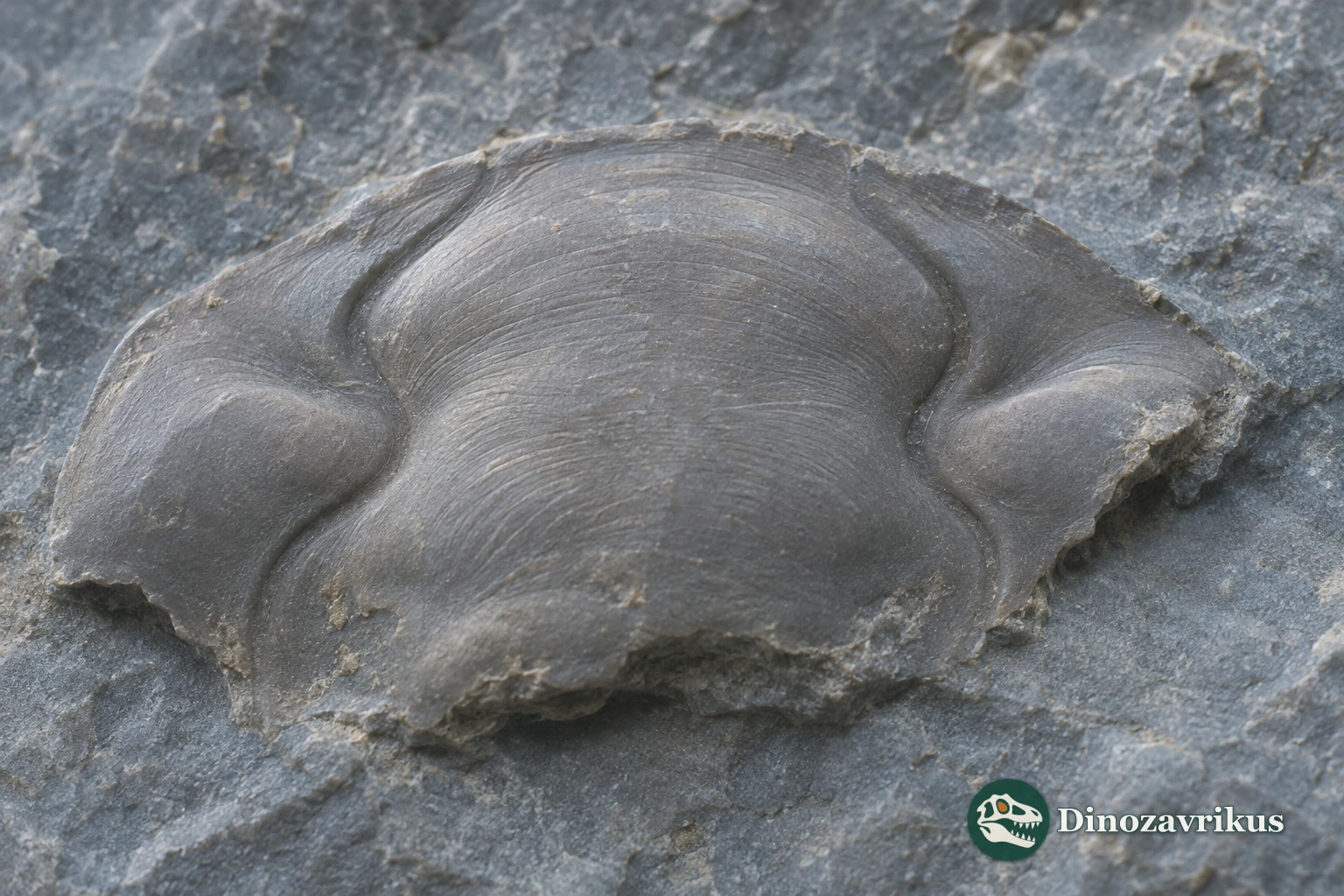
One head shield from a Nevada limestone
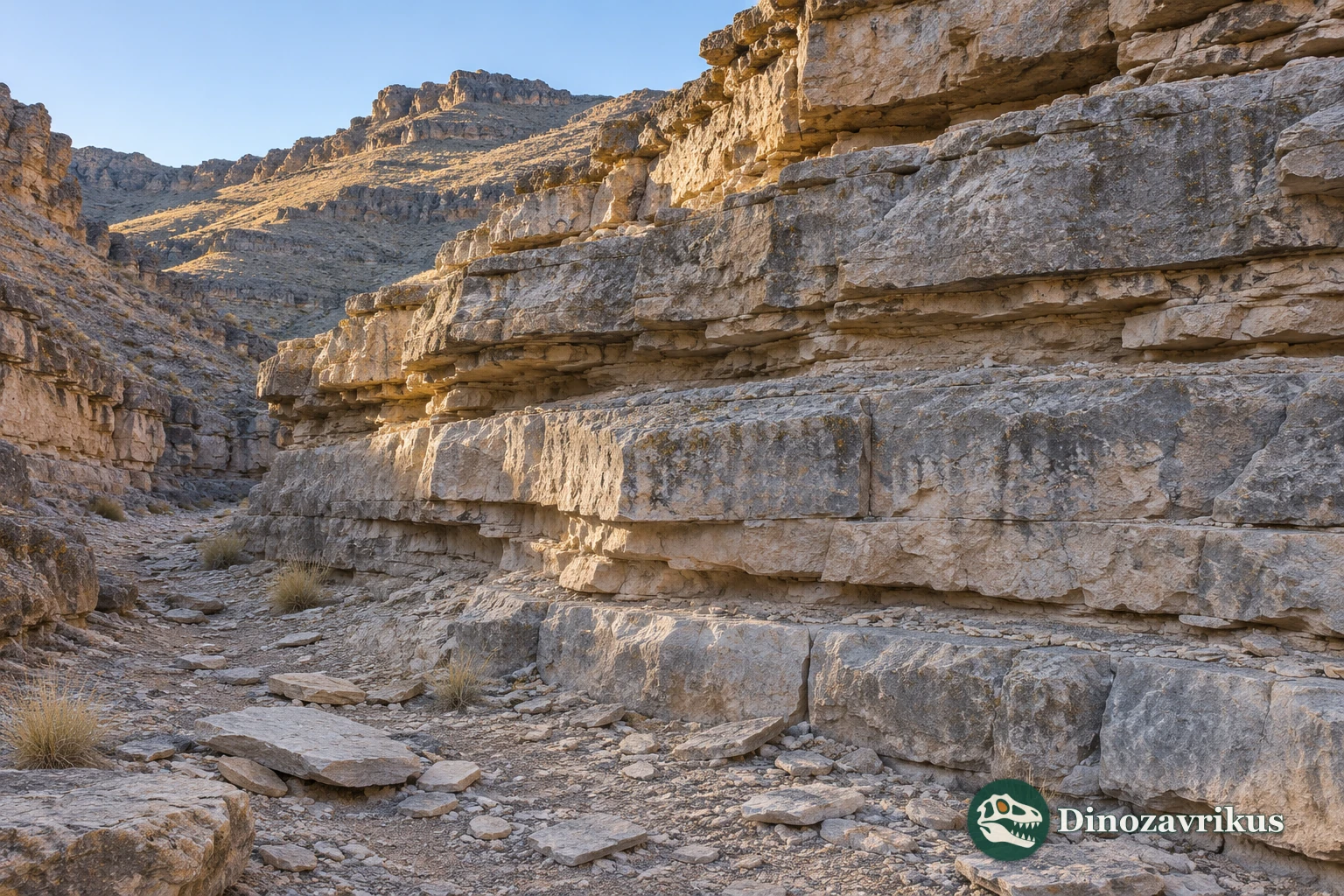
In the Whiterock Canyon Narrows of Nevada, a detached piece of Antelope Valley Limestone yielded a fragmentary cranidium. It was compared with material called Bathyurellus sp. 3 and reassigned to Uromystrum. Comparable material occurs in the same formation at Meiklejohn Peak.
The Nevada specimen was found in loose rock. It adds Uromystrum to the fauna documented from the Antelope Valley Limestone, while its original position in the section is unknown. The isolated cranidium gives little information about the rest of the shell in that form.
Frequently asked questions
Where was the type species found?
It came from the Table Head Group of western Newfoundland.
Who established Uromystrum?
Harry Whittington in 1953. Elkanah Billings had already described the type species.
What distinguishes its head from the type species of Bathyurellus?
The axial furrows curve, narrowing the glabella at the eye lobes.
Why is the original bed of the Nevada specimen uncertain?
The head shield was recovered from loose limestone rather than a bed in the section.