

Vastanavis is an early Eocene bird from western India. Its two named species were distinguished by the bones that braced the shoulder against the breastbone. Later finds included foot bones with features familiar from parrots, but those features have supported different evolutionary interpretations.
Quick facts
| Type species | Vastanavis eocaena |
|---|---|
| Family | Vastanavidae |
| Age | Early Eocene, Ypresian |
| Locality | Vastan, Gujarat, India |
| Holotype | GU/RSR/VAS 441 |
| Type material | Partial left coracoid, 39 mm as preserved |
What can the fossils tell us?
The second species differs in having a broader facet for the wishbone that projects farther on the lower side. Its type coracoid is also smaller.
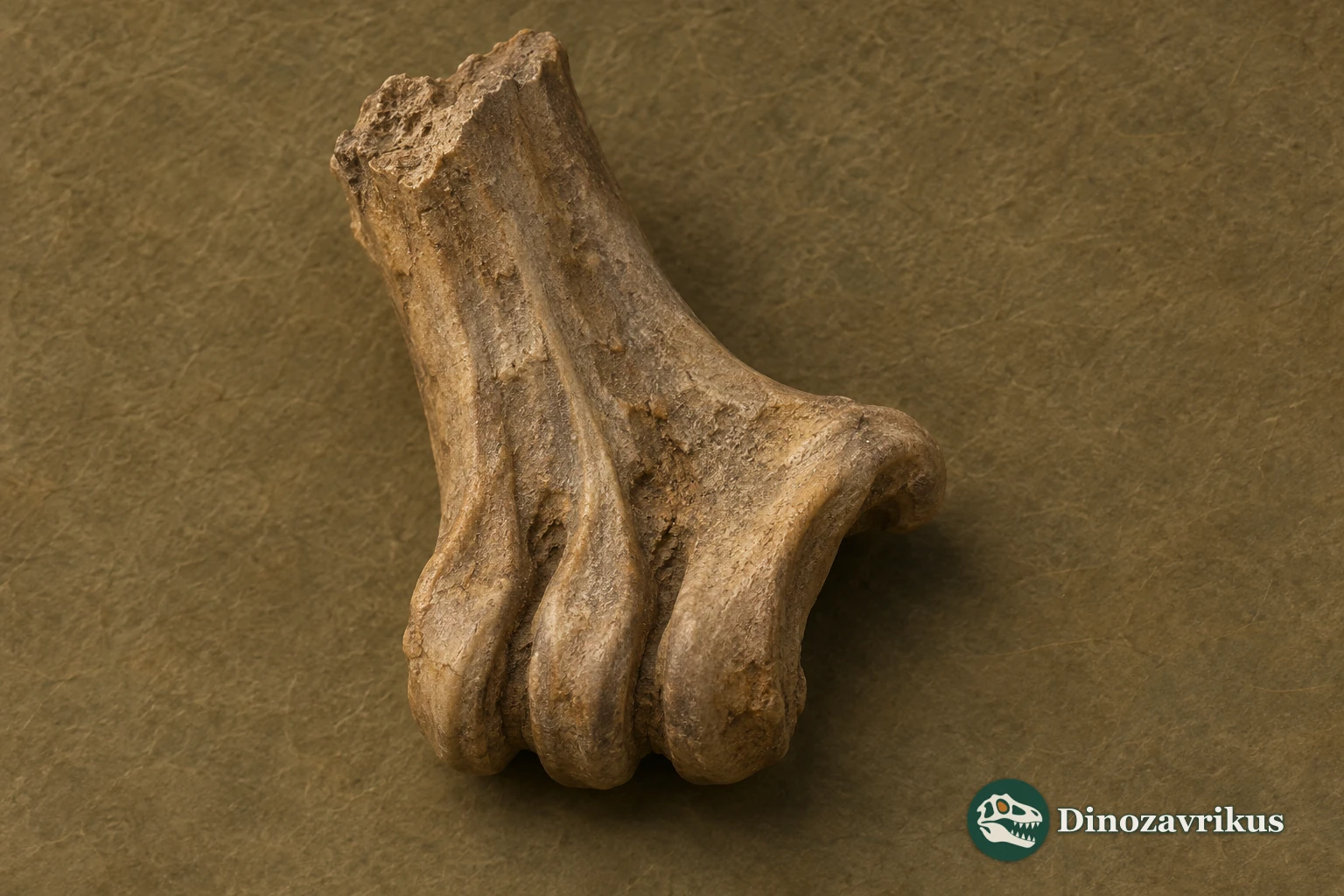
The lower end of the tarsometatarsus preserves a feature associated with a rear-facing fourth toe. The referred foot bones are difficult to assign to a species.
In a 2026 analysis the placement of Vastanavidae changed when the relationships of living birds were constrained. Similarity in the toes does not settle where the fossil family belongs.
From the Vastan lignite mine
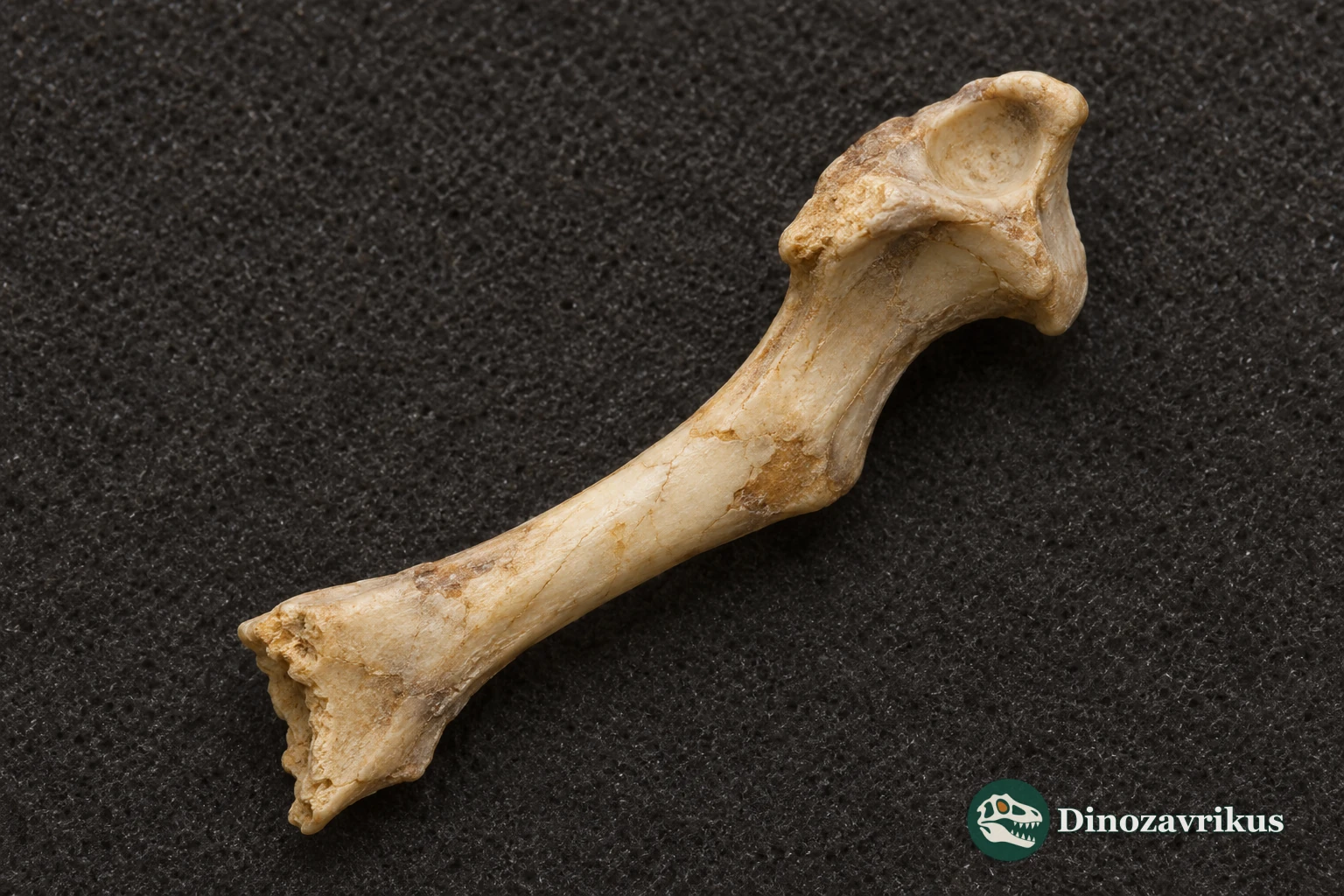
In 2007 Gerald Mayr, Rajendra Rana, Ashok Sahni and Thierry Smith named Vastanavis eocaena from the Cambay Formation. The bones were collected in the Vastan lignite mine northeast of Surat. The incomplete left coracoid GU/RSR/VAS 441 measures 39 mm as preserved. It has a rounded socket for the shoulder blade and lacks the nearby opening for the supracoracoid nerve.
New specimens led to the description of Vastanavis cambayensis in 2010. Its type, GU/RSR/VAS 1251, is an almost complete right coracoid about a fifth smaller than that of the type species. It has a broader facet for the wishbone and a shorter shoulder process that turns farther inwards. A humerus from the nearby Tadkeshwar mine can be assigned to the genus, while its species remains uncertain.
What the outer toe reveals
The first authors compared the coracoid to that of bustards. Foot bones later drew comparisons with fossil relatives of parrots. The accessory joint surface near the outer end of the foot is associated with the orientation of the fourth toe. A ridge on the underside of the bone helps distinguish it from Avolatavis.
Mayr’s 2026 analysis recovered different positions for Vastanavidae. Under a constraint based on living bird relationships, the family fell outside the group containing parrots and passerines. The foot suggests a way of gripping a perch or other support, but cannot establish diet or confirm a close relationship with parrots. A different fossil from Vastan, a small humerus, was compared with Paraprefica.
Frequently asked questions
Where did Vastanavis live?
In what is now western India during the early Eocene. The published finds come from Gujarat.
How can the two species be told apart?
The type coracoids differ in the shape of the shoulder process and the facet that contacted the wishbone.
Was Vastanavis an early parrot?
Its foot resembles that of parrots, but analyses disagree on whether the family was closely related to them.
Is its bill known?
No bill has been securely identified. Comparisons with parrots rely chiefly on bones of the foot and shoulder.