

Waltonavis was a small early Eocene bird from Walton-on-the-Naze, Essex. The partial skeletons preserve parts of the jaw joint, wing and foot. Gerald Mayr and Andrew Kitchener used those bones to distinguish two species and to compare the genus with the living cuckoo-roller of Madagascar.
Quick facts
| Type species | Waltonavis paraleptosomus |
|---|---|
| Proposed group | Early Leptosomiformes |
| Age | Early Eocene, early Ypresian |
| Locality | Walton-on-the-Naze, Essex, England |
| Holotype of type species | NMS.Z.2021.40.16 |
| Material | Partial skeletons of several individuals |
What can the fossils tell us?
In the type of W. paraleptosomus the coracoid measures 21.6 mm and the tarsometatarsus 21.3 mm. The second species has a visibly longer tarsometatarsus relative to its coracoid.
NMS.Z.2021.40.21 preserves an upper bill narrower than that of a living cuckoo-roller. It lacks enough of the critical bones for a species identification.
The quadrate has well separated articular heads. Features of the palate and shoulder show differences from the living bird.
Michael Daniels’s collection
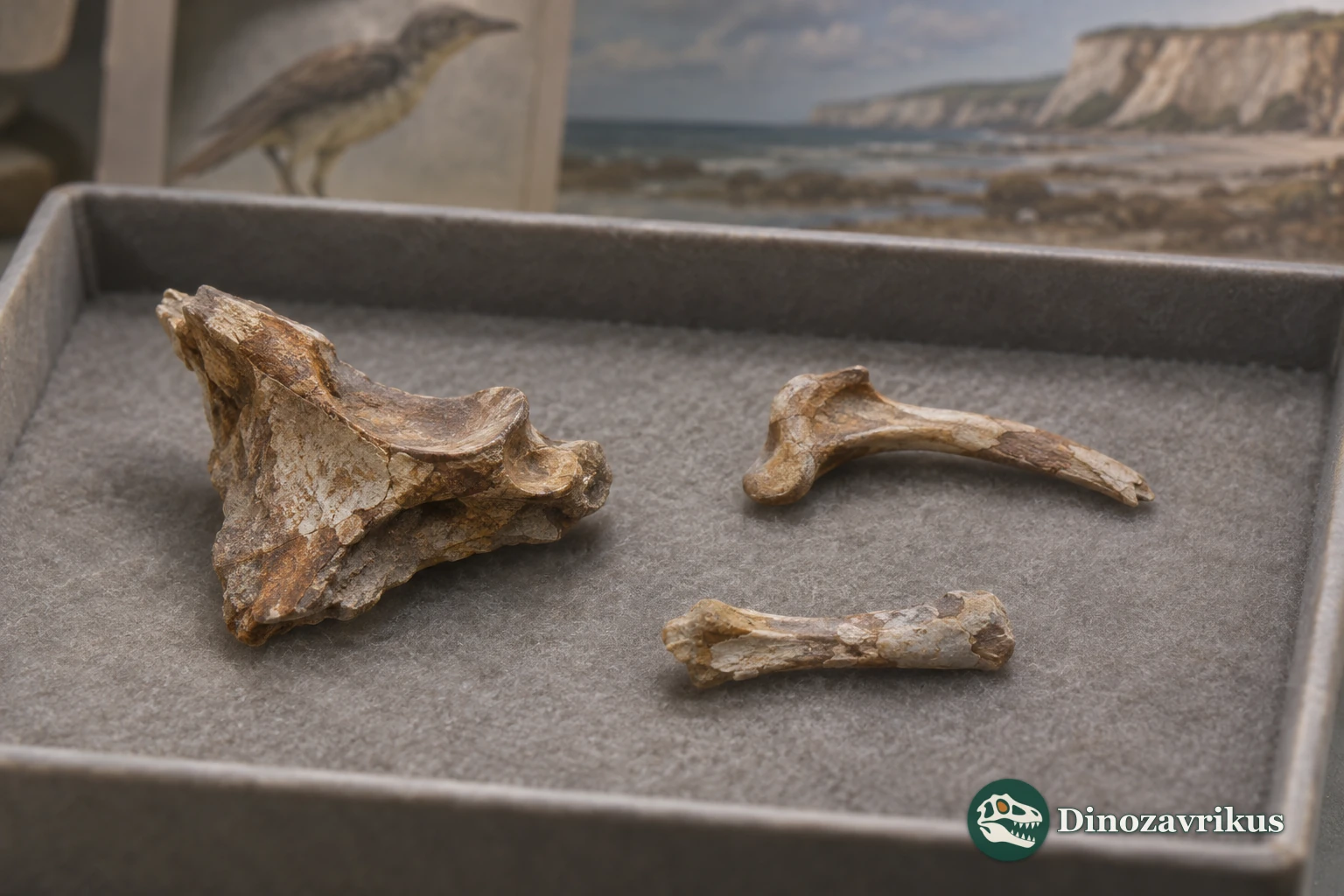
Daniels collected the type of Waltonavis paraleptosomus in 1988. It is held by National Museums Scotland as NMS.Z.2021.40.16. The skeleton preserves a quadrate and pterygoid, part of the shoulder blade and breastbone, a coracoid and parts of the feet. Another specimen, NMS.Z.2021.40.18, is the right tarsometatarsus of a juvenile.
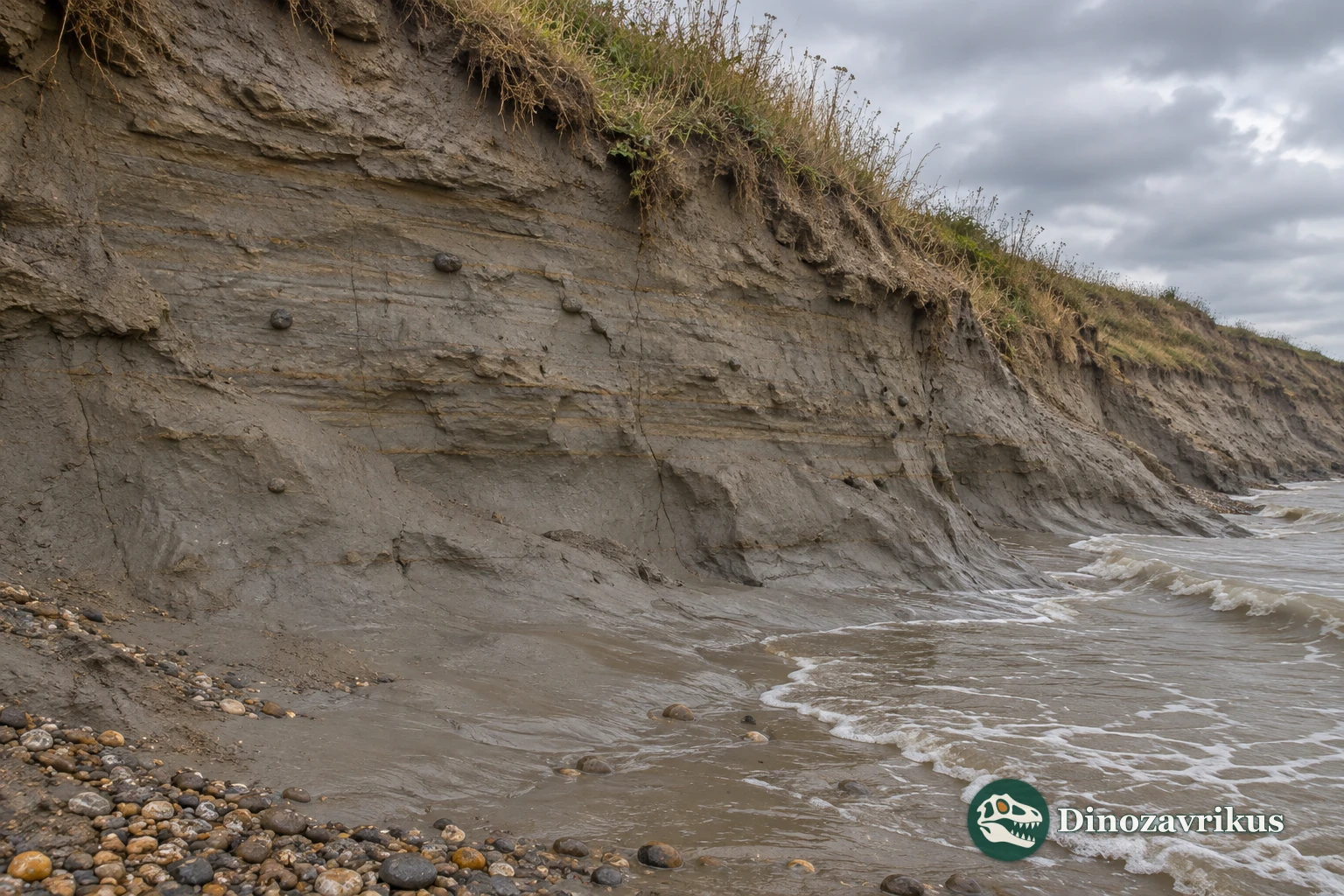
The fossils come from the Walton Member of the London Clay Formation. The marine deposits also contain the remains of land birds. The researchers compared Waltonavis with Plesiocathartes from the same deposits, including features of the foot and shoulder girdle.
Two species from the Walton Member
Waltonavis danielsi was named after the collector. Its type, NMS.Z.2021.40.20, was found in 1985 and preserves vertebrae and parts of the wings and legs. Its tarsometatarsus is more elongate with a relatively narrow upper end, and its coracoid is distinctly shorter than that bone. The two elements are closer to equal in length in the type species.
Some specimens lack one of the key bones or preserve only fragments. The specimen with a partial upper bill was therefore referred to the genus without a species name. The preserved outline was compared to that of a thrush. Several quadrate traits resemble those of cuckoo-rollers, though other differences in the palate and shoulder led the authors to interpret Waltonavis as a more distant relative.
Frequently asked questions
Who found Waltonavis?
Michael Daniels collected the fossils in Essex. Mayr and Kitchener described them as a new genus.
How were the two species distinguished?
The coracoid and the tarsometatarsus differ in their relative lengths. In W. danielsi the latter is appreciably longer.
Is its bill known?
Part of an upper bill survives. The specimen has not been assigned to either named species.
What living bird is it compared with?
The Malagasy cuckoo-roller. The jaw joint in particular has several comparable features.