

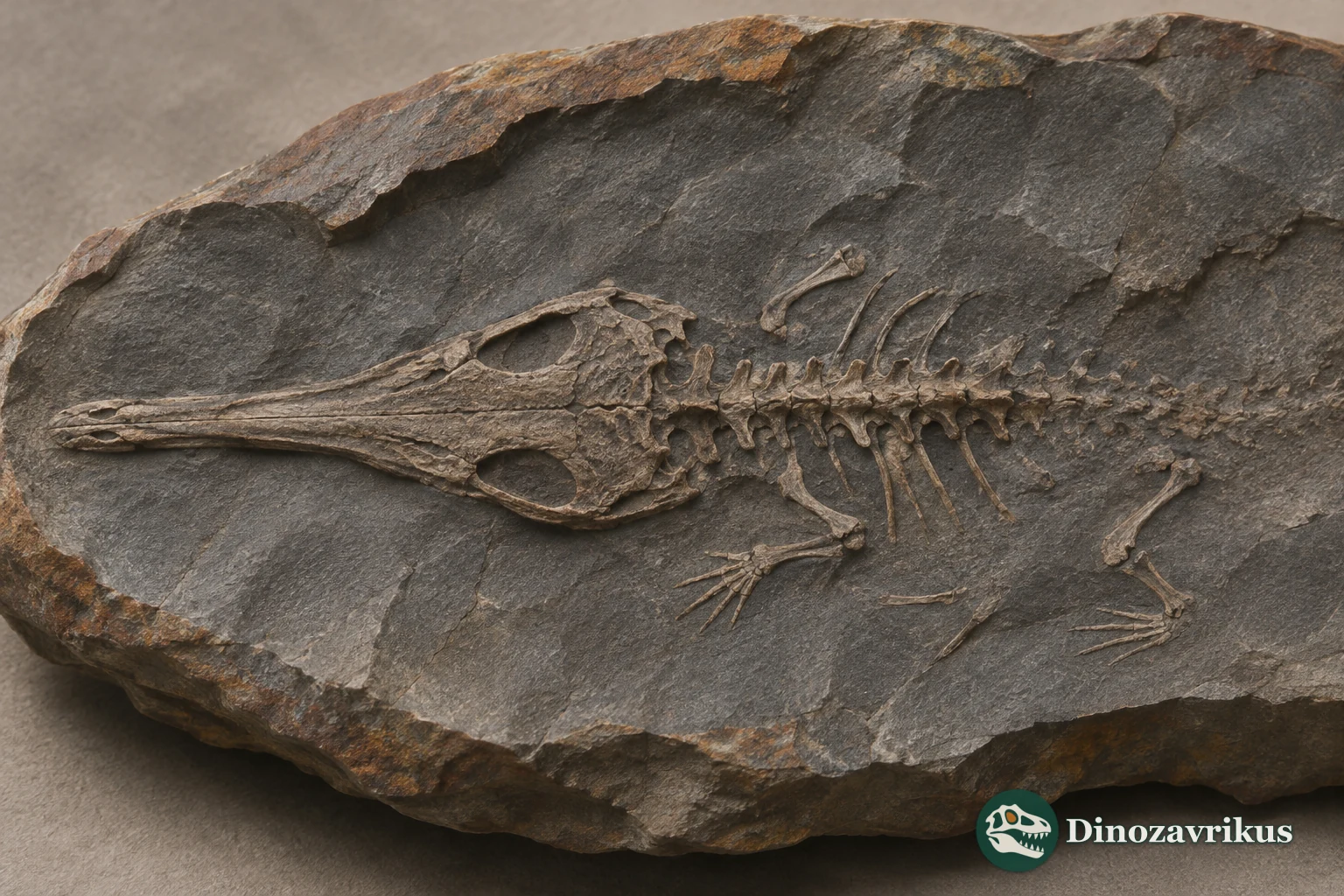
Wantzosaurus elongatus was an Early Triassic amphibian with a narrow, elongated snout. A juvenile from Ifasy-Anaborano in northwestern Madagascar preserves much of the skull with vertebrae and elements of the shoulder girdle, providing a rare look at the body of a trematosaurid.
Quick facts
| Group | Temnospondyls, trematosaurids |
|---|---|
| Age | Early Triassic, Induan |
| Region | Africa (northwestern Madagascar) |
| Type species | Wantzosaurus elongatus |
| Scientific name | Wantzosaurus |
| Diet | Undetermined |
What can the fossils tell us?
The adult type includes moulds of the skull roof and parts of the jaws. In juvenile RHMA01, skull bones occur alongside vertebrae, ribs and shoulder elements.
Small vertebral arches and an elongated trunk support a hypothesis of side-to-side swimming. The exact contribution of the tail and limbs is uncertain.
The teeth suit the capture of mobile prey. Neither its exact diet nor the range of salinities it could tolerate is established.
Two specimens from the Ambilobe region
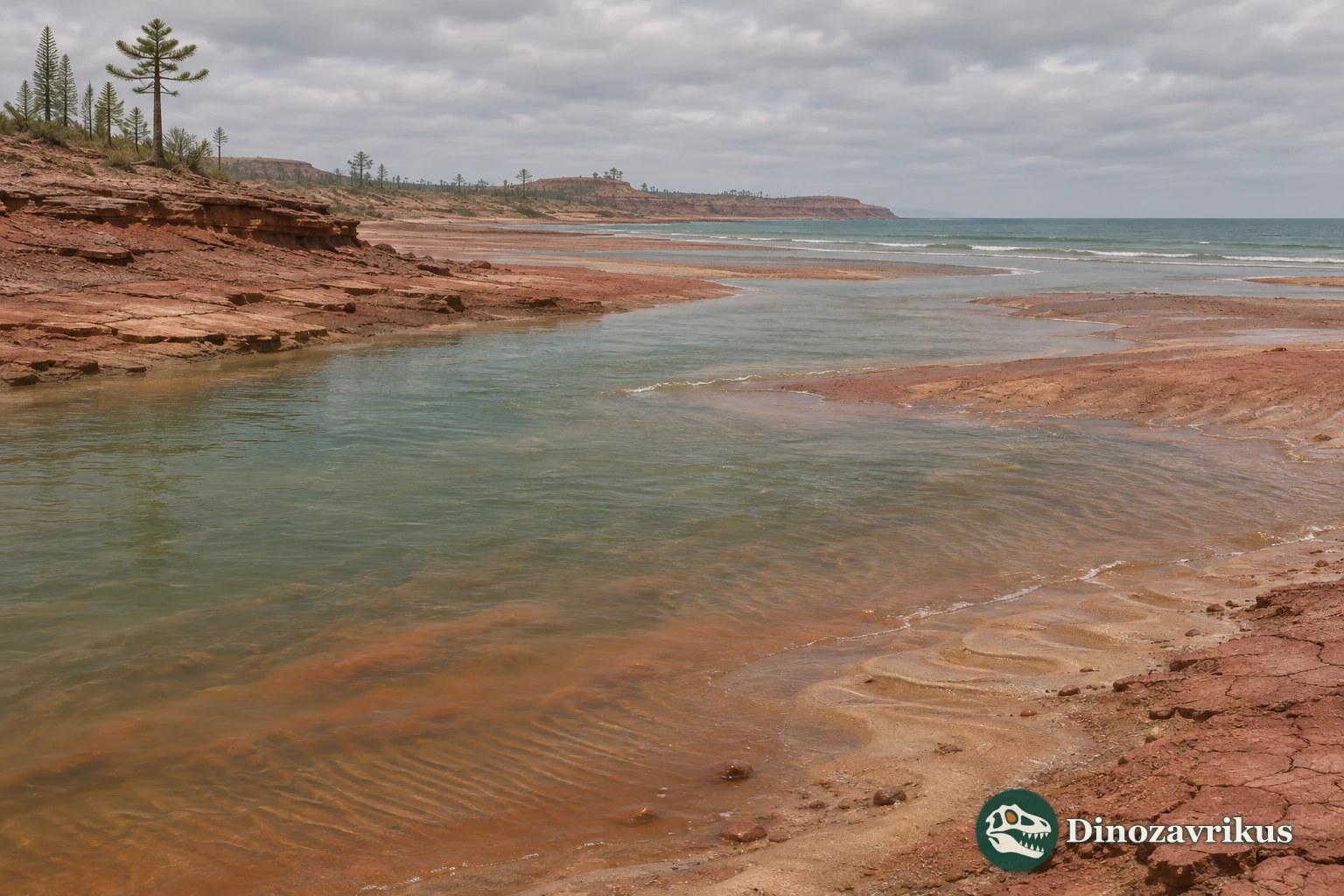
The type material, catalogued in Paris as MNHN.F.MAE3030, includes natural moulds of the skull roof, parts of the occiput, the jaws and the palate. It comes from Madiromiary and was described by Jean-Pierre Lehman in 1961. The articulated juvenile RHMA01 came from Ifasy-Anaborano. Both localities expose the Early Triassic Middle Sakamena Formation.
A snout that lengthened during growth
The juvenile has a relatively shorter snout and its eye sockets sit farther forward than in the adult type. The nostrils differ in shape and position too, and the skull surface bears finer ornament. Both specimens preserve well-developed lateral-line grooves, which traced a sensory system sensitive to water movement. One analysis of skeletal characters placed Greenland’s Stoschiosaurus nearest to Wantzosaurus.
Vertebrae and shoulder girdle
The juvenile preserves small vertebral arches and ribs that shorten toward the rear of the trunk. The interclavicle is an elongated, diamond-shaped plate. Two bones behind it were tentatively identified as parts of the shoulder. The known skeleton leaves the shape of the feet and the end of the tail uncertain.
How it may have swum and hunted
Sébastien Steyer proposed that the shape of the body would have allowed swimming by lateral undulation. Small conical teeth at the front of the jaws are angled backwards in a way that could help hold mobile prey. The geological setting and skeletal anatomy have prompted a marine or coastal interpretation. The fossils leave open how dependent Wantzosaurus was on seawater.
Frequently asked questions
When did Wantzosaurus live?
The type comes from deposits assigned to the Induan, the first age of the Triassic.
Where were the fossils found?
The described specimens are from the Ambilobe region of northwestern Madagascar.
What makes RHMA01 a juvenile?
It has a proportionally shorter snout, different proportions around the eyes and nostrils, and finer ornament on some skull bones.
How might Wantzosaurus have swum?
The proportions of its body suggest side-to-side undulation. The shape of the tail and the role of its limbs remain uncertain.