

Wimanius odontopalatus was a Middle Triassic ichthyosaur from the Besano Formation of Switzerland. It is known from one skull and lower jaw, not a complete skeleton. Teeth on the palatal bones helped distinguish the fossil, while later researchers have disagreed about where the genus belongs among ichthyosaurs.
Quick facts
| Type species | Wimanius odontopalatus Maisch & Matzke, 1998 |
|---|---|
| Age | Anisian, Middle Triassic |
| Locality | Monte San Giorgio, Ticino, Switzerland |
| Holotype | GPIT-PV-76272, skull and lower jaw |
| Repository | University of Tübingen collection |
| Estimated size | About 1.5 m by comparison with Mixosaurus, not a measured complete skeleton |
Evidence guide
GPIT-PV-76272 is the only recognized specimen. The tooth-bearing front of the skull is well preserved, while some bones behind it are missing. The holotype does not include a vertebral column or limbs.
The description records broadly similar teeth along the tooth rows and teeth on palatal bones. These are anatomical observations. Teeth alone do not establish an exact diet or feeding behaviour.
The Monte San Giorgio locality and Besano Formation place the fossil in the Anisian of the Middle Triassic. This is the age of the rock, not a life stage of the animal.
The genus has been discussed as an ichthyosaur of uncertain placement, a possible shastasaurid, or close to Besanosaurus. A 2024 review provisionally retained it as distinct pending reassessment.
A skull from the Tübingen collection
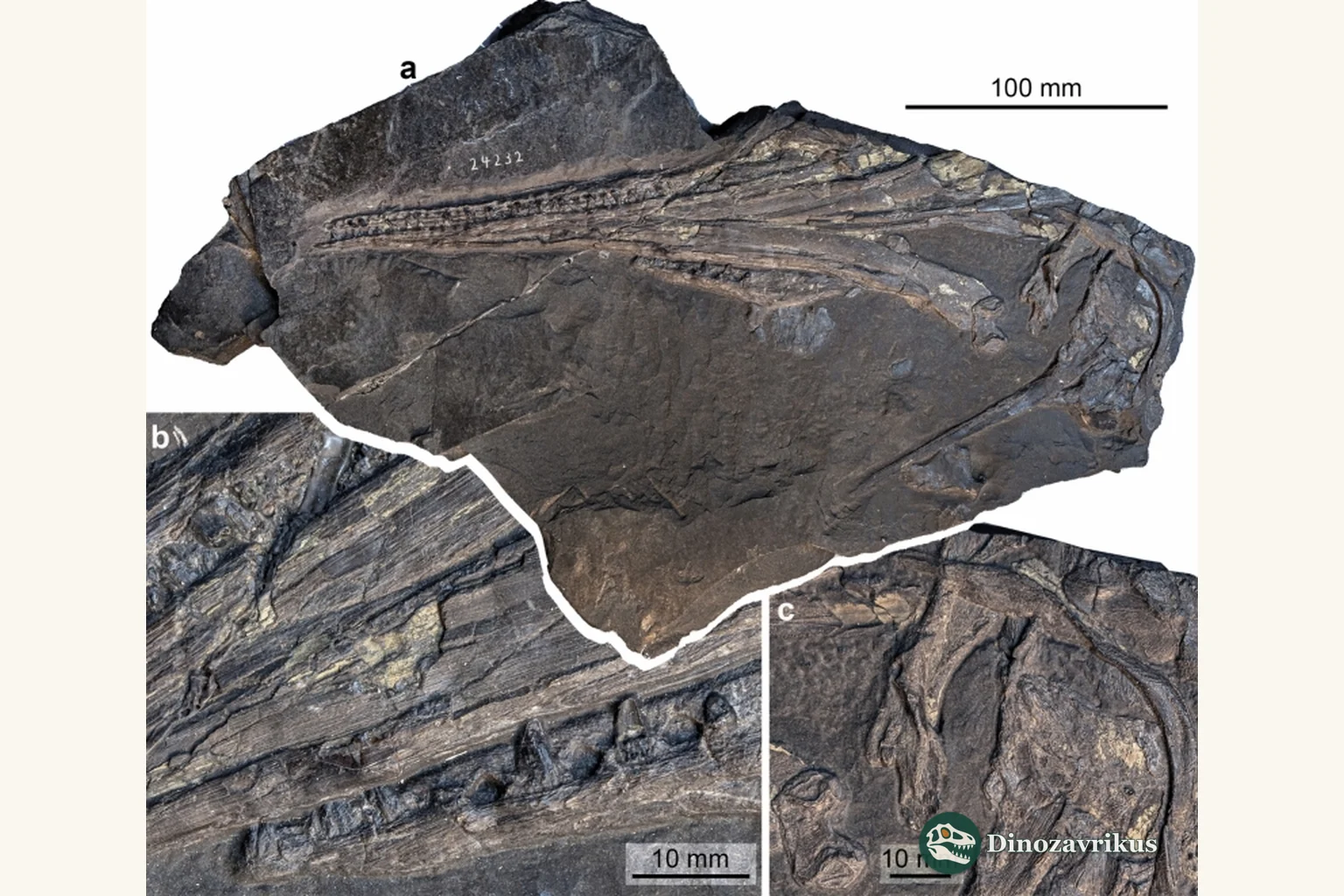
The holotype GPIT-PV-76272 came from Monte San Giorgio in the canton of Ticino, southern Switzerland. It is held in the palaeontological collection of the University of Tübingen. Michael Maisch and Andreas Matzke described a new genus and species from it in 1998; the researchers published a reconstruction of the skull and jaws the following year.
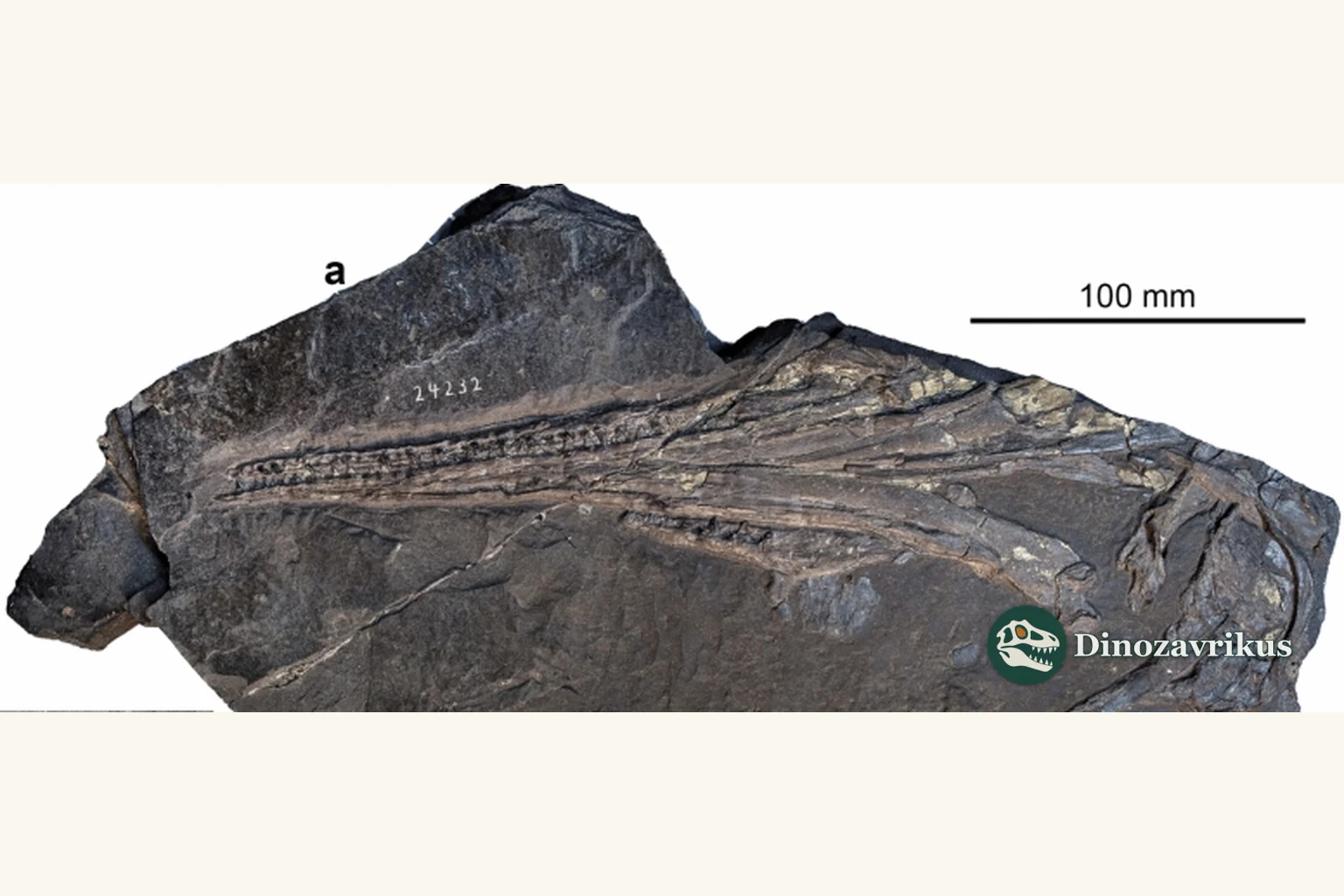
The preserved material allows researchers to examine the snout, tooth rows and some bones from the back of the skull. The tooth-bearing region is especially well represented, but some bones farther back are missing or disarticulated. The holotype has no associated vertebrae, fins or tail, so it is not a complete skeleton.
Palatal teeth and the limits of dietary evidence
The species name odontopalatus refers to teeth on the palate. The original description also notes an isodont dentition, with teeth broadly similar in form along the tooth row, and their implantation in tooth sockets. These features contribute to the diagnosis of the skull.
Palatal teeth do not by themselves reveal exactly how the animal fed. A secure account of prey or feeding mechanics would need additional evidence, such as stomach contents, distinctive bite traces or a broader set of comparative anatomy. The known Wimanius material does not identify a specific prey item or hunting technique.
Other ichthyosaurs are known from the same Middle Triassic region. Mixosaurus and the larger Besanosaurus offer useful comparisons, but their presence in the same geological area does not make either genus an ancestor of Wimanius.
Estimated size and the missing body
The skull suggests an animal around 1.5 metres long when compared with Mixosaurus cornalianus. This is a comparative estimate, not a direct measurement of a complete Wimanius skeleton. The trunk and tail are unknown, and body proportions may have differed from those of related forms.
The available material therefore cannot establish fin length, tail shape or swimming speed. Reliable information on growth, reproduction, colour and soft tissues has not been described for the genus. Any complete animal shown in artwork necessarily includes reconstructed features.
For a wider Triassic comparison, Cymbospondylus illustrates another ichthyosaur body plan from the period. Differences in fossil completeness limit direct comparisons.
Why the classification has changed
Maisch and Matzke named Wimanius from a combination of skull features in 1998. Later authors treated it as an ichthyosaur of uncertain placement, considered a possible relationship to shastasaurids, or discussed similarities to Besanosaurus. A synonymy with another genus was also proposed. The differing views reflect the limited evidence: only one incomplete skull is known.
A 2024 review of Swiss ichthyosaurs retained Wimanius odontopalatus provisionally as a distinct taxon pending a new evaluation. This is a working decision in that review, not a claim that the debate is closed. More complete material or a renewed comparison could change its placement.
Frequently asked questions
What does Wimanius odontopalatus mean?
The species name refers to teeth on the palatal bones, a feature noted in the description of the holotype.
Where was Wimanius found?
The only known specimen came from Monte San Giorgio in Ticino, Switzerland, in rocks of the Anisian Besano Formation.
Is a complete Wimanius skeleton known?
No. GPIT-PV-76272 consists of a skull and lower jaw; the holotype does not preserve the vertebral column, fins or tail.
How large was Wimanius?
A review gives an approximate comparison of about 1.5 metres based on Mixosaurus cornalianus. It is an estimate from the skull, not a measured complete Wimanius skeleton.