

Yaminuechelys was a long-necked freshwater turtle from Patagonia. A nearly complete Late Cretaceous skeleton preserves the skull, neck vertebrae and shell. Younger Paleocene fossils document another species of the same genus. Together they show that the Yaminuechelys lineage survived the extinction at the Cretaceous–Palaeogene boundary.
Quick facts
| Group | Turtles, side-necked chelids |
|---|---|
| Age | Late Cretaceous and early Paleocene |
| Region | South America, Patagonia |
| Carapace length | 41.8 cm in the type specimen |
| Type species | Yaminuechelys gasparinii |
| Scientific name | Yaminuechelys |
| Diet | No direct dietary evidence |
What can the fossils tell us?
Elongated neck vertebrae in the type skeleton give direct evidence of the neck’s proportions.
Fine grooves partition the surface of many bones into small polygons. Details of the pattern help distinguish species.
Cretaceous fossils and the early Paleocene species establish that the lineage existed on both sides of the mass extinction.
A skeleton from Yaminué Creek
The type specimen of Yaminuechelys gasparinii, MPA 86-86-IC, comes from the Allen Formation near Yaminué Creek in Río Negro Province, Argentina. Its carapace measures 41.8 cm long. Marcelo de la Fuente, France de Lapparent de Broin and Teresa Manera de Bianco described the new genus and species in 2001. The genus name refers to the locality, and the species name honours palaeontologist Zulma Gasparini.
The neck, the shell and their clues to ancestry
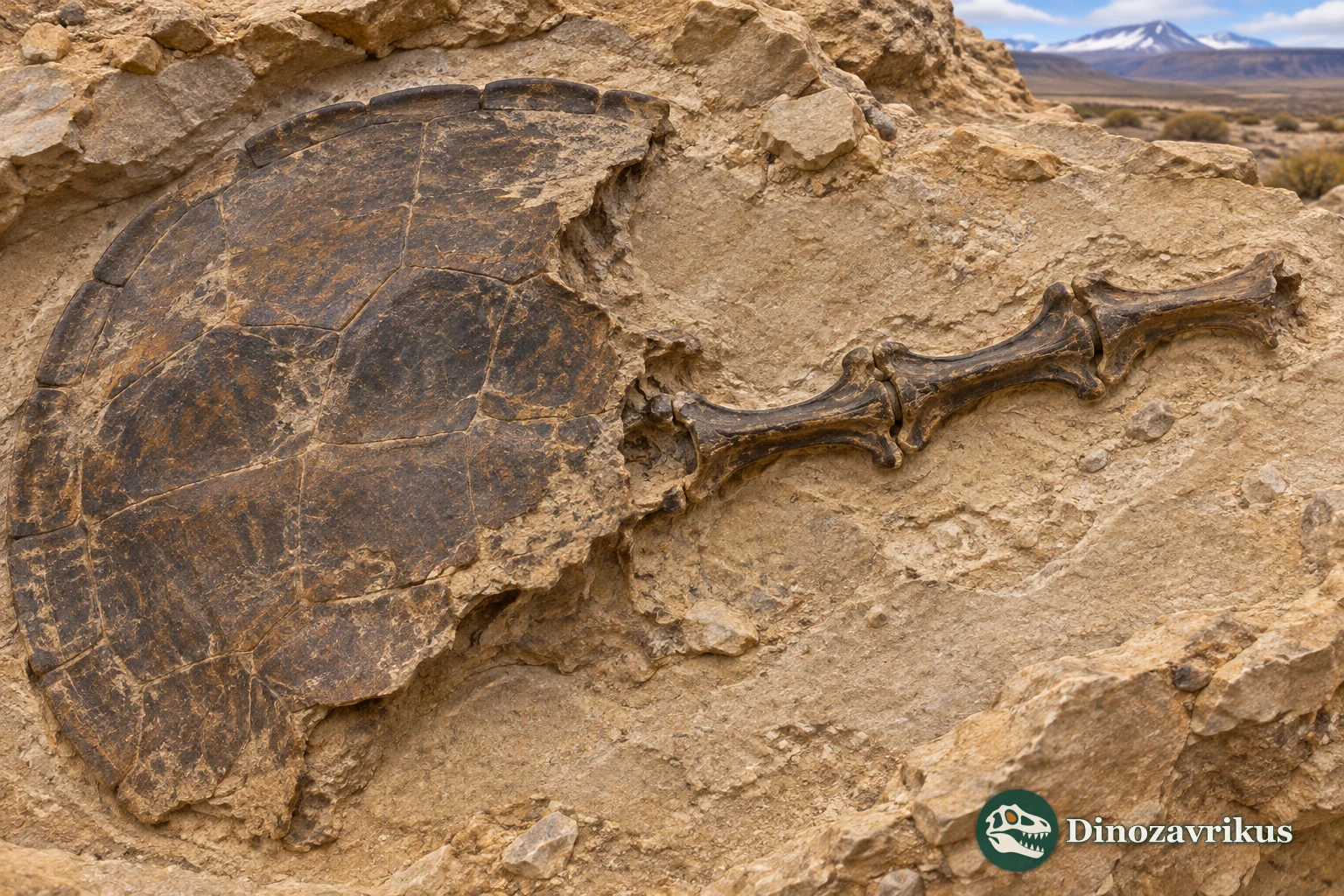
Elongated cervical vertebrae establish that the neck was long. Skull and neck characters link the fossil to the living South American chelids of the genus Hydromedusa in some family trees. Chelids share a pelvis joined to the shell with other side-necked turtles. Neochelys, from the Eocene, illustrates this feature in a different side-necked lineage. On many Yaminuechelys bones, fine grooves form a mosaic of polygons. Shell shape and sculpture helped distinguish Y. sulcipeculiaris from the Late Cretaceous La Colonia Formation.
Shells after the mass extinction
The early Paleocene Salamanca Formation in Chubut yielded more complete shells of a large turtle named by Karl Staesche in 1929 from more limited material. In 2005, Paula Bona and Marcelo de la Fuente compared the material and transferred the species to Yaminuechelys as Y. maior. Later work compared Campanian material from the Anacleto Formation with it as Yaminuechelys aff. maior. That qualifier records a close resemblance. A secure identification of the Cretaceous material at species level requires further diagnostic features.
Distribution and diet
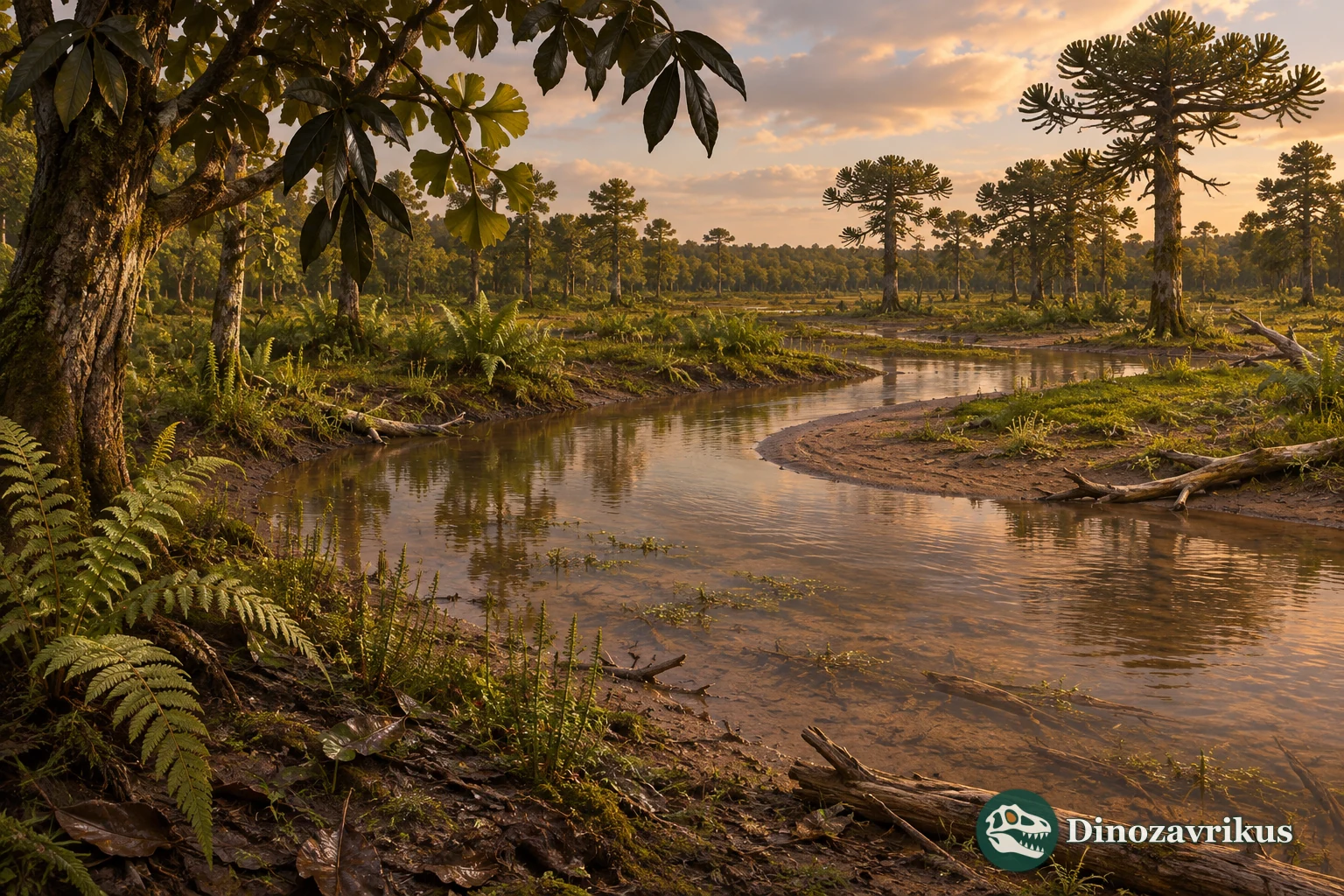
The principal specimens come from Argentine Patagonia. Shell fragments assigned to Yaminuechelys without a species identification have also been reported from the Río de las Chinas Valley in Chilean Patagonia. Comparison with living freshwater chelids informs its general appearance and locomotion. Direct evidence for its diet and how it obtained food is still missing.
Frequently asked questions
How do we know Yaminuechelys had a long neck?
Elongated vertebrae document the proportions directly. In the type skeleton, neck bones were found together with the skull and shell.
Where was the type specimen found?
It comes from the Late Cretaceous Allen Formation near Yaminué Creek in Río Negro Province, Argentina.
Did Yaminuechelys survive the end-Cretaceous extinction?
The lineage is known from both Late Cretaceous and early Paleocene fossils. Shells of the Paleocene species Yaminuechelys maior occur in the Salamanca Formation.
What pattern is preserved on the shell?
Fine grooves often divide the bone surface into a mosaic of polygons. Details of that sculpture differ among species.