

Yarengia was an Early Triassic temnospondyl from northeastern European Russia. The genus and species were named from a fragment of the skull base. Ridges and contacts on bones deep in the palate help distinguish it from related amphibians.
Quick facts
| Group | Temnospondyls, trematosauroids, yarengiids |
|---|---|
| Age | Early Triassic, late Olenekian |
| Region | Europe, Russia (Arkhangelsk Oblast) |
| Type species | Yarengia perplexa |
| Scientific name | Yarengia |
| Diet | Exact prey is unknown |
What can the fossils tell us?
The holotype preserves parts of the base of the skull, including regions of the parasphenoid, pterygoid and occipital bones.
Comparison with other trematosauroids showed that some specimens once assigned to Yarengia belonged to different genera.
The holotype lacks the snout, lower jaws and trunk. It does not establish total body length or what the animal ate.
Where the holotype came from
Mikhail Shishkin described Yarengia perplexa in 1960. The type specimen, PIN 1584/5, comes from the Yarenga locality in the Lensky District of Arkhangelsk Oblast. The fossil-bearing beds belong to the Gam Formation. Their correlation with the Gamian Horizon places the find in the late Olenekian of the Early Triassic.
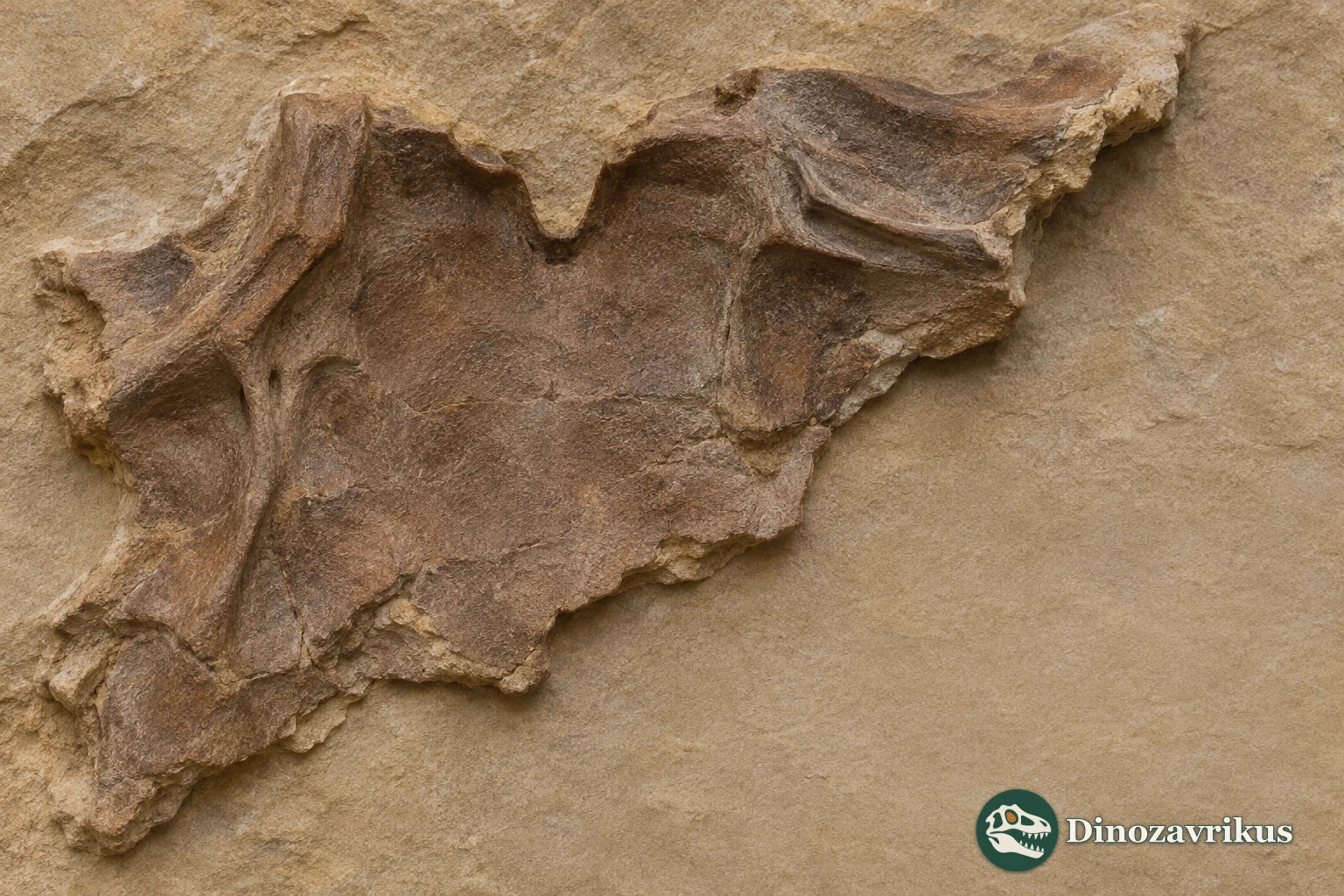
Details on the underside of the skull
The parasphenoid, a central bone at the base of the skull, has an elongated body. Its surface carries conspicuous curved ridges associated with muscle attachment. Ridges and grooves dominate the pterygoid, while small palatal toothlets are confined to part of its surface. The base of the exoccipital extends well forwards. The combination of these features helps identify the specimen among other trematosauroids.
Why the list of fossils became shorter
Some fragments from other localities were assigned to Yarengia on the basis of similar palate bones. The Zhezhart specimen was later reassigned to Trematosaurus. Novikov interpreted the Astrakhanovka II fragment as a probable trematosaurid. His revision therefore retained the holotype as the only secure material. Researchers rely chiefly on the lower jaw to identify Qantas, another Early Triassic temnospondyl, so the two taxa were established from different parts of the skull.
Frequently asked questions
Where was Yarengia found?
It comes from the Yarenga locality in the Lensky District of Arkhangelsk Oblast, Russia.
When did Yarengia live?
The fossil is from the late Olenekian of the Early Triassic.
What fossil was used to name Yarengia?
The holotype is a fragment of the skull base, preserving bones of the palate and the rear of the skull.
Can its appearance be reconstructed accurately?
The fragment comes from deep in the skull. It does not reveal the outline of its head, the proportions of its limbs or its overall length.