

Yvridiosuchus boutilieri was a Middle Jurassic marine crocodyliform with a moderately long snout and stout, blunt-tipped teeth. The species was first described from a French skull fragment. A skull from Oxfordshire later became the reference specimen for its name.
Quick facts
| Species | Yvridiosuchus boutilieri |
|---|---|
| Age | Bathonian, Middle Jurassic |
| Localities | Calvados, France and Oxfordshire, England |
| Neotype | OUMNH J.1401, incomplete skull |
| Group | Teleosauroidea, Machimosaurini |
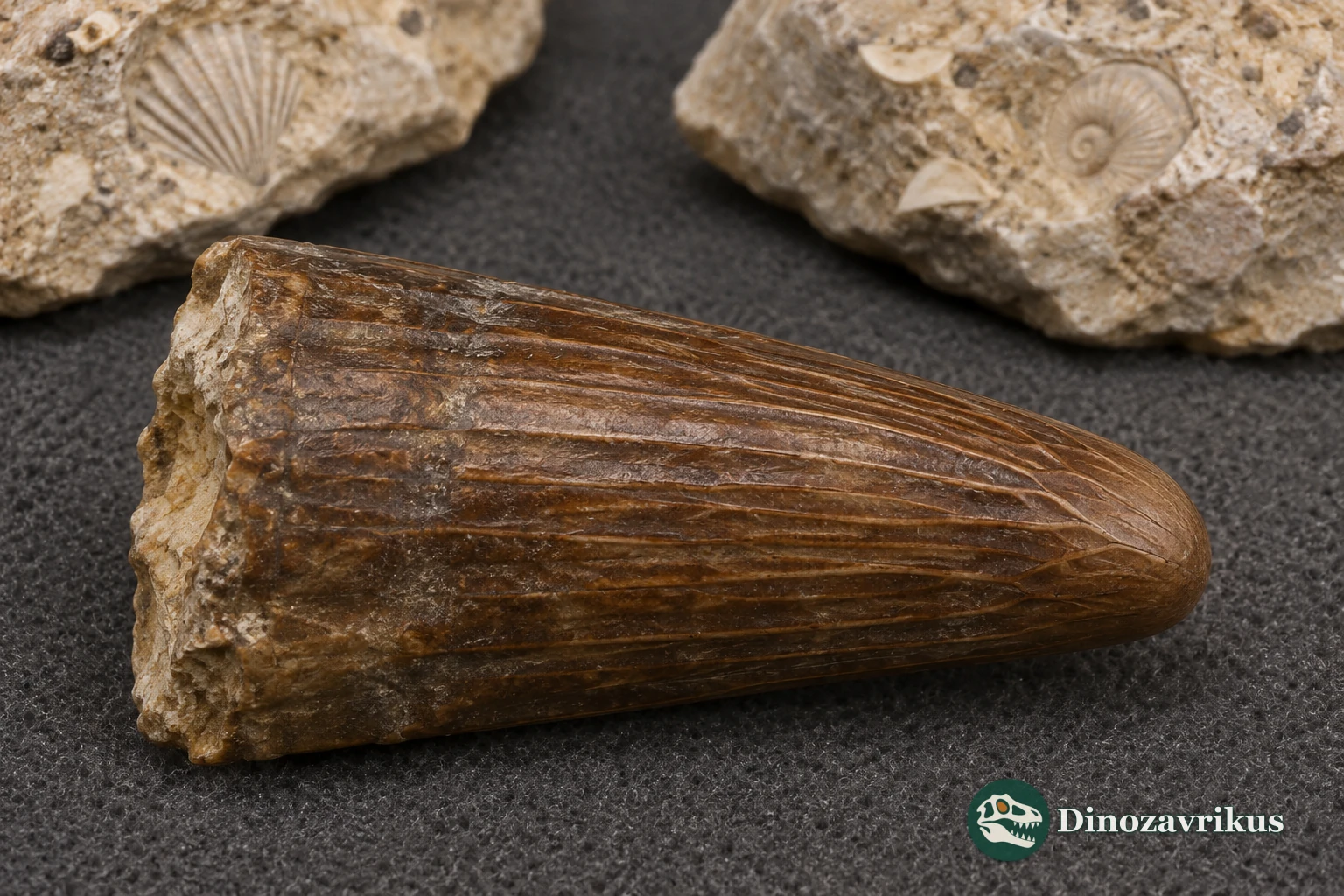
| Teeth | Robust conical crowns |
What can the fossils tell us?
The neotype comes from Enslow Bridge and had already been compared with the French material in the nineteenth century. It provides a physical reference following the loss of the original specimen.
The ridges join near the tips of the teeth. The shape is consistent with processing more resistant prey, but it cannot identify particular prey species.
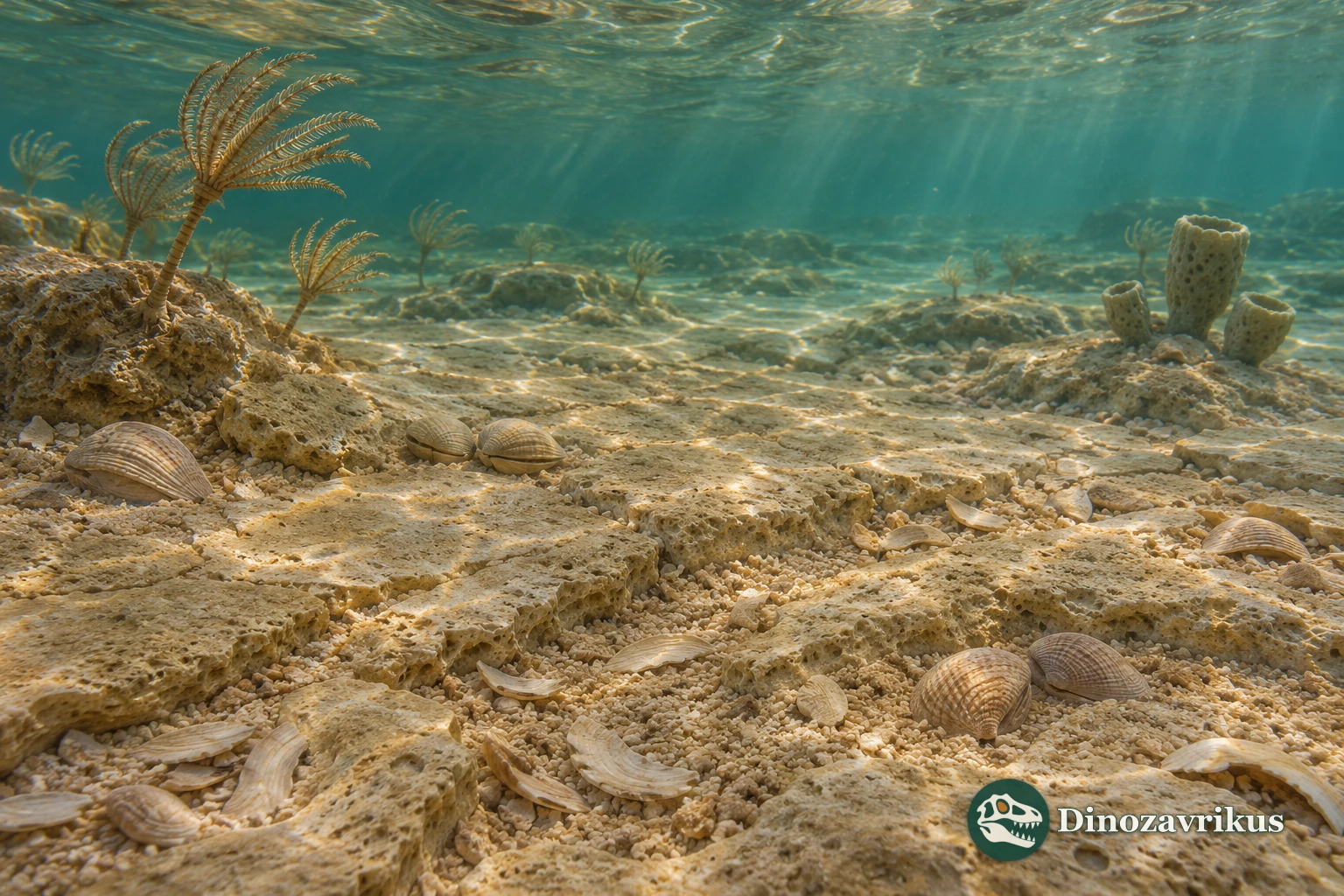
Bathonian rocks establish the age and marine setting of the English fossils. They give no measure of how far the animals normally travelled offshore.
From a lost French fossil to a neotype
Eugène Eudes-Deslongchamps described the species from a skull fragment found in Calvados. He compared it with an English skull and regarded them as the same species. The original French fossil is presumed to have been destroyed during the bombing of Caen in 1944.
Michela Johnson, Mark Young and Stephen Brusatte established the genus Yvridiosuchus in a revision published online in 2019. They designated the incomplete Oxford skull OUMNH J.1401 from Enslow Bridge as the neotype. Bones behind the eye sockets are missing. Other skulls and pieces of lower jaw document more of the anatomy. The revision treated Teleosaurus brevidens and Steneosaurus meretrix as junior synonyms.
A robust skull and blunt crowns
The skull has conspicuous pits, grooves and openings for nerves and blood vessels, especially towards the front of the snout. Small openings lie ahead of the eyes. The nostrils opened upwards, and the jaws carried thick, conical teeth.
The ridges on the crowns branch and join near their blunt tips. They resemble those of the later Lemmysuchus, another member of Machimosaurini. The stout crowns led the authors to suggest that Yvridiosuchus could handle relatively large or resistant prey. The available specimens contain no direct evidence of particular meals.
The Bathonian carbonate shelf
The English neotype comes from marine limestone of the Cornbrash Formation. Long, slender-snouted teleosauroids also occur in roughly contemporaneous deposits in western Europe. The differences in skull proportions and dentition suggest a range of feeding strategies among these Middle Jurassic crocodyliforms.
Frequently asked questions
Why does the species have a neotype?
The original French specimen was lost. A surviving English skull now serves as the name-bearing specimen.
What does Yvridiosuchus mean?
The name means hybrid crocodile and refers to a combination of anatomical traits.
How do its teeth differ from those of slender-snouted teleosauroids?
They have thick conical crowns with blunt tips and branching enamel ridges near the apex.
What did Yvridiosuchus eat?
The teeth are compatible with handling relatively large or hard prey. The fossils do not identify its actual prey.