

Zhyraornis was a bird from the Late Cretaceous of what is now the central Kyzylkum Desert in Uzbekistan. Its two named species are based on pieces of the synsacrum, the part of a bird's backbone where several vertebrae fuse and attach to the pelvis.
Quick facts
| Group | Birds (Aves), precise relationships uncertain |
|---|---|
| Age | Late Cretaceous (Turonian) |
| Region | Central Asia (Uzbekistan, Kyzylkum) |
| Diet | Exact diet unknown |
| Type species | Zhyraornis kashkarovi |
| Holotype | TsNIGR 42/11915, partial synsacrum |
| Deposits | Bissekty Formation |
What can the fossils tell us?
The type fragment preserves a run of at least seven fused vertebrae. Its missing rear end prevents a complete count.
A second piece preserves a differently shaped front and thicker projections. These were used to distinguish a second species, although neither fossil is complete.
The synsacra provide features for comparing the pelvic region. Independent evidence from connected parts of the skull, shoulder or limbs is scarce.
Two synsacra from Dzharakuduk
Lev Nessov described Zhyraornis kashkarovi in 1984 from TsNIGR 42/11915. This partial synsacrum includes at least seven fused vertebrae. It widens gradually at the front, and the largest lateral projections angle away from the long axis.
In 1992 Nessov named Zhyraornis logunovi from specimen PO 4600. It has at least five fused vertebrae, a more abrupt widening at the front and thicker projections. Both specimens lack the very back of the bone. Their preserved vertebrae therefore provide minimum counts.
The limits of a family assignment
Nessov associated Zhyraornis with ichthyornithiform birds. Evgeny Kurochkin discussed possible enantiornithine affinities and later expressed doubts about that assignment. Isolated shoulder bones once referred to Zhyraornis were found separately from the synsacra. The evidence for a narrower evolutionary placement remains inconclusive.
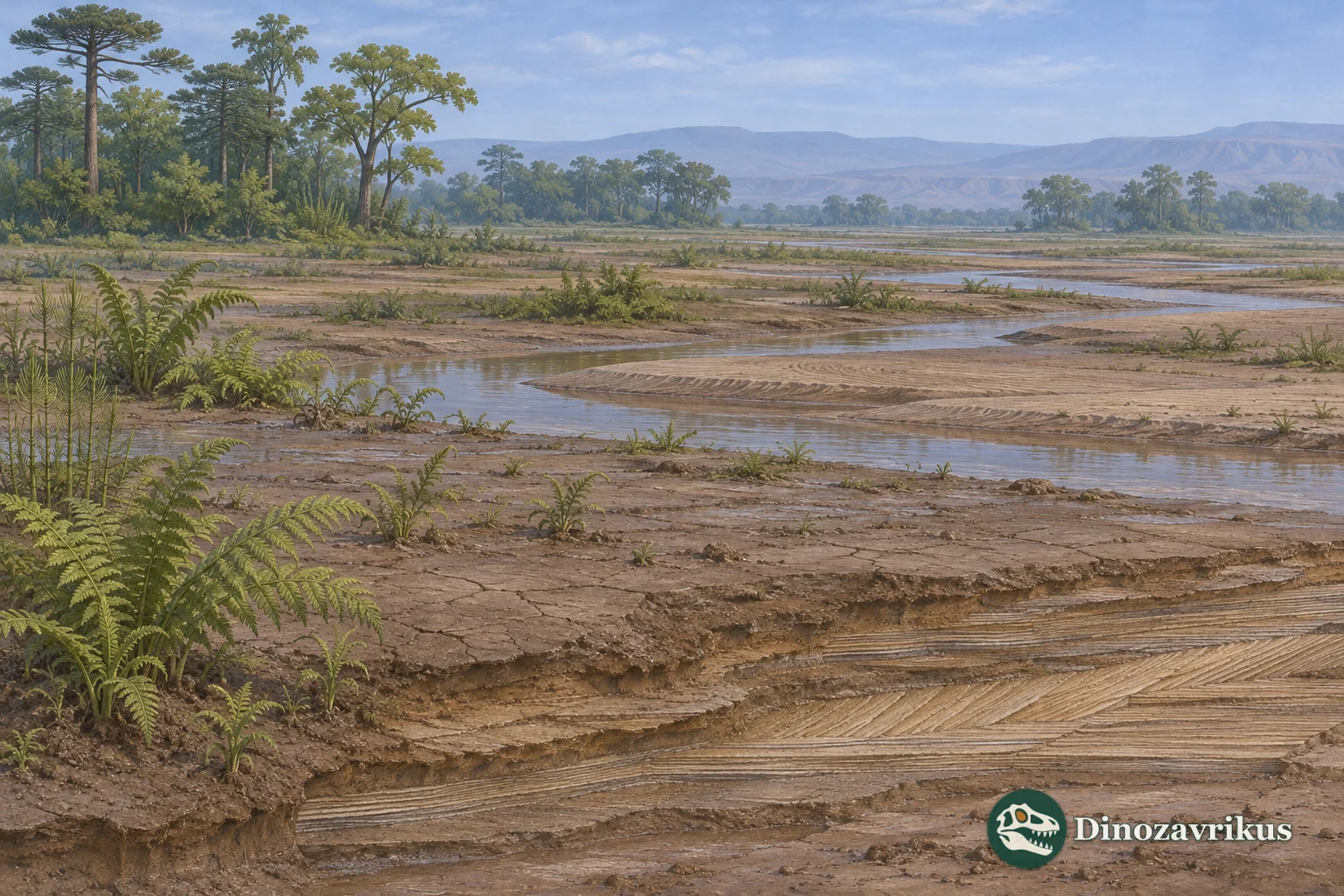
Recent studies date the Bissekty deposits at Dzharakuduk to the Turonian, although older work used a Coniacian age. The same beds yielded Explorornis, known mainly from parts of the shoulder girdle. The different bones document avian diversity without providing much anatomical overlap for direct comparison with Zhyraornis.
Frequently asked questions
Which bones are known for Zhyraornis?
The two principal fossils are pieces of the synsacrum, each with a series of fused vertebrae.
Where did the two specimens come from?
Both type fossils were found at Dzharakuduk in the central Kyzylkum region of Uzbekistan.
How were the two species distinguished?
The front of each synsacrum widens differently, and the projections of bone differ in thickness and orientation.
What did Zhyraornis eat?
Its type material preserves no jaws or other direct evidence of the diet. The vertebrae cannot identify the food it ate.