

Albertogaudrya is a South American astrapothere known chiefly from Eocene teeth. Its history illustrates how a fragmented museum record can change as specimens are compared: several early names were later brought together, while a recently described tooth from Chile extended the known range of A. unica farther south. No complete skeleton of the genus is known.
The genus belongs in the ancient mammals catalogue. Comparisons with Astrapotherium and Trigonostylops help place it among South American astrapotheres; they do not establish a direct ancestor–descendant sequence.
Quick facts
| Scientific name | Albertogaudrya Ameghino, 1901; type species A. unica |
|---|---|
| Group | Astrapotheria; internal placement has varied among classifications |
| Time | Middle Eocene, with some records near the early Late Eocene |
| Region | Patagonia in Argentina and Chile |
| Type material | Dental specimens from Chubut; no complete skeleton |
| Recent record | An isolated left lower molar from the Río Turbio Formation |
| Body mass | No reliable species-level estimate is established |
What do the teeth show?
Simpson's 1967 revision placed several names established by Ameghino and Roth under Albertogaudrya unica. Lectotypes MACN-A 12000 and 12001 come from Chubut, but their original collecting localities are unknown. They are not parts of a single complete skeleton.
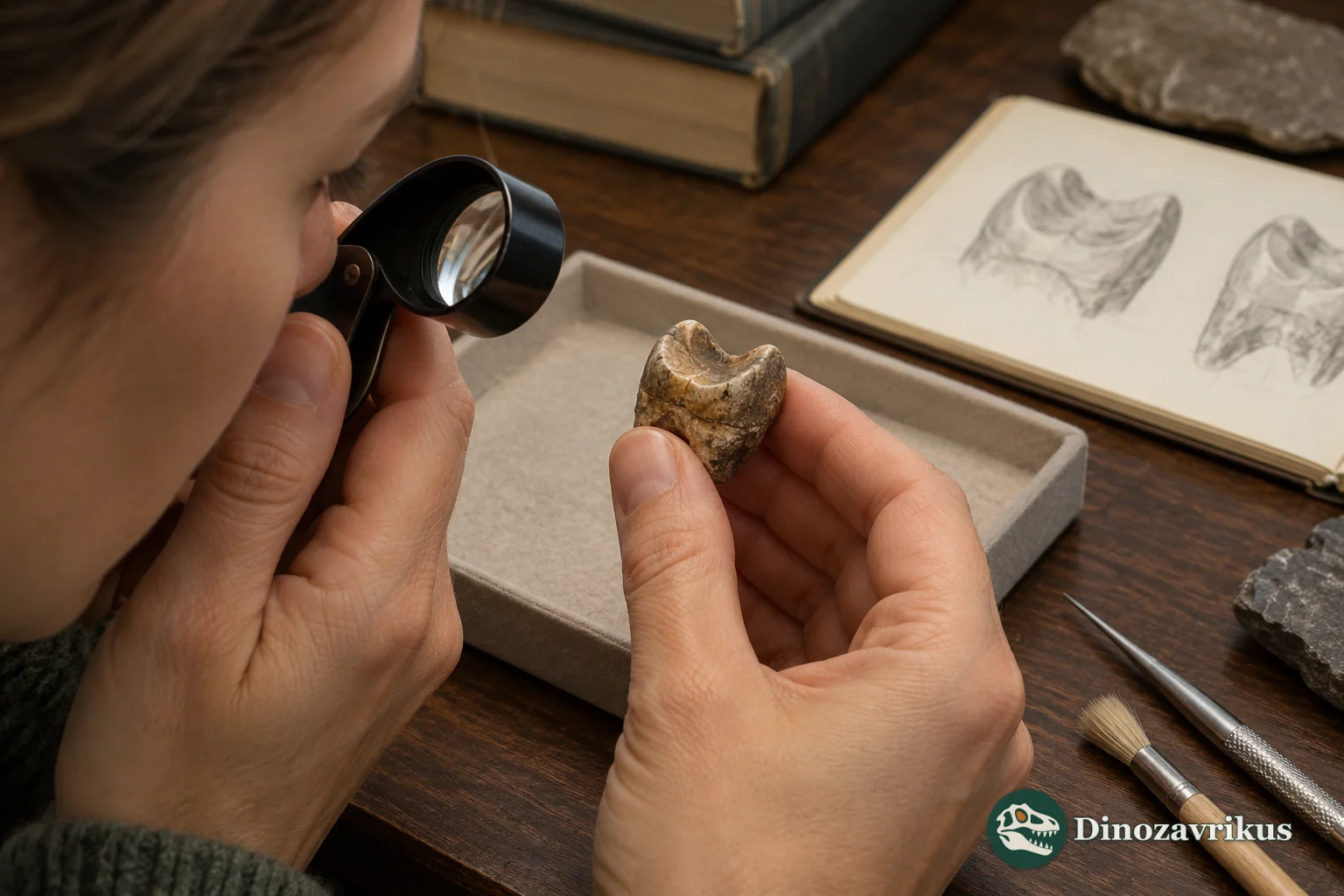
The specimen from Sierra Baguales was identified as a left m1 or m2. Its dimensions and morphology support referral to A. unica, but one tooth cannot reveal the whole skeleton, body mass, diet or membership in a particular population.
The newly described molar has an unusual pattern of enamel wear. The authors discuss how the facets may have formed and functioned; they are anatomical observations, not a direct record of foods or behaviour.
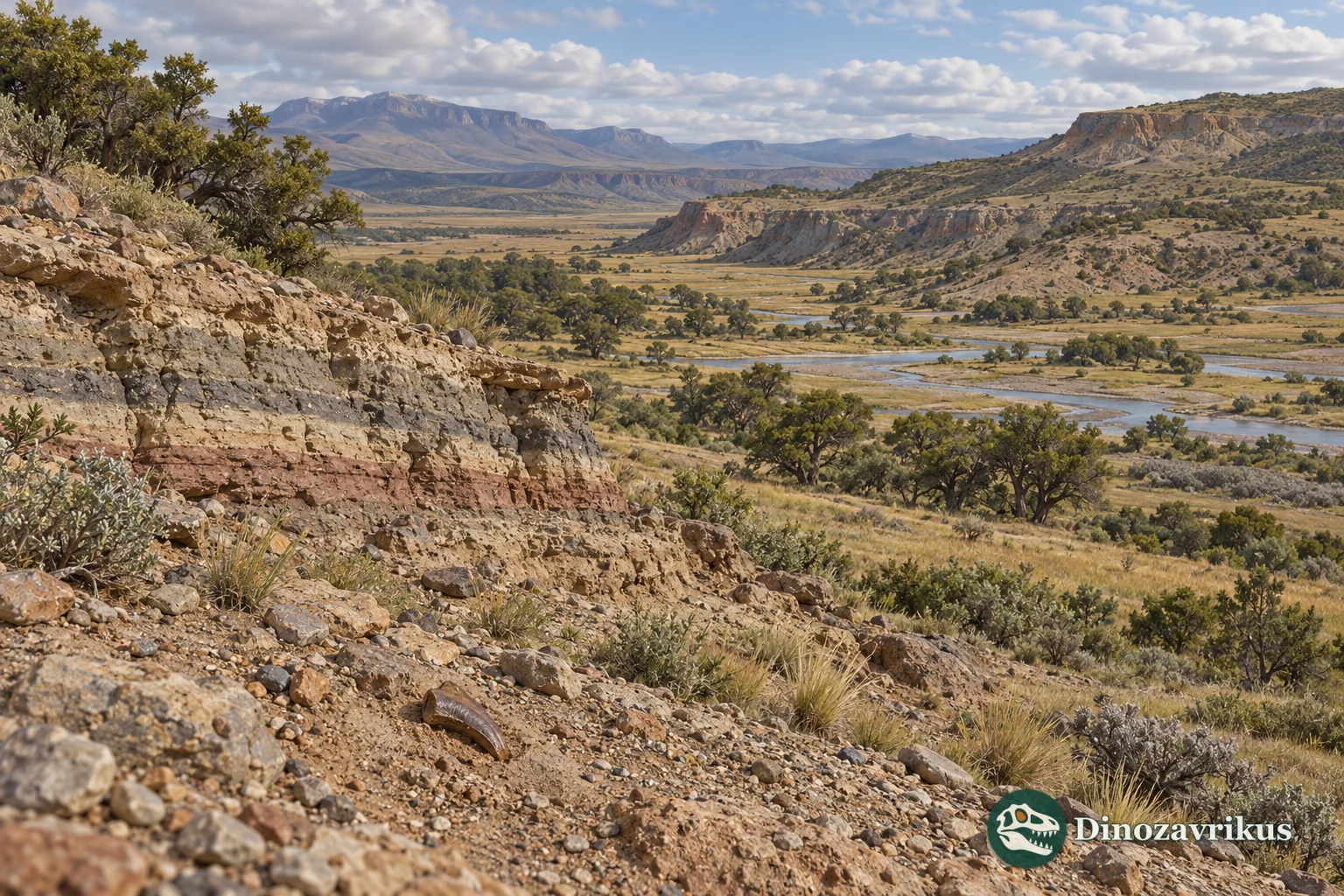
Exposures at Loma Tiburón Locality 2, in the Upper Member of the Río Turbio Formation, are estimated at about 40–37 Ma. The local mammal fauna has not been assigned confidently to a narrower South American land-mammal age.
Naming and the museum record
Florentino Ameghino established Albertogaudrya in 1901. The genus name honours French palaeontologist Albert Gaudry. Its type species, A. unica, became entangled with several other names based on isolated teeth and jaw fragments. In a major 1967 monograph, George Gaylord Simpson synonymised many of these forms. The 2025 study identifies MACN-A 12000 and 12001 in the Museo Argentino de Ciencias Naturales as lectotypes of A. unica; their exact original collecting localities in Chubut are not known.
Old names in a specimen list should not automatically be treated as currently accepted species. Specimens once called Albertogaudrya separata, Scabellia cyclogona, A. oxygona and A. regia appear in comparisons with A. unica. A separate form, A.? carahuasensis, is known only from a poorly preserved mandible from the Lower Lumbrera Formation in Salta. Its lower teeth differ from the Patagonian form, but the recent authors caution that preservation and the lack of further diagnostic material do not justify a confident new genus. The question mark reflects unresolved generic placement.
A molar from Magallanes
In 2025, researchers published the first detailed description of a Paleogene mammal from Chile’s Magallanes Region. Specimen FMHN.PV.850 is an isolated, incomplete left lower molar, identified as either m1 or m2. It was recovered at Loma Tiburón Locality 2 in Sierra Baguales, from estuarine deposits of the Upper Member of the Río Turbio Formation. The fossil assemblage includes thousands of chondrichthyan teeth as well as remains of bony fish, aquatic mammals and marine reptiles. The tooth was not found attached to other bones.
Its size and morphology support referral to A. unica. The preserved tooth is about 14.92 mm wide across the trigonid and 16.37 mm across the talonid; its length is not available because the molar is incomplete. This record extends the known range of the species more than 400 km southward. It does not document a continuous population or a particular migration route between central Patagonia and Magallanes.
The fossiliferous exposures at Loma Tiburón Locality 2 are estimated to be about 40–37 million years old, spanning the Bartonian to Priabonian. This is an age estimate for the layers, not a direct measurement of the tooth. The associated mammal fauna is too limited to assign the locality confidently to a narrower regional land-mammal age.
What the teeth reveal
Lower astrapothere molars have connected ridges and basins. FMHN.PV.850 preserves parts of the trigonid and talonid, together with distinctive enamel-wear facets. The 2025 paper compares these surfaces with other Albertogaudrya teeth and with related astrapotheres. Differences may reflect tooth position, wear stage and the way opposing upper and lower teeth met during chewing.
Wear does not directly identify a menu. Astrapotheres are generally interpreted as herbivorous from their anatomy and comparisons within the group, but no stomach contents, diagnostic plant remains in coprolites or other direct dietary evidence are known for A. unica. Specific foods should not be inferred from tooth shape alone.
Body size and limits of reconstruction
The literature describes Albertogaudrya as a large early astrapothere, but the fragmentary record does not support a reliable body-mass estimate for A. unica. Most specimens are isolated teeth or incomplete jaws; they do not form a single articulated skeleton. Reconstructions of body proportions and limbs must therefore rely on comparisons with other astrapotheres.
The fossils also provide no direct evidence of gait, seasonal movements, social behaviour or reproduction. The Magallanes tooth is most informative about geographic range and the age of its host deposits. An image of the animal as a whole is an artistic reconstruction rather than a portrait of a complete fossil skeleton.
Frequently asked questions
When did Albertogaudrya live?
Most secure records of A. unica come from middle Eocene deposits in Patagonia. The layers at the newer Sierra Baguales locality are estimated at about 40–37 million years old, but their precise regional biochronological assignment remains open.
What was found in Chile?
An isolated, incomplete left lower molar, FMHN.PV.850, identified as m1 or m2. It comes from the Upper Member of the Río Turbio Formation and is not associated with a complete skeleton.
How large was Albertogaudrya?
No reliable body-mass estimate is established for A. unica. Dental measurements and comparisons with other genera do not supply an exact value without a validated model and suitable skeletal elements.
What did Albertogaudrya eat?
Herbivory is inferred from its placement among astrapotheres and from dental anatomy. Direct food remains are unknown, so particular plants or feeding habits cannot be specified.