

Alzadasaurus is a historical name erected for a fragmentary elasmosaurid skeleton from Montana. Samuel Welles named A. riggsi in 1943 for material previously called Elasmosaurus serpentinus. Carpenter later referred the specimen to Thalassomedon haningtoni, while a 2016 conference abstract argued that the immature, distorted remains are too incomplete for a confident diagnosis. The name is therefore useful for understanding taxonomic history, but it does not represent a securely established separate animal.
Quick facts
| Type species | Alzadasaurus riggsi |
|---|---|
| Original placement | Elasmosaurid plesiosaur |
| Historical synonymy | Referred to Thalassomedon haningtoni by Carpenter in 1999 |
| Age | Cenomanian, Late Cretaceous |
| Formation | Belle Fourche Formation in later accounts |
| Locality | Near Alzada, southeastern Montana, USA |
| Holotype | FMNH 12009, now P 12009, Field Museum of Natural History |
| Preserved material | 60+ vertebrae and parts of the shoulder girdle, pelvis and left paddle; no skull |
| Taxonomic status | Insufficiently diagnostic; status remains debated |
Evidence guide
Welles listed more than 60 vertebrae, both scapulae and coracoids, an almost complete left paddle, a pubis and both ischia and ilia. The skull is unknown. The current Field Museum number is P 12009; older literature uses FMNH 12009.
Riggs described the fossil as Elasmosaurus serpentinus in 1939. Welles proposed Alzadasaurus riggsi in 1943, deriving the genus name from the locality and the species name from E. S. Riggs.
Welles used the broader phrase Benton Cretaceous of southeastern Montana. Carpenter's 1999 revision and the 2016 abstract identify the Belle Fourche Formation and Cenomanian age.
A 2016 conference abstract described the remains as immature, fragmentary and heavily distorted and considered the name a nomen dubium. Carpenter had referred the specimen to Thalassomedon; the 2021 redescription did not include it in that genus.
A name from southeastern Montana
Elmer S. Riggs and John D. Abbott collected the fossil near Alzada in 1904. Riggs described it in 1939 as Elasmosaurus serpentinus. In 1943, Samuel Welles proposed the new genus Alzadasaurus and the species A. riggsi. He derived the genus name from Alzada and dedicated the species epithet to Riggs, then curator of palaeontology at the Field Museum.
Welles explicitly cautioned that his comments on this specimen and other elasmosaurs were based on published literature rather than direct examination. The type was listed as Field Museum no. 12009 and is now catalogued as P 12009. Those numbers refer to the same specimen, not separate fossils.
What the type specimen preserves
Welles listed sixty or more vertebrae, both scapulae and coracoids, an almost complete left paddle, the left pubis, and both ischia and ilia. No skull is known. He diagnosed the genus using the shape of the scapula, described as having a narrow ventral plate and a broad, smoothly tapering dorsal process.
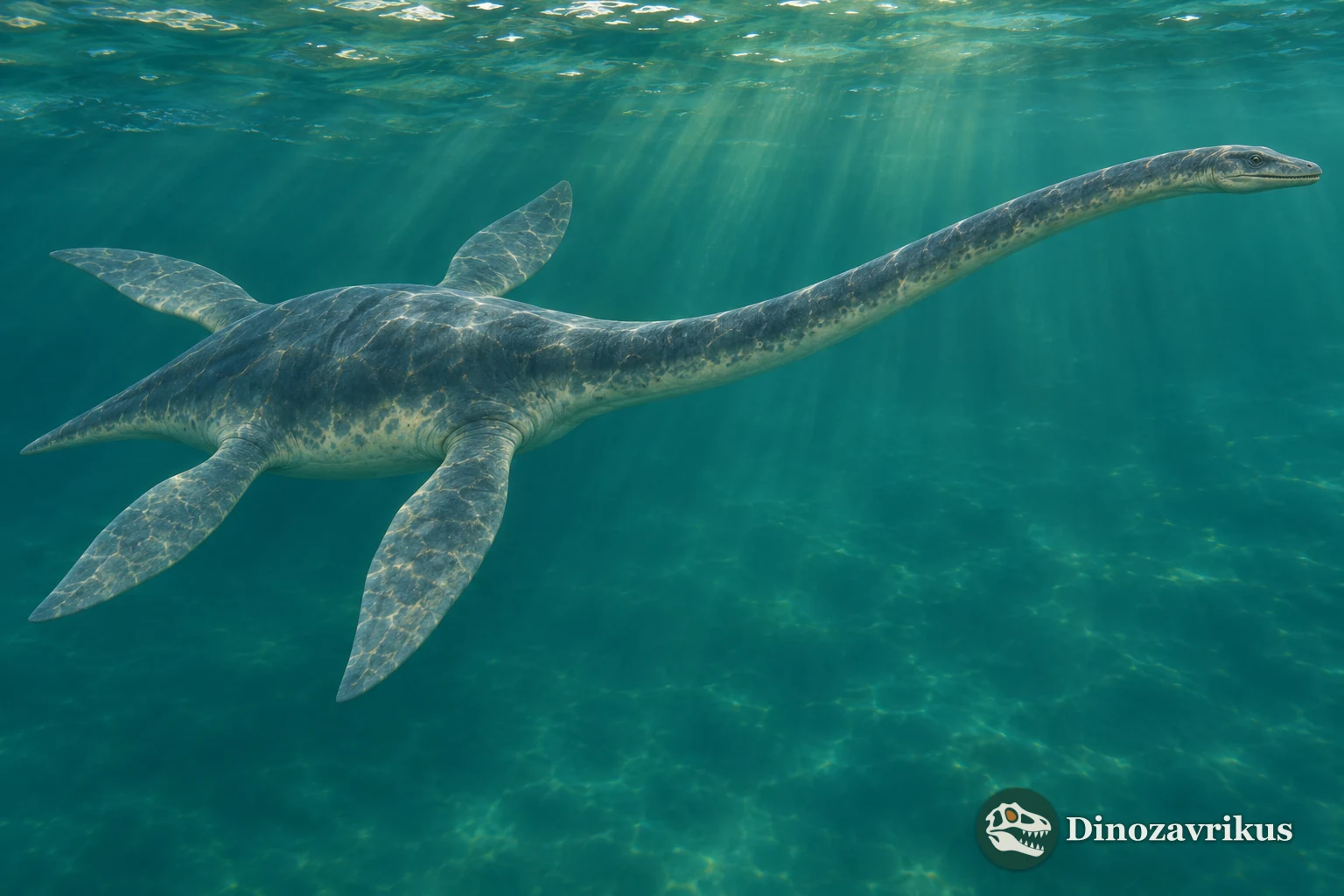
A diagnosis based on a small part of a fragmentary skeleton can be difficult to test, especially when the bones are distorted or belong to an immature individual. The type does not preserve enough of the animal to establish a complete body outline, exact length, diet or swimming behaviour. The image on this page is a generalized elasmosaurid reconstruction rather than a portrait of P 12009.
Age and changing classifications
Welles described the horizon broadly as Benton Cretaceous from southeastern Montana. Carpenter's 1999 revision placed the specimen in the Belle Fourche Formation and treated it as referred material of Thalassomedon haningtoni. Later accounts identify the deposit as Cenomanian. The geological age is more precise than the original wording, but it does not settle the animal's taxonomy.
Carpenter also changed the names of other fossils that had at one time been assigned to Alzadasaurus. He placed A. kansasensis and A. pembertoni within Styxosaurus snowii, and erected Callawayasaurus for the Colombian species Alzadasaurus colombiensis. These are revisions to separate specimens, not evidence that all of them belonged to one population. Compare the later accounts of Thalassomedon, Styxosaurus and Callawayasaurus.
Why its status remains uncertain
Sachs, Kear and Lindgren revisited the name in a 2016 conference abstract. They described the bones as osteologically immature, fragmentary and heavily distorted, and said they were insufficient for a confident diagnosis. They argued that the specimen could not be referred to Thalassomedon with certainty and suggested treating Alzadasaurus riggsi as a nomen dubium, a name that cannot be reliably distinguished using the available material.
A 2021 paper on Thalassomedon's skull anatomy also excluded FMNH 12009 from that genus, while leaving a fuller assessment for future work. These publications do not provide a single final consensus about every aspect of its status. They do show why it is safer to describe Alzadasaurus as a disputed historical name than as an unquestioned valid genus.
What can and cannot be reconstructed
The fossil is associated with a set of vertebrae, girdle bones and paddle elements from a marine reptile. It does not preserve a skull or a complete skeleton. The bones therefore cannot establish an exact body length, head shape, colour, prey or movement pattern. Immaturity also means that the adult proportions of the individual are not known.
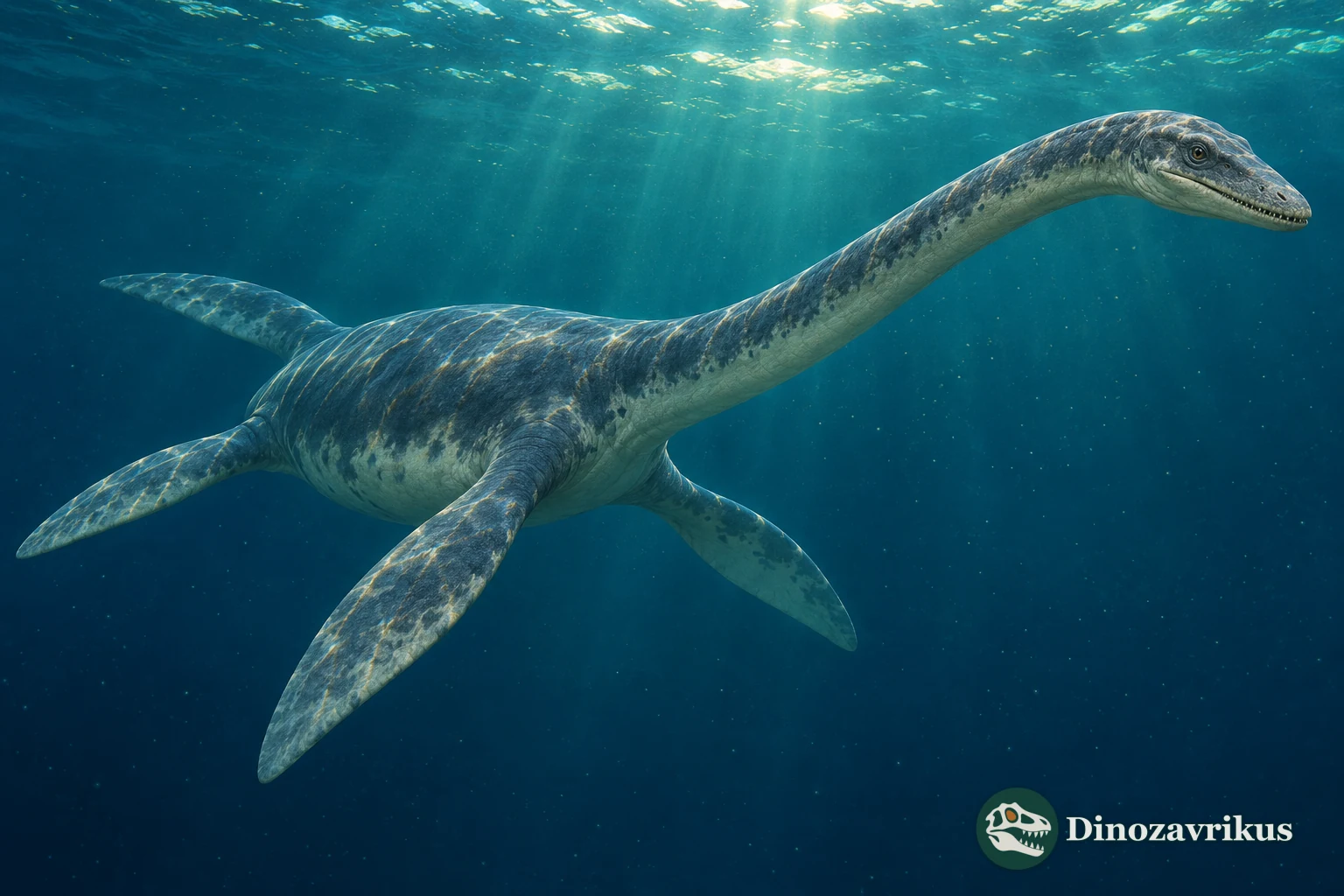
The accompanying images show a broad elasmosaurid body plan for context. They are not depictions of the type specimen, and they do not claim that Alzadasaurus had those precise proportions or behaviours. Any better reconstruction would require evidence that the current fossil record does not provide.
Frequently asked questions
Is Alzadasaurus accepted as a valid separate genus?
Its status is uncertain. Carpenter referred the type specimen to Thalassomedon, while a 2016 conference abstract considered it too incomplete for a confident diagnosis and suggested nomen dubium.
Where was the Alzadasaurus type found?
It was collected near Alzada in southeastern Montana. The Field Museum specimen is now catalogued as P 12009, formerly FMNH 12009.
What bones are known?
The type includes more than 60 vertebrae and parts of the shoulder girdle, pelvis and left paddle. No skull is known, and the material is fragmentary and distorted.
How long was Alzadasaurus?
A reliable total body length is not established. The incomplete, immature type specimen does not preserve enough anatomy for a precise estimate.