

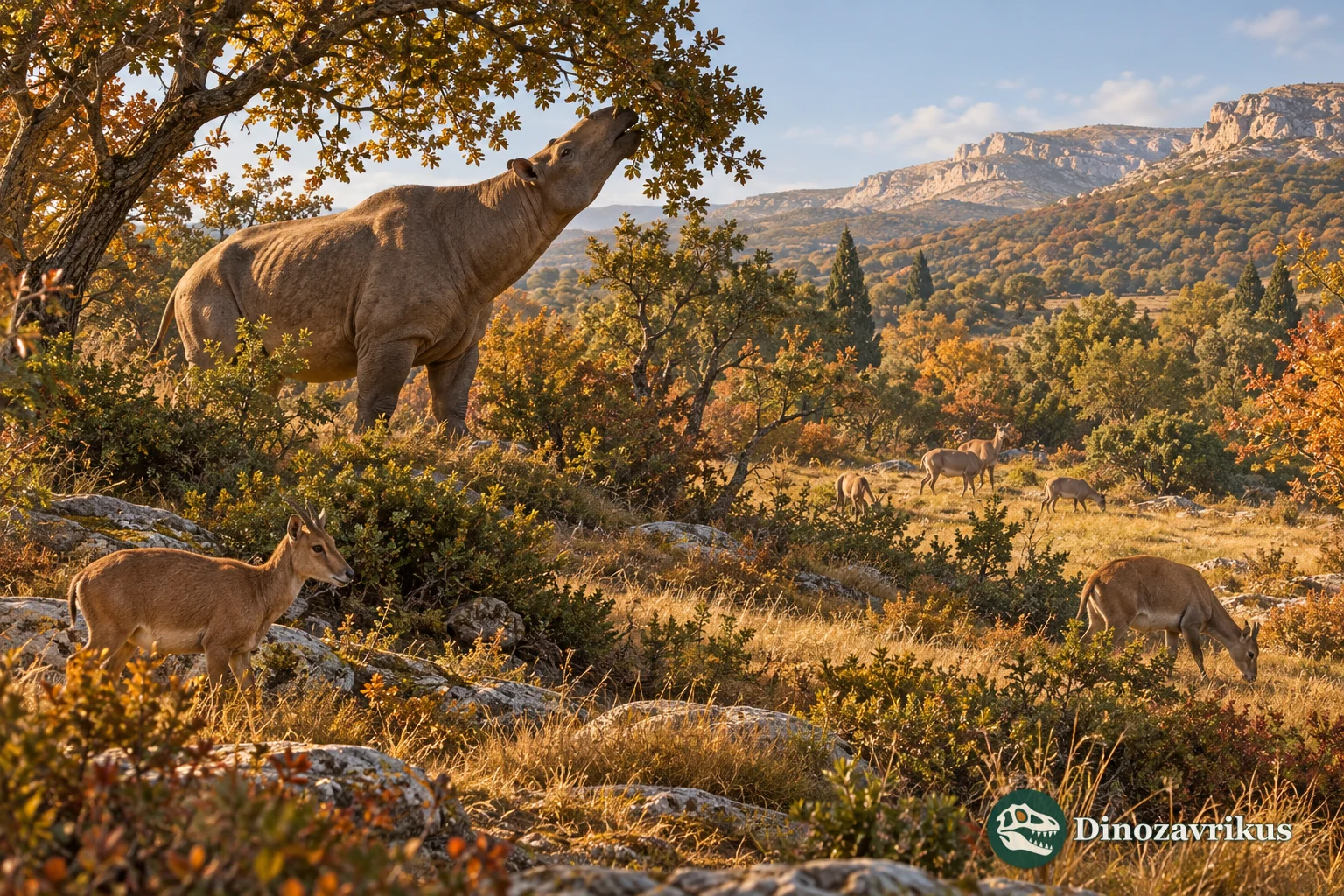
Ancylotherium was an extinct chalicothere, a branch of the odd-toed mammals that also include horses, tapirs and rhinos. The late Miocene species A. pentelicum is documented by skull, dental and limb remains from the eastern Mediterranean and Iran. Its claws distinguish it from familiar hoofed mammals. The cover is a cautious life reconstruction; fur color and exact feeding movements are unknown.
The evidence comes from multiple localities and collections. The bones do not form a single complete skeleton from one site.
Quick facts
| Genus | Ancylotherium |
|---|---|
| Studied species | A. pentelicum |
| Group | Perissodactyla, Chalicotheriidae, Schizotheriinae |
| Age | Late Miocene |
| Key localities | Pikermi and Samos, Greece; Maragheh, Iran |
| Direct evidence | Skulls, teeth and limb bones including claw phalanges |
| Uncertain details | Size variation and the original type series |
What can the fossils tell us?
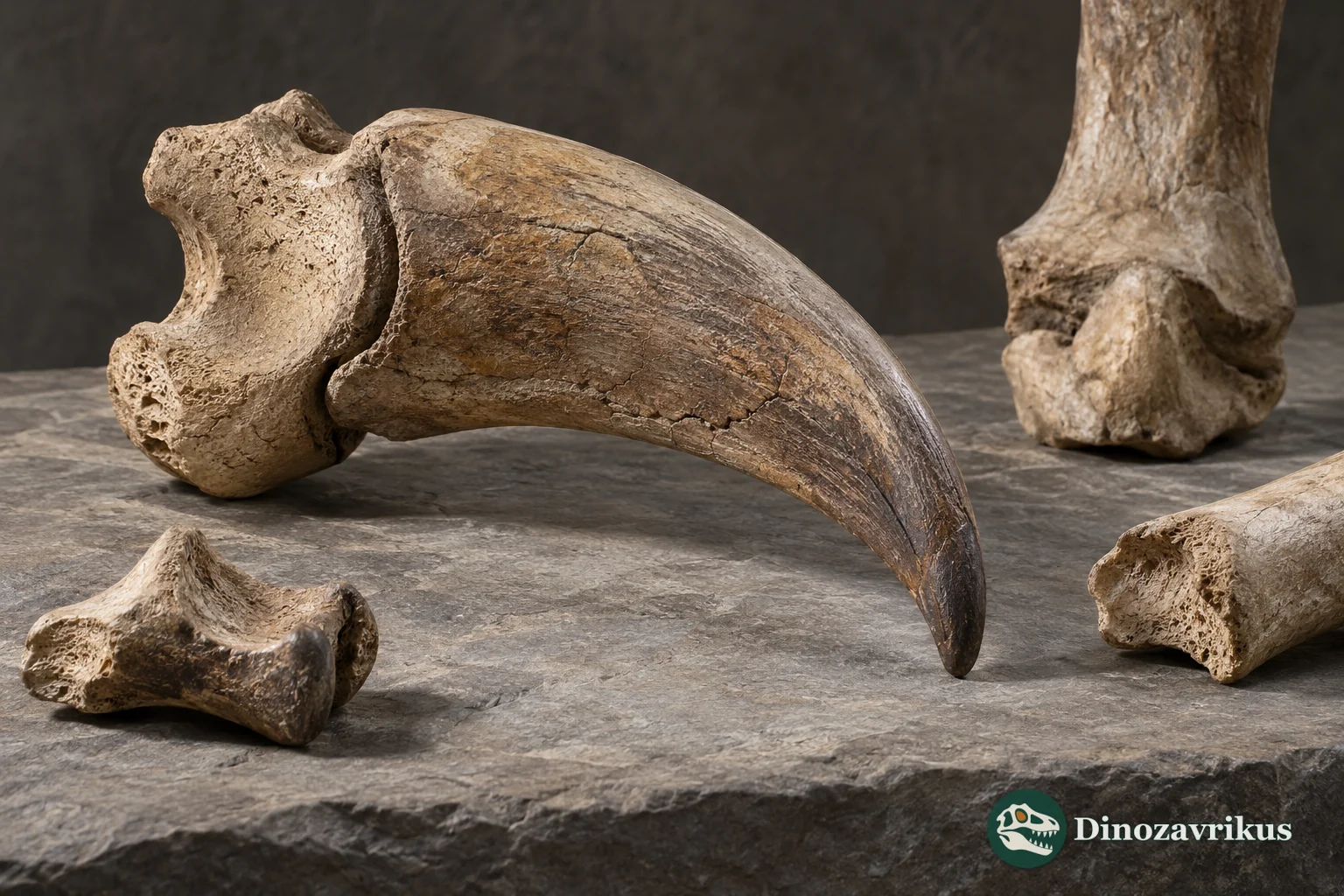
Samos material includes radius, ulna, femur, metatarsal and claw phalanx. Bone joints permit locomotor inferences, but no gait was observed.
A reassessment of Maragheh compared cranial and dental features with Greek material and referred the Iranian finds to A. pentelicum.
Greek, Iranian and Romanian records document occurrences in separate late Miocene deposits. Routes and habitats are reconstructed from additional evidence.
Greek collections and Iranian skulls
The name pentelicum is tied to classical Greek fossils described in the nineteenth century. The composition of old type series and the exact origin of individual pieces require historical scrutiny. A study of Maragheh, Iran, compared local skull and tooth remains with material from Pikermi and Samos and assigned them to A. pentelicum using several characters rather than size alone.
Late Miocene communities included other large herbivores. A regional comparison with Paracamelus does not establish that every known individual lived together; the layers must be dated separately.
What the limbs can show
Researchers described radius, ulna, femur, metatarsal and claw phalanx material from Samos. These bones help compare proportions and infer how weight passed through the limbs. A horse-like hoof stance cannot simply be applied to a clawed chalicothere. Joint surfaces constrain movement, but do not record the gait of the studied animals directly.
Ancylotherium belongs to the schizotheriines. Chalicotherium represents another chalicothere branch with different body proportions. Variation in Greek tooth and body size has prompted a sexual-dimorphism hypothesis, but the sex of an isolated fossil is generally unknown.
Habitat and the limits of life art
A Romanian fossil occurrence includes A. pentelicum and a member of the other chalicothere subfamily. Co-occurrence informs habitat studies, yet it does not identify each animal's preferred plant species. Vegetation structure is inferred from geological and faunal context.
The illustrated mixture of woodland and open patches is a possible late Miocene setting, not a portrait of one fossil site. Comparisons with Spirocerus show broader ungulate diversity without collapsing separate localities into one ecosystem.
Frequently asked questions
Was Ancylotherium related to horses?
Yes. Both are odd-toed mammals, though Ancylotherium belonged to the separate extinct chalicothere family.
What were its claws for?
Claw bones establish their presence. Pulling vegetation is a plausible use, but a particular feeding action is inferred rather than directly observed.
Where was A. pentelicum found?
Classical Greek finds include Pikermi and Samos; compared skull and tooth material from Maragheh, Iran, was also assigned to it.
Are its exact weight and coat known?
Bone dimensions allow model-based size estimates. Coat structure and color are not preserved.