

Argyrohyrax was an interatheriid, a member of the extinct South American group Notoungulata. Despite the ending hyrax, it was not a living hyrax or a close relative of hyraxes. The genus is known chiefly from teeth and jaws from the Late Oligocene; a small amount of postcranial material adds limb evidence, but no complete skeleton is known.
The genus belongs to the ancient mammal catalogue. Other notoungulates such as Interatherium and Pachyrukhos illustrate the group's diversity, but their anatomy cannot be transferred directly to Argyrohyrax.
Quick facts
| Scientific name | Argyrohyrax Ameghino, 1897 |
|---|---|
| Type species | Argyrohyrax proavus Ameghino, 1897 |
| Group | Interatheriidae; Notoungulata, Typotheria |
| Age | Late Oligocene; Deseadan South American land-mammal age |
| Range | Argentina; type material from Chubut |
| Holotype | MACN A 52-472, a palate and associated isolated teeth |
| Known material | Palatal, maxillary and mandibular fragments, teeth, some limb bones |
| Body size | Reliable total length and mass are unknown |
How do we study Argyrohyrax?
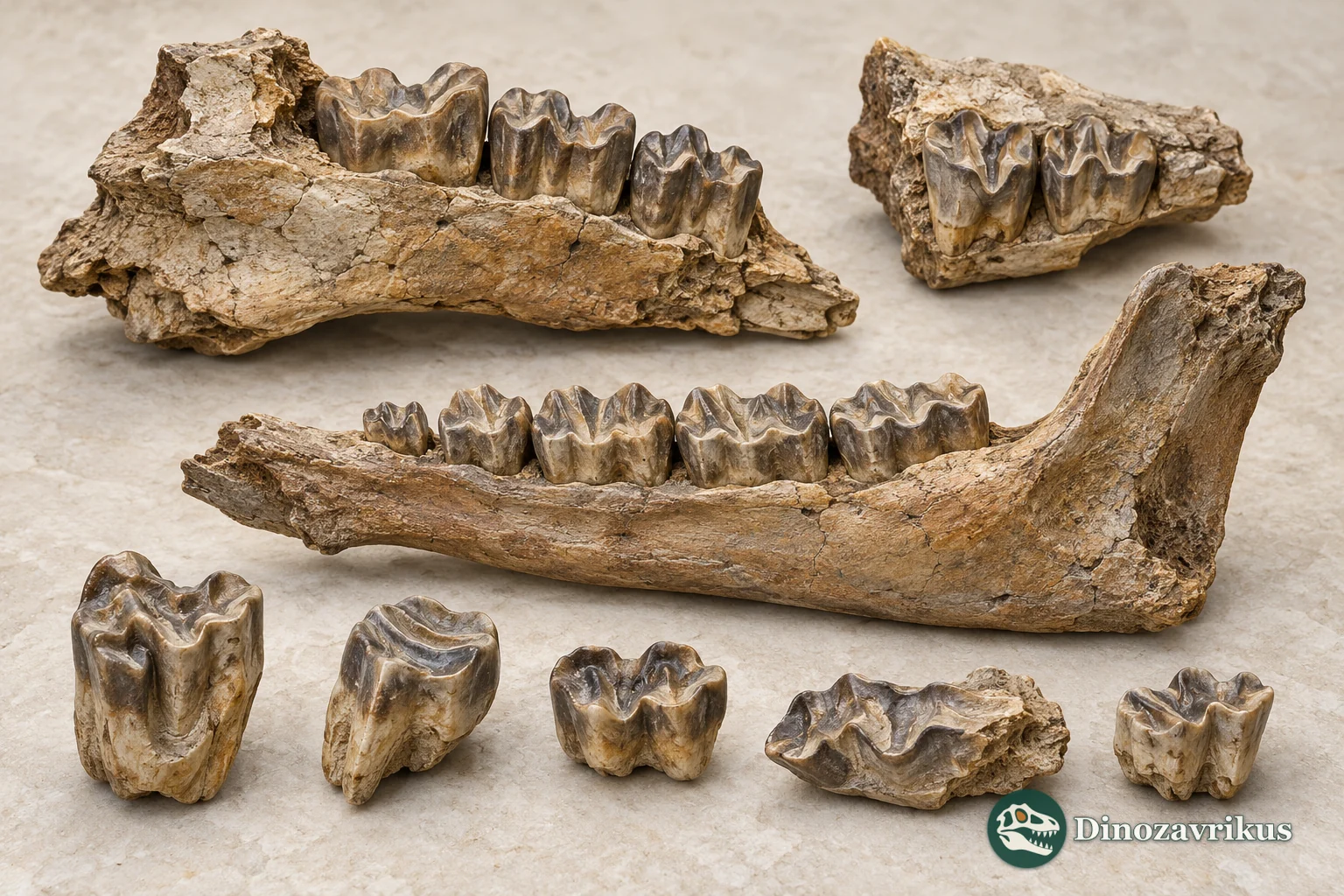
The holotype MACN A 52-472 preserves the left tooth row from I1 to M3 plus separate teeth from the right side. It anchors the name A. proavus, but it is not a complete skull or skeleton.
The cheek teeth from P/p3 through the molars are hypsodont, and roots form only in very old individuals. Comparisons across juvenile and adult material help separate growth changes from taxonomic differences.
The 2022 study lists 26 specimens from the Agua de la Piedra Formation in Mendoza, including A. proavus. Most are isolated teeth or jaw fragments, not 26 complete skeletons.
The 2016 revision treated Plagiarthrus clivus as a nomen dubium and gave priority to A. proavus; other names were revised or excluded. Each decision depends on comparison with its name-bearing type material.
The name and the type species
Florentino Ameghino established Argyrohyrax in 1897 and named A. proavus as its type species. The holotype MACN A 52-472 is a palate with the left incisors, canine, premolars and molars, plus separate teeth from the right side. It comes from Cabeza Blanca in Chubut Province, Argentina. The specimen documents part of the upper tooth row, not a complete face.
Later workers assigned material from several localities to this and related names. Vera, Cerdeño and Reguero's 2016 revision compared teeth, jaws and postcranial fragments. They recognized the priority of A. proavus over Plagiarthrus clivus, whose type was considered too ambiguous to diagnose a secure species and treated as a nomen dubium. The authors also reassessed A. proavunculus and removed ?A. acuticostatus from Argyrohyrax. These are conclusions tied to the material and comparisons in that revision.
New fossils from Mendoza
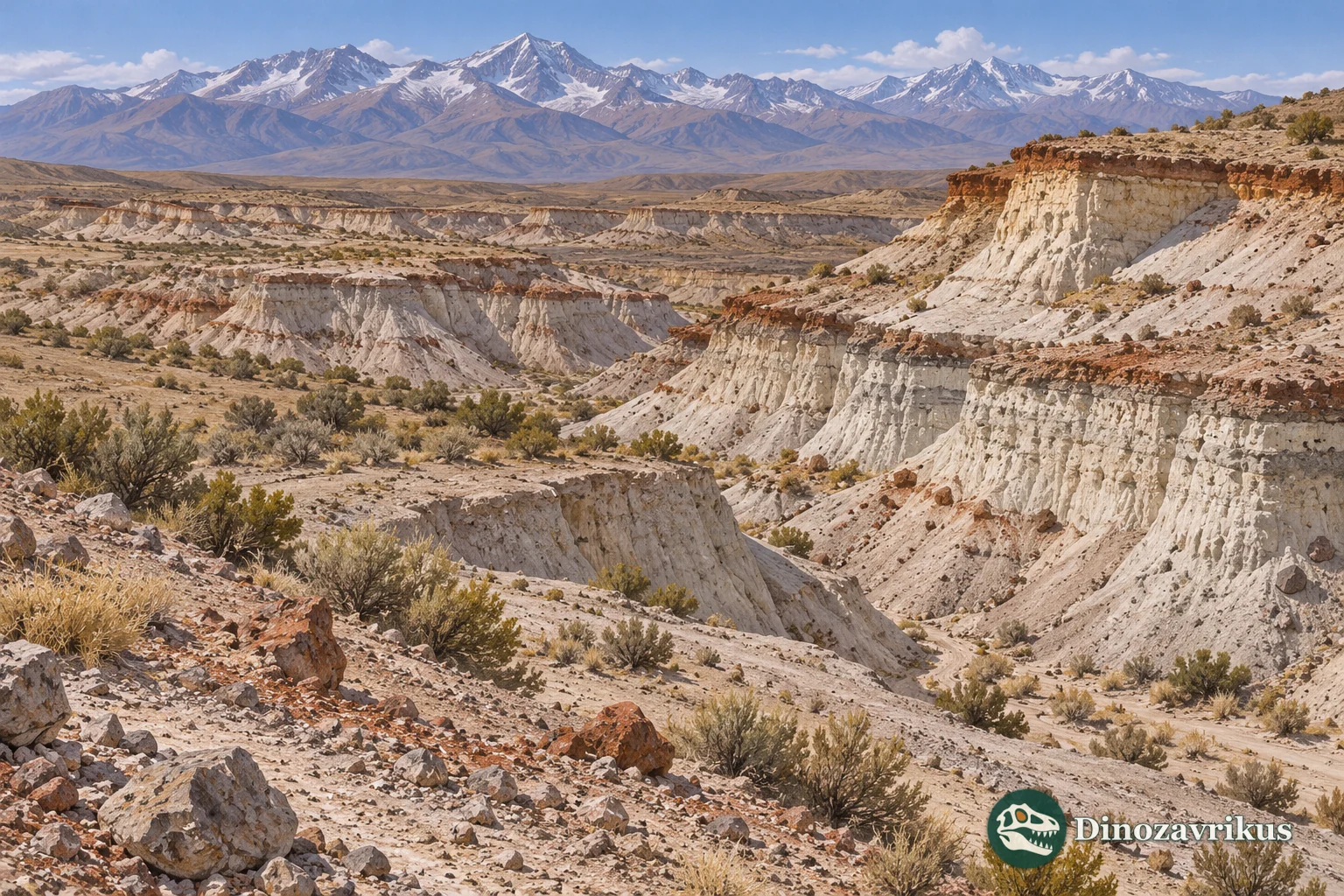
Quebrada Fiera is a fossil locality in the Malargüe Department of Mendoza Province. Fieldwork beginning in 2006 added a large collection of Oligocene mammals. A 2022 study described 26 A. proavus specimens from the Late Oligocene, including maxillary and mandibular fragments and isolated teeth. Most remain fragmentary; 26 catalogue numbers do not represent 26 complete animals.
The fossil-bearing QF4 level is assigned to the base of the Agua de la Piedra Formation. It consists mainly of white to grey tuff with oxidized minerals and angular plagioclase. Gypsum-bearing intervals were interpreted as short evaporitic episodes rather than volcanic gypsum. This geology describes the deposit and its setting; it does not give an exact calendar date for each tooth.
Dental anatomy and changing names
Diagnosis of A. proavus relies on the proportions, crown form and combination of dental characters. The first two premolars are rooted, while teeth from P/p3 through the molars are high-crowned. Roots appear on those teeth only in very old individuals, so root development must be considered alongside age and wear.
The expanded sample includes a juvenile with erupting teeth. Comparing young and adult material helps researchers recognize growth changes instead of mistaking them for differences between species. The papers describe enamel, cementum and crown form, but these fossils do not by themselves establish a specific menu or seasonal diet.
An isolated upper molar reported from Quebrada Fiera in 2022 may represent a different interatheriine, with some similarities to the Bolivian Brucemacfaddenia boliviensis. The authors could not identify it confidently. It should not be automatically counted as Argyrohyrax.
Body size, diet and movement
No reliable total length or body mass has been established from a complete Argyrohyrax skeleton. The teeth suggest a small or medium interatheriid in broad comparative context, but fragmentary dental remains cannot support a precise mass in kilograms. Separate limb bones allow anatomical comparison without establishing a confident speed, gait or jumping ability.
Hypsodont cheek teeth are compatible with plant feeding, an inference from dental form. The studied material has not yielded reported stomach contents, attributed coprolites or isotope-based menu evidence. Claims about particular leaves, grasses or feeding behaviour would go beyond the available fossils.
What remains uncertain
Researchers directly observe teeth, jaw fragments and a few limb elements; the age comes from the stratigraphic context of the formations. The placement of A. proavus among interatheriids and the status of historical names are comparative taxonomic conclusions. Coat, colour, lips, detailed musculature and behaviour are not preserved. The cover is an artistic reconstruction of a small ungulate mammal, not a portrait of a known individual.
Frequently asked questions
Was Argyrohyrax a true hyrax?
No. It was an interatheriid notoungulate, part of a distinct South American mammal radiation. The name ending does not make it a close relative of living hyraxes.
What is the type specimen?
The holotype MACN A 52-472 is a palate fragment with part of the left tooth row and separate right-side teeth from Cabeza Blanca, Chubut.
What did the Quebrada Fiera fossils add?
The 2022 paper reports 26 mostly dental specimens, including juvenile material. They document the genus in Mendoza and help assess variation during growth.
What did Argyrohyrax eat?
High-crowned cheek teeth support a broad inference of plant feeding, but no stomach contents or specific plant remains establish a precise diet.