

Bathyspondylus swindoniensis is a Late Jurassic plesiosaur named from material associated with Wiltshire in southern England. The accessible systematic review treats it as a valid species but notes that the known fossils are vertebrae only, too limited for inclusion in its phylogenetic analysis. The name therefore identifies a described species, while its family-level relationships and complete appearance remain poorly constrained.
Quick facts
| Type species | Bathyspondylus swindoniensis |
|---|---|
| Age | Late Jurassic; commonly placed in the Kimmeridgian |
| Reported area | Swindon district, Wiltshire, England |
| Geological context | Linked to Kimmeridge Clay in secondary records; exact bed uncertain |
| Known material | Vertebrae; no complete skeleton |
| Family placement | Unresolved; insufficient material for a phylogenetic score |
Evidence guide
Smith's 2003 review describes the available material as vertebrae only. The consulted source does not establish a complete skull, limb series or articulated skeleton.
Smith retained the species as valid but excluded it from the phylogenetic analysis because the available anatomy was insufficient for coding. Validity and precise family placement are different questions.
Secondary records associate the taxon with Kimmeridge Clay near Swindon. The exact quarry and stratigraphic bed are not securely established by the sources consulted here.
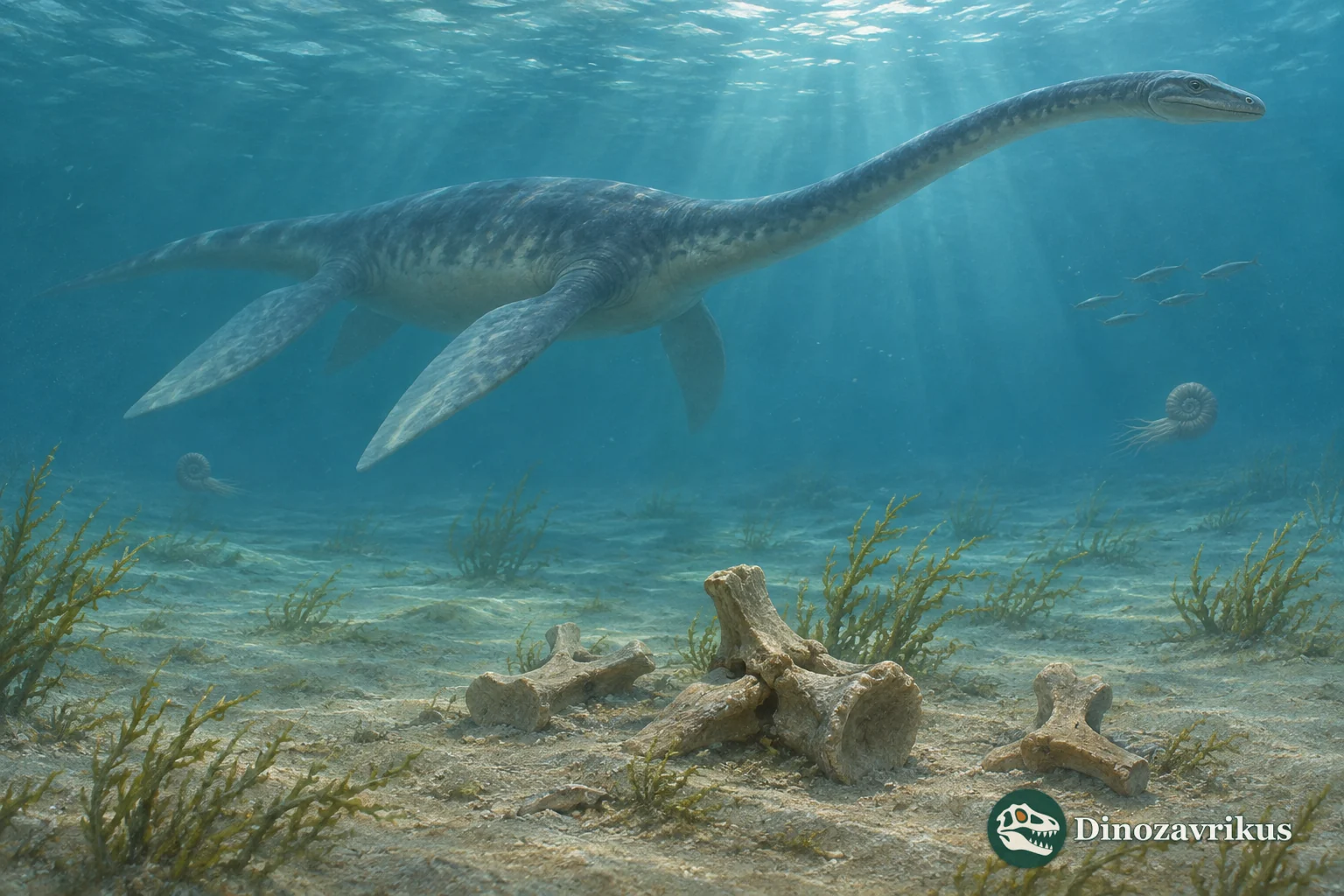
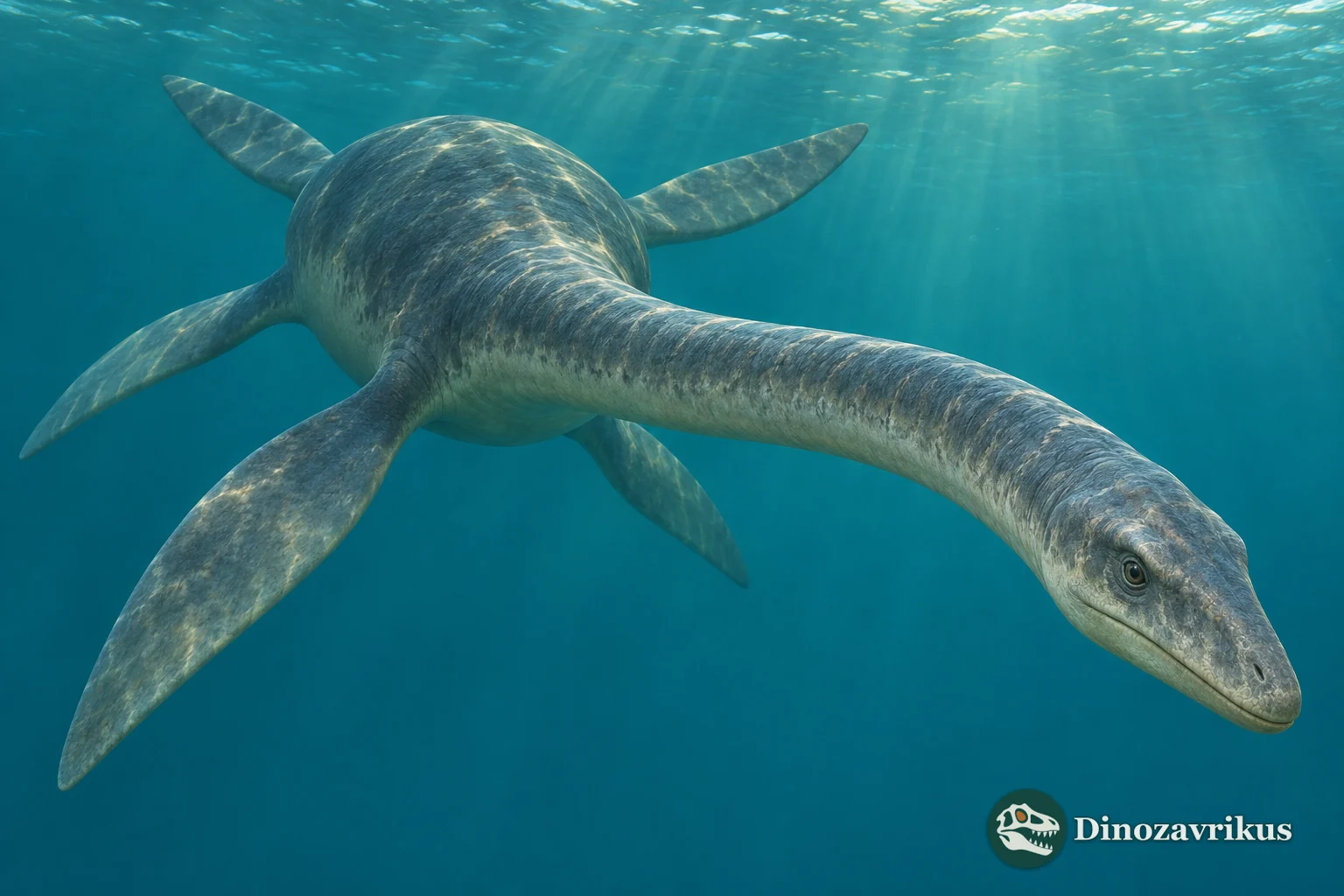
The known bones do not establish the skull, limb proportions, colour or exact body length. The accompanying animal images are generic plesiosaur illustrations, not a species-specific reconstruction.
A species named from Wiltshire material
Justin Delair introduced Bathyspondylus swindoniensis in a 1982 paper on new and little-known Jurassic reptiles from Wiltshire. The paper is cited in later reference lists, but the source material consulted for this profile does not securely identify the original collector, exact collection year, quarry or present museum number. Those details are left open rather than supplied from an unverified retelling.
The name combines Greek roots commonly rendered as ‘deep’ and ‘vertebra’. It points to the spinal material on which the taxon is discussed. Etymology does not provide evidence for a deep-water habitat or a distinctive body shape.
What the vertebrae do and do not establish
In his 2003 review, Adam Stuart Smith retained the species as valid but excluded it from the phylogenetic analysis because the known record consisted of vertebrae only. A named species can be recognised in the literature while its position among plesiosaur families remains uncertain. The decision not to score it reflects missing anatomical characters, not proof that the name is invalid.
The fossil evidence is not a complete skeleton assembled from several animals. Without a diagnostic skull, shoulder girdle or limb series, comparisons with better-known plesiosaurs cannot supply those missing parts as direct observations. The profile of Tricleidus shows how a more extensive, though still incomplete, specimen permits a different level of anatomical description.
A qualified Jurassic setting
Later taxonomic summaries associate the material with the Swindon district and Kimmeridge Clay, within the Kimmeridgian stage of the Late Jurassic. These references are useful for broad context, but they do not establish a precise bed or quarry in the sources checked here. A stage-level age should not be made more exact than the locality record allows.
The geological setting indicates marine deposits in which plesiosaur remains could be preserved. It does not show that every animal from a named formation lived at the same depth, in the same bay or at the same time. Other Jurassic plesiosaurs such as Tatenectes have a richer skeletal record, but comparisons with them must remain comparisons rather than borrowed anatomy.
Why the animal's full appearance remains unknown
Vertebrae cannot be used to measure the animal from snout to tail when the rest of the skeleton and its proportions are missing. Published length figures without a stated method should be treated as estimates by analogy, not direct measurements. The same limits apply to body mass, skull shape, paddle length, prey, swimming speed and reproductive biology.
The two underwater images in this profile are generic plesiosaur artwork, included to make the group easier to picture. Neither depicts a recovered individual or establishes the species' exact silhouette. New diagnostic bones or a re-examination of the original material could refine its placement, but the present evidence supports a deliberately limited account. For broader group context, see the overview of plesiosaurs and pliosaurs.
Frequently asked questions
What fossils are known for Bathyspondylus?
Smith's 2003 review describes vertebrae only and considers the available material too limited for phylogenetic coding.
Is Bathyspondylus a valid species?
Smith retained the species as valid while excluding it from his phylogenetic analysis. That leaves its precise relationships unresolved.
Where was it found?
Later records associate it with the Swindon district in Wiltshire. The exact quarry and bed are not established by the sources consulted here.
Can its complete appearance be reconstructed?
No. Vertebrae do not establish the skull, limbs or full body proportions. The images on this page are explicitly generic plesiosaur illustrations.