

Batodon tenuis is known from an incomplete lower jaw and isolated teeth in Late Cretaceous North America. It belongs among early eutherian mammals, a broad group that includes later placentals, while its finer relationships have been classified differently. Teeth can connect scattered finds; they reveal much less about the animal's full outline.
Batodon is included in the ancient mammal catalogue. Later Puercolestes and Litaletes illustrate how early mammal studies often depend on fragmentary jaws and teeth, though they are different taxa from a later interval.
Quick facts
| Scientific name | Batodon tenuis Marsh, 1892 |
|---|---|
| Group | Early Eutheria; finer placement debated |
| Holotype | USNM V2139, partial left lower jaw |
| Collector | John B. Hatcher, 1891 |
| Type locality | Lance Formation, Wyoming |
| Type age | Late Maastrichtian |
| Other evidence | Isolated teeth in western North America |
What can the fossils tell us?
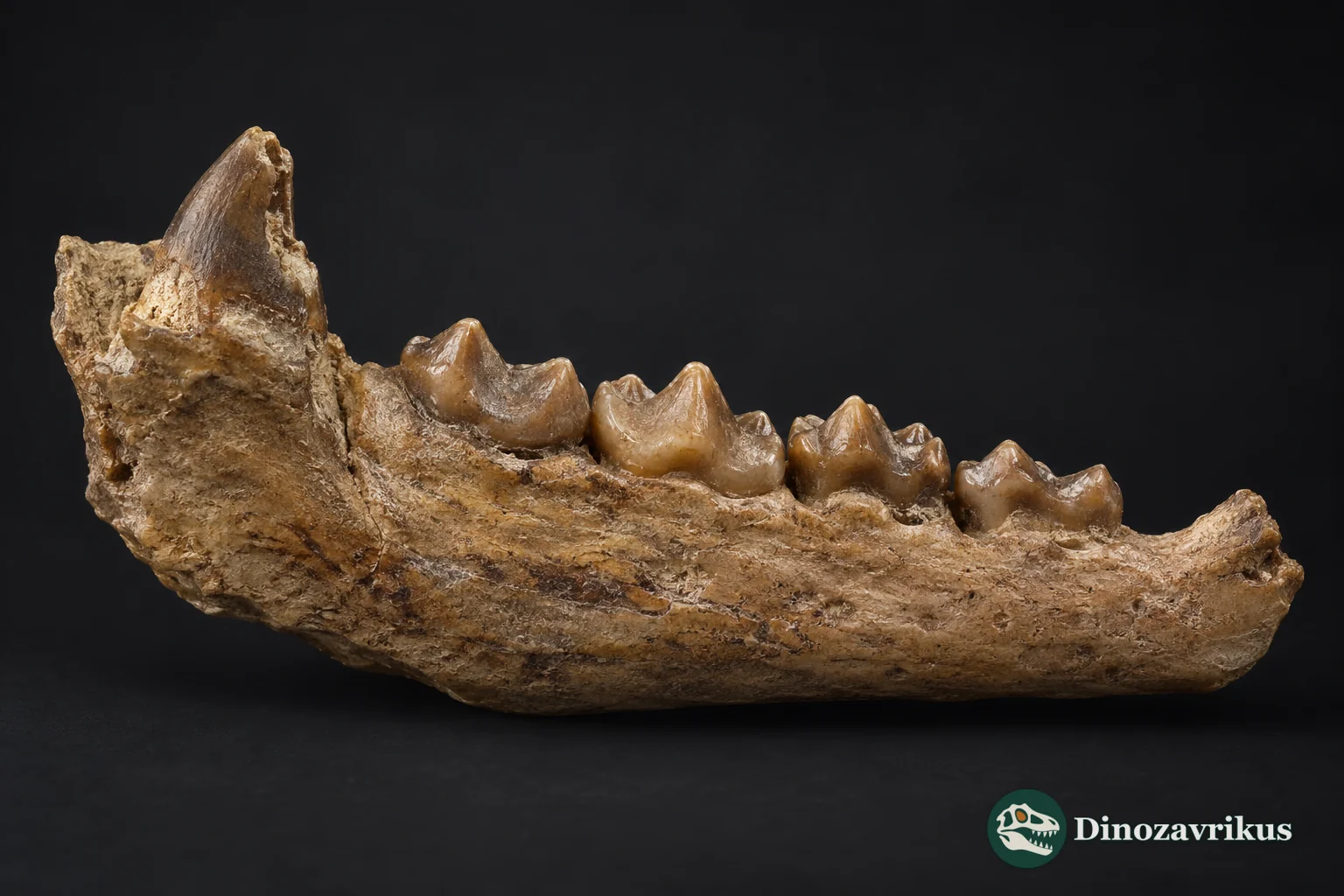
USNM V2139 includes part of a canine, a first-premolar socket and succeeding premolars. It is direct evidence of Batodon tenuis, but no complete skull or body skeleton is associated with it.
Four teeth referred to Batodon were described from three McGuire Creek localities. Their shapes and millimetre-scale measurements are useful, but a loose tooth does not establish body mass or individual count.
Some Hell Creek reports are close to the Cretaceous–Paleogene boundary. A tooth in a contested or reworked bed alone cannot demonstrate that this species survived the extinction.
Hatcher's find and Marsh's name
John B. Hatcher collected the type jaw in 1891 from the Lance Formation in what is now Niobrara County, Wyoming. Othniel Charles Marsh published Batodon tenuis in 1892. The Smithsonian National Museum of Natural History holds the holotype as USNM V2139 and records it as late Maastrichtian.
The specimen is a partial left dentary with part of the canine, an alveolus for the first lower premolar and the following premolars. It is not a complete skull or skeleton. Neither the living ear shape nor tail length can be read from this fragment; the shrew-like cover is a visual analogy rather than a reconstruction of documented soft tissue.
Tiny teeth in other assemblages
A study of McGuire Creek in Montana referred four teeth from three localities to Batodon tenuis. Published lengths of the isolated premolars and molars are around one millimetre. These are direct tooth measurements, not a reliable full-body mass derived from the incomplete type.
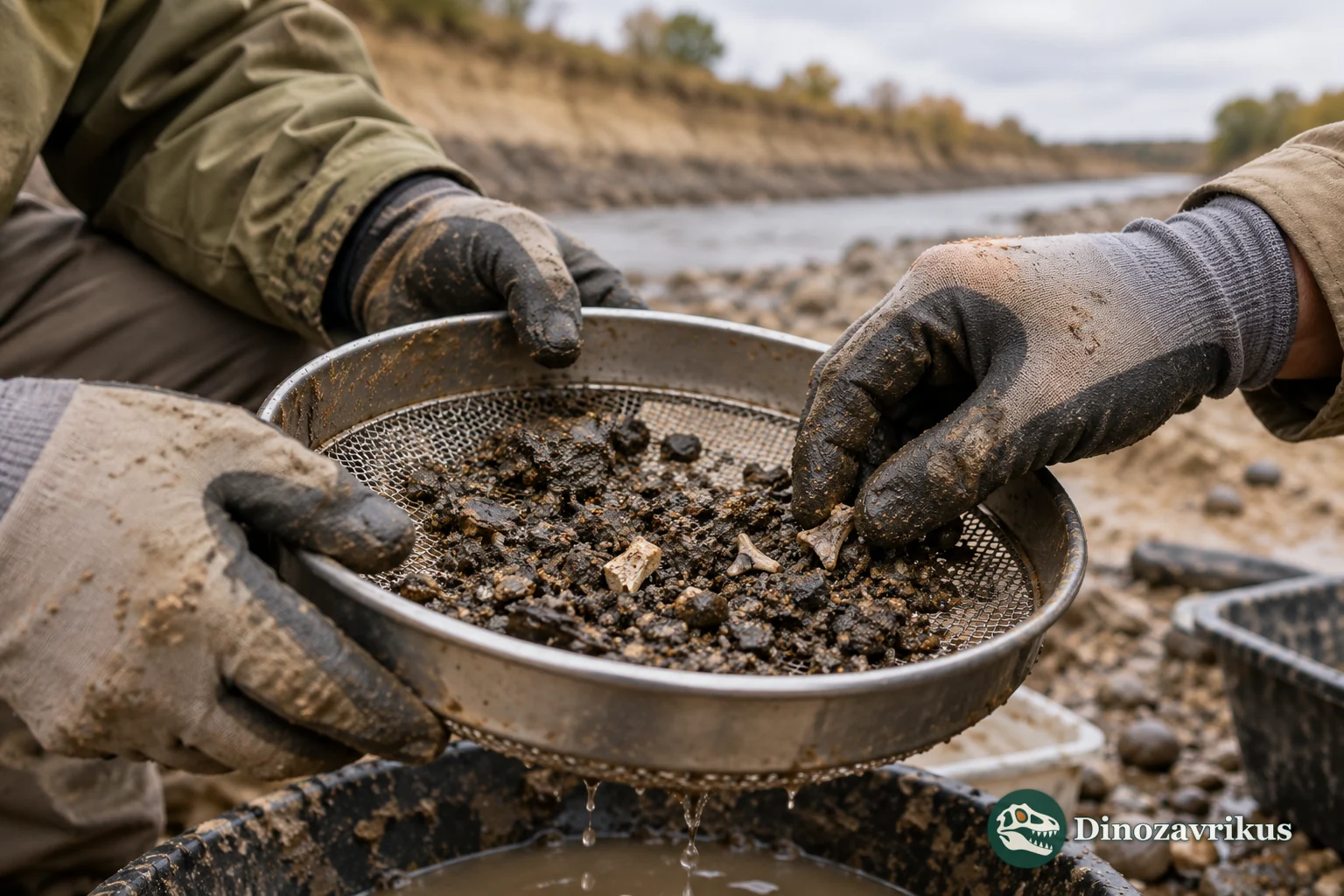
The genus has also been reported among Late Cretaceous mammals of the Hell Creek Formation in Montana and the Scollard Formation in Alberta. Screen washing channel sediments can recover tiny crowns that would be missed by surface collecting. Such samples enrich comparisons but cannot show whether isolated teeth belonged to adults or to one individual.
Changing classification and a difficult boundary
The McGuire Creek monograph placed Batodon in Palaeoryctidae with uncertain finer affinities, whereas the current Smithsonian catalogue uses Cimolestidae. These are different taxonomic interpretations of the same physical type. More complete associated fossils would help test the placement.
The Lance type and most relevant Hell Creek beds are latest Cretaceous. Some records near the Cretaceous–Paleogene transition have been discussed as potentially younger. A name on a list from a boundary section does not by itself prove that B. tenuis survived the extinction; the tooth's precise horizon and possible reworking must be evaluated.
What remains unknown
Dental form may suggest processing small animal prey, but no stomach contents establish a specific food. There is no associated limb skeleton that proves whether Batodon ran, climbed or dug. Body mass, coat colour and most details of the cover are artistic choices, clearly separate from the jaw and teeth that establish the taxon.
Frequently asked questions
What survives of the Batodon holotype?
Part of a left lower jaw with canine and premolar material. USNM V2139 is not an associated skull or body skeleton.
Who found and named Batodon tenuis?
John B. Hatcher collected the type in Wyoming in 1891; Othniel Charles Marsh named it in 1892.
Was Batodon an ancestor of modern shrews?
That is not established. A shrew-like illustration is only an analogy; close kinship requires a separate phylogenetic test.
Did Batodon survive the end of the Cretaceous?
The late Maastrichtian type does not show that. Boundary-area records require careful stratigraphy and checks for reworked teeth.