

Callawayia neoscapularis is an ichthyosaur from Norian marine rocks in British Columbia, Canada. Its name-bearing fossil, ROM 41993, preserves a partial skull and skeleton. The animal's classification has been revised, but the underlying type specimen remains the reference point.
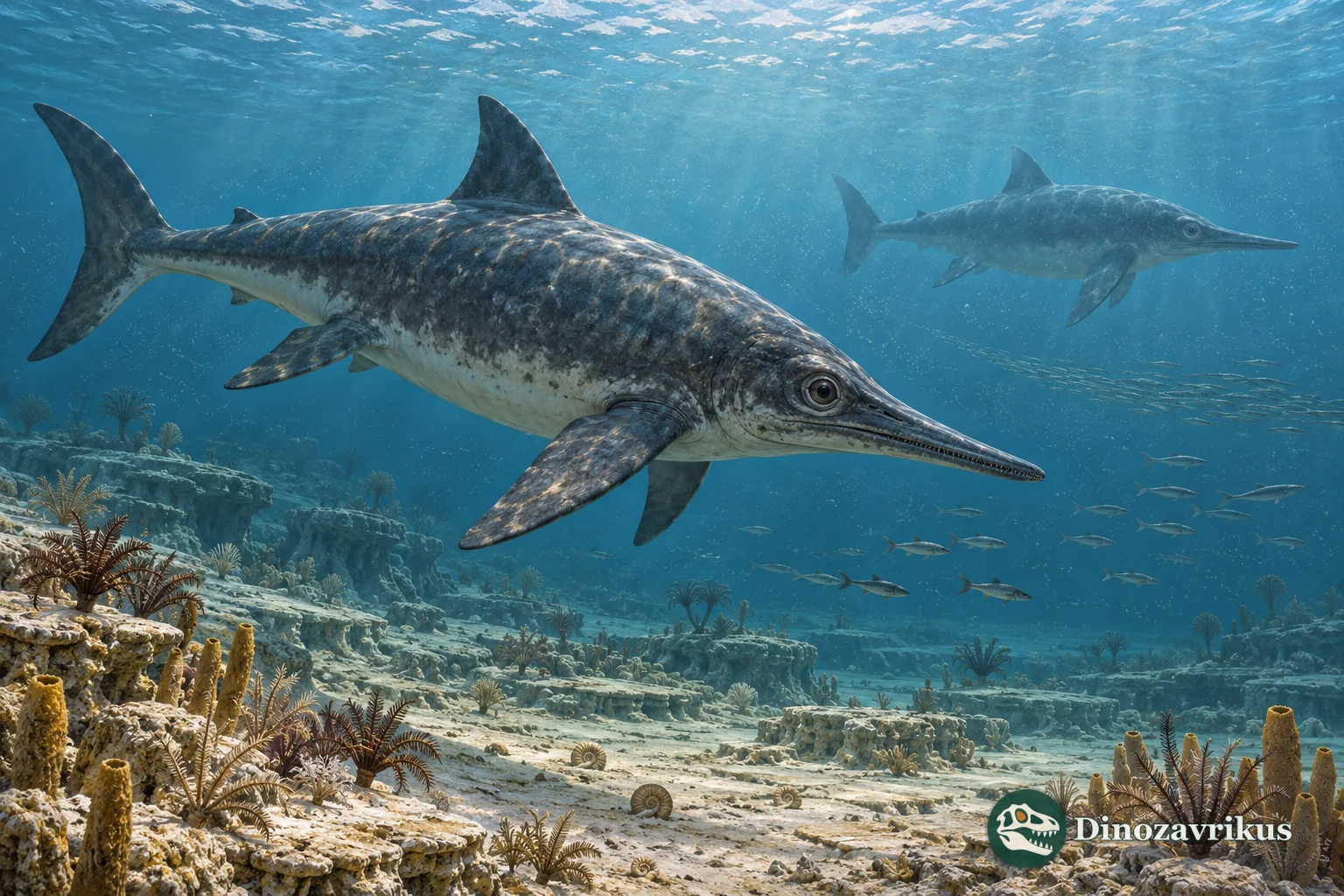
The cover is an artistic reconstruction. The incomplete skeleton does not preserve the animal's color, all soft tissues or a fully measurable tail outline.
Quick facts
| Type species | Callawayia neoscapularis (McGowan, 1994) |
|---|---|
| Original name | Shastasaurus neoscapularis |
| Type specimen | ROM 41993, partial skull and skeleton |
| Age | Norian, Late Triassic |
| Formation | Pardonet Formation |
| Region | British Columbia, Canada |
| Later name | Metashastasaurus neoscapularis was also proposed |
What can the fossils tell us?
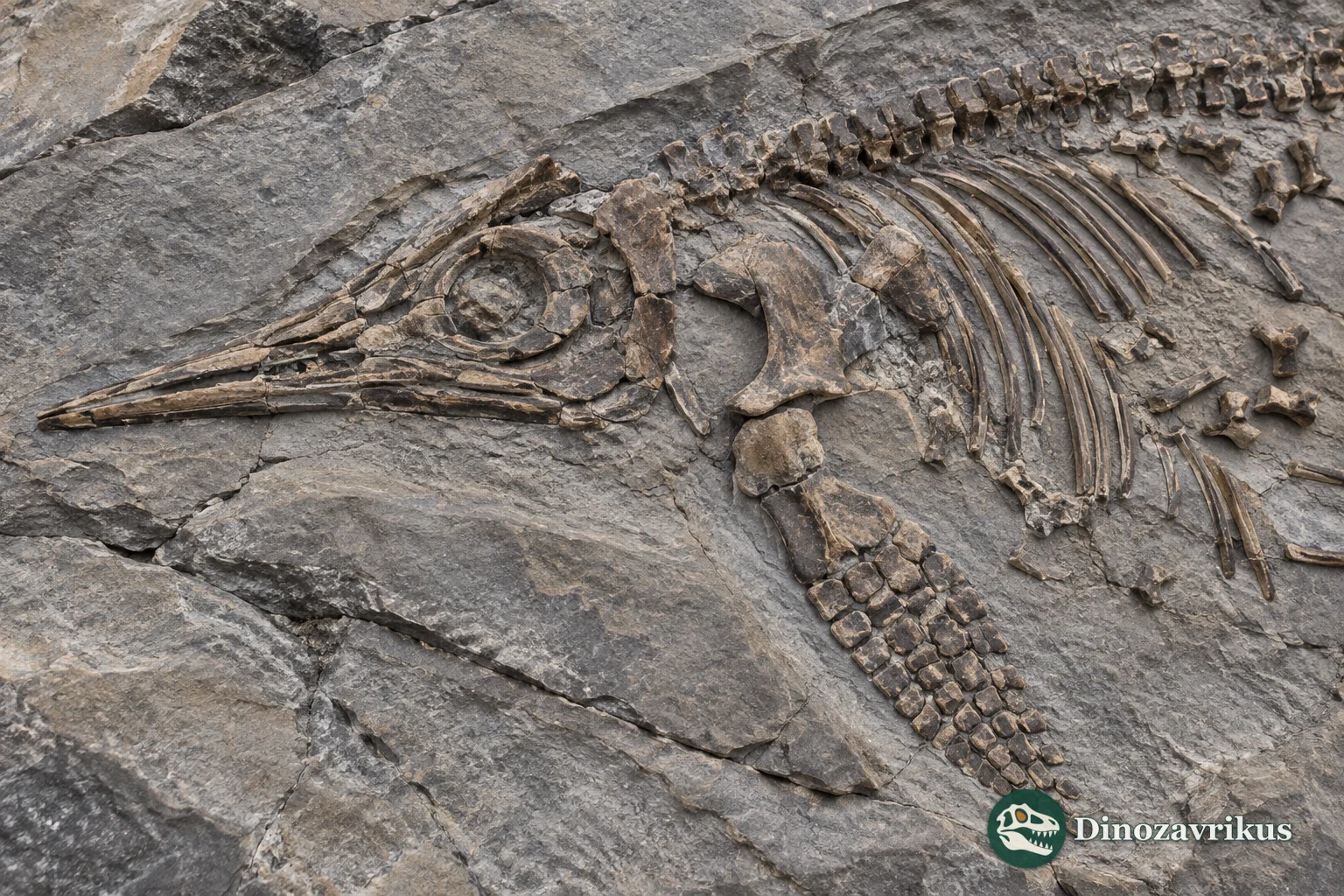
The fossil preserves parts of the skull, trunk and limbs but not a complete tail. Soft-tissue outlines and color remain reconstruction.
The specimen came from marine strata near today's Williston Lake in British Columbia. The modern reservoir did not exist in the Triassic.
McGowan named Shastasaurus neoscapularis in 1994. Callawayia and Metashastasaurus were later generic proposals concerning that species.
A fossil from the Pardonet Formation
The type specimen comes from the Pardonet Formation near Peace Reach at today's Williston Lake. The locality has been called Flipper Quarry. Marine stratigraphy and associated biostratigraphy place the find in the Norian stage of the Late Triassic; the present-day reservoir is much younger.
Christopher McGowan described ROM 41993 as Shastasaurus neoscapularis in 1994. It preserves portions of the skull, trunk and limbs, while much of the posterior body is incomplete. This allows anatomical comparison but does not give a directly measured whole-body length from a single complete vertebral series.
Why the genus name changed
Maisch and Matzke introduced Callawayia for the species in 2000. Nicholls and Manabe proposed another generic placement, Metashastasaurus, in 2001. Those combinations reflect competing taxonomic interpretations of material related to the same originally named species, not three independent animals.
Comparisons draw on the shoulder girdle, flippers, skull and dentition. Later analyses have varied in the placement of Triassic ichthyosaur lineages. Maisch's 2010 review uses Callawayia neoscapularis. Tracking the type number is more reliable than treating a changed generic label as a new discovery.
Evidence and reconstructed appearance
The fossils establish a marine ichthyosaur, but the pose, colors and complete caudal fin in artwork are inferred. Comparisons with Shonisaurus and earlier Grippia show the group's diversity without filling every missing bone of Callawayia. Californosaurus is another example of how incomplete skeletons limit whole-body portraits.
The species name points to shoulder anatomy. It does not by itself reveal precise speed, prey choice or swimming power. Such claims would require additional functional evidence.
Frequently asked questions
Where was the Callawayia type found?
ROM 41993 came from marine Pardonet Formation strata near today's Williston Lake in British Columbia, Canada.
Why does Shastasaurus neoscapularis appear in older papers?
McGowan described the species under that name in 1994, before the genus Callawayia was proposed.
Is Metashastasaurus a separate fossil?
The name was proposed as another generic assignment for the species, not as a new type specimen.
Is the animal's color known?
No. The described incomplete fossil does not preserve a secure color pattern.