

Catonyx was a Pleistocene ground sloth with a long, relatively low skull. Fossils occur across South America, but each species and locality has its own evidence. Skulls, jaws and rare hyoid elements reveal much more than a generalized sloth silhouette, while posture, coat color and particular foods remain partly inferred.
It belongs to the ice-age animal catalogue. The related Scelidotherium provides a useful cranial comparison; the much heavier Lestodon belonged to another mylodontid line.
Quick facts
| Group | Scelidotheriinae, Mylodontidae |
|---|---|
| Time | Primarily Pleistocene |
| Region | South America |
| Species in a recent treatment | C. chiliensis, C. cuvieri and C. tarijensis |
| Detailed specimen | MNHN-Bol V 13364, Oruro, Bolivia |
| Key evidence | Skulls, jaws, hyoid bones and limb fossils |
What can the fossils tell us?
MNHN-Bol V 13364 retains an elongated low skull and associated jaw. It allows detailed anatomical comparison but cannot preserve fur color.
Preserved hyoid elements and nerve canals allow an inference of relatively limited tongue protrusion and a possible role for prehensile lips. Soft tissues and feeding behavior were not directly observed.
Brazilian and Paraguayan cave bones document Catonyx cuvieri and subsequent mineral alteration. Being buried in a cave does not by itself show habitual cave dwelling.
Names and boundaries between close relatives
Florentino Ameghino introduced the name Catonyx in 1891. Historical descriptions also used Scelidodon and Platyonyx for related fossils. The latter name was already occupied in zoology, while different researchers have drawn the Scelidodon boundary differently. A modern specimen therefore needs anatomical comparison, not a mechanical copy of its old label.
A 2020 study treated C. chiliensis, C. cuvieri and C. tarijensis as three species. It discussed body size, nasal shape, sagittal crest and chewing surfaces as distinguishing characters. C. tarijensis was originally described from the Tarija Valley in Bolivia; later finds extended the documented range. One trait alone should not replace the combined anatomical evidence.
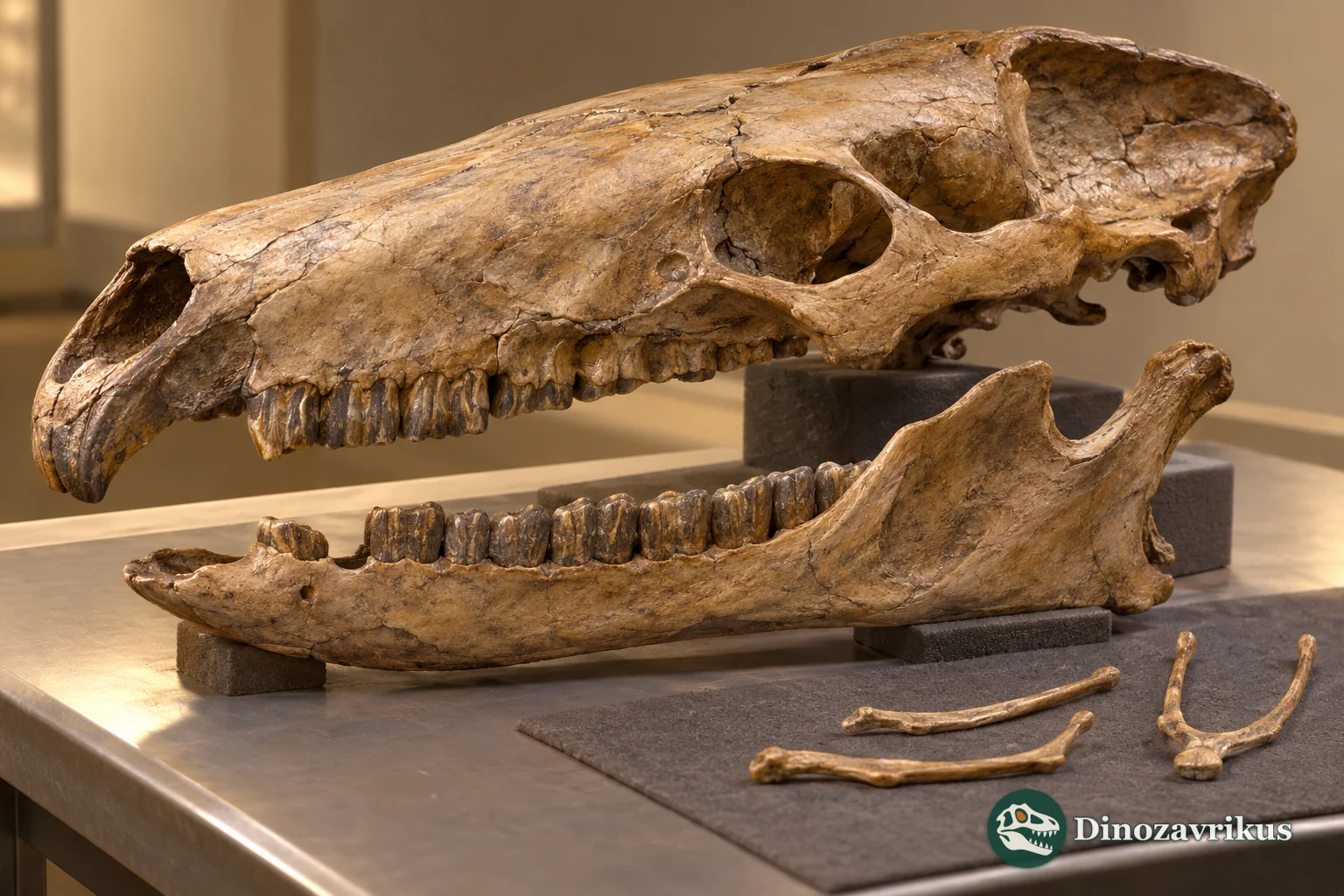
An unusually informative skull from Oruro
The nearly complete skull MNHN-Bol V 13364 comes from late Pleistocene deposits in Bolivia's Oruro Department. It preserves a mandible and much of the hyoid apparatus. Researchers documented its elongated tubular skull, ear region and digitally reconstructed internal cavities and brain impression.
Several features indicate that the individual was not fully adult. Its skull size should not be treated as the average size of all mature C. tarijensis. A published mass estimate near 1.6 tonnes is produced by a comparative model for ground sloths; it is neither a direct weighing of this fossil nor a universal value for the three species.
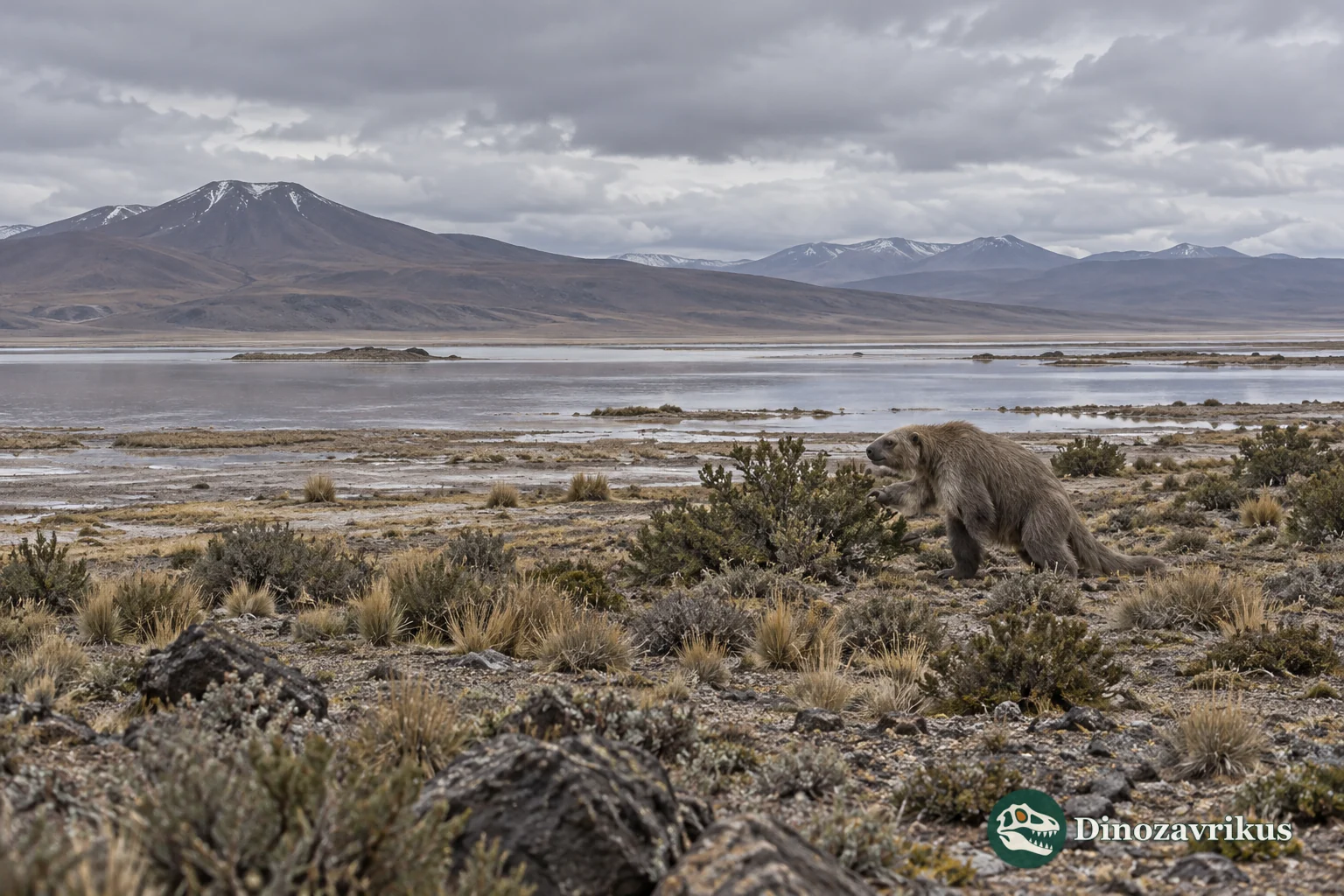
What hyoid bones suggest about feeding
The Oruro skull retains a right stylohyal and epihyal, a fused central part of the hyoid apparatus, and ossified thyroid cartilage. This rare preservation gives a basis for discussing tongue support. Combining those bones with nerve-canal anatomy, the authors inferred less tongue protrusion than in some other mylodontids and a possible compensating role for grasping lips.
This is a functional inference. Neither lips nor tongue survived. Dental anatomy and relationships support herbivory, but the specimen does not identify plant species eaten in life. Comparison with Glossotherium helps test differences in hyoid and cranial structures without copying its entire feeding behavior.
Cave bones and the history of burial
C. cuvieri fossils occur in Brazilian caves and other Quaternary deposits. At Abismo Ponta de Flecha in São Paulo, investigators described an adult humerus and a tooth of a younger animal. Preservation did not permit a firm date or a precise environmental reconstruction for those specimens.
Rib material from Risso Cave in Paraguay was studied with mineralogical and chemical methods. Altered apatite, carbonate deposition and sediment in pores trace what happened to the bones after burial. They do not record daily activity underground. An almost complete C. tarijensis skull from Uruguay added a separate geographical record, but one locality should not be used to assign an exact age to every fossil of the genus.
Frequently asked questions
Was Catonyx a tree-dwelling sloth?
No. Its large limb bones and anatomy identify it as a ground sloth, unlike today's smaller tree sloths.
Which species are commonly included in Catonyx?
A 2020 anatomical study recognized C. chiliensis, C. cuvieri and C. tarijensis, while historical synonymy among close genera has been debated.
Why is the Oruro skull important?
MNHN-Bol V 13364 preserves a jaw and much of the hyoid apparatus, allowing detailed study of the ear, internal cavities and possible tongue function.
Do cave fossils prove that Catonyx lived in caves?
No. Caves preserve remains well, but their burial there alone cannot establish habitual residence.