

Cercopithecoides was an extinct African colobine monkey, known from Pliocene and early Pleistocene deposits. The record spans several localities and more than one species. South African skulls help define C. williamsi; an associated partial skeleton from Ethiopia adds evidence about the movement of C. meaveae. Combining all those fossils into one supposedly complete animal would hide the differences between species and sites.
Its relationship to living colobines is established by anatomy, but a coat pattern and exact daily habits are not preserved. The fossil Rhinocolobus is a useful comparison: a longer muzzle and different dental features distinguish it from Cercopithecoides.
Quick facts
| Group | Cercopithecidae, Colobinae |
|---|---|
| Type species | Cercopithecoides williamsi |
| Named | Mollet, 1947 |
| Fossil range | Pliocene to early Pleistocene |
| Regions | Eastern and southern Africa |
| Main evidence | Skulls, jaws, teeth and partial skeletons |
What can the fossils tell us?
South African C. williamsi crania preserve facial and dental traits of a colobine monkey. A single worn tooth can be much harder to separate from other fossil colobines.
An associated partial skeleton of C. meaveae from Ethiopia provides a stronger basis for locomotor inference than scattered teeth. It does not measure the behaviour of every species in the genus.
The partial Sterkfontein cranium STS 1039 lay inside hard breccia. Neutron tomography exposed its jaws and teeth; its attribution to C. williamsi remained tentative.
The South African name and its changing species list
Mollet established Cercopithecoides in 1947 with C. williamsi as its type species. Material from Sterkfontein, Swartkrans, Makapansgat and other karst localities includes crania, jaws and isolated teeth. An additional Swartkrans name, C. molletti, was later absorbed into C. williamsi after larger samples showed overlapping dental variation. That revision does not erase the distinct eastern African species.
The South African crania have a relatively short muzzle, broad face and small colobine-like cheek teeth. The museum archive records STS 394a and b from Sterkfontein Member 4 as a partial cranium with an associated partial mandible. This association permits better comparisons than a single isolated molar. Paracolobus, another fossil colobine, has a different combination of cranial and postcranial characters; size alone cannot classify these monkeys.
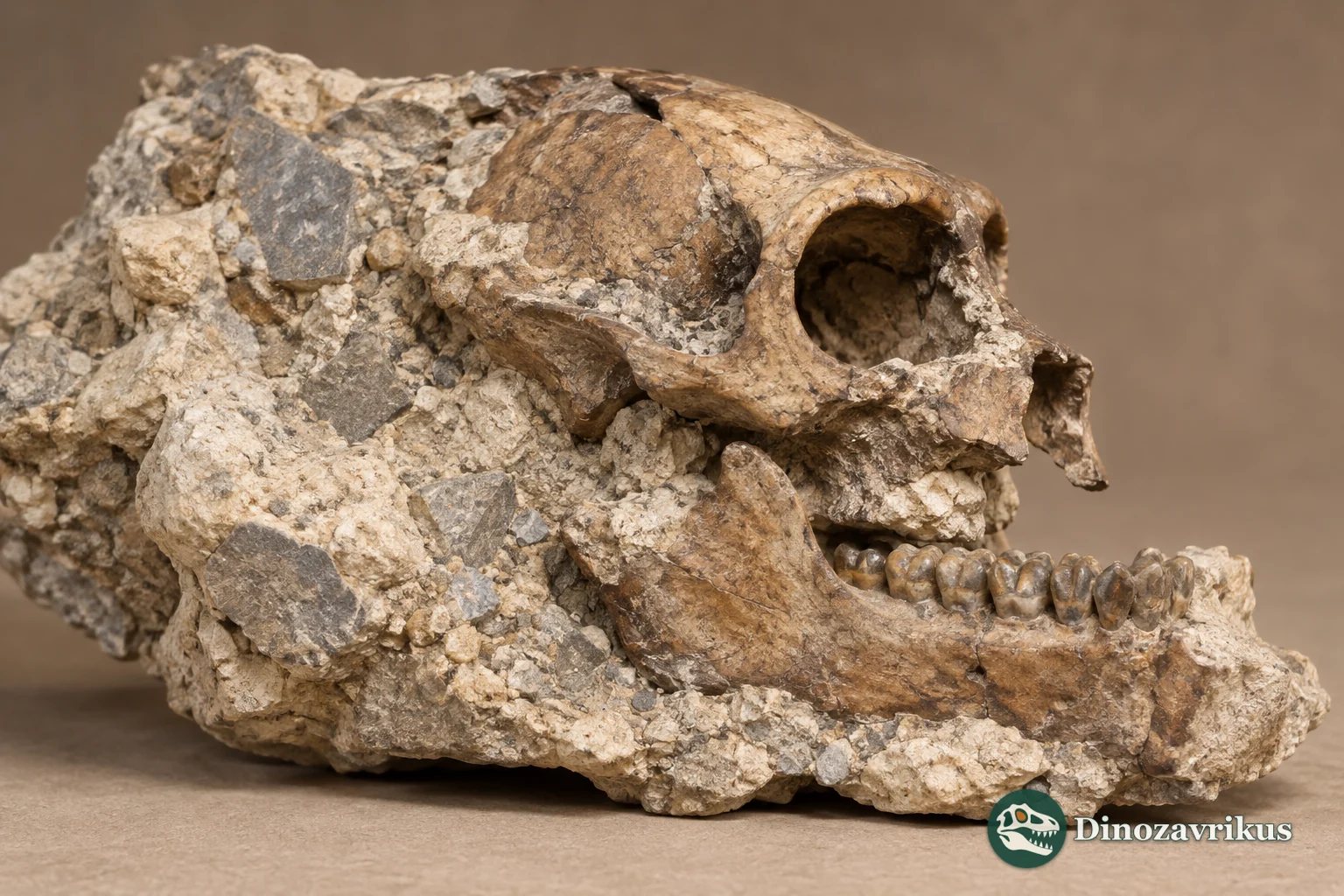
A skull reconstructed inside breccia
The partial cranium STS 1039 was embedded in the hard breccia of Sterkfontein Member 4. Ordinary X-ray microtomography did not reveal enough of its internal anatomy. Beaudet and colleagues instead used neutron microtomography to virtually expose the dentognathic region, including postcanine teeth, and compared the digital model with other fossil and living monkeys.
Their 2016 paper proposed C. williamsi only tentatively. Better imaging improves access to a fossil; it does not supply missing anatomical parts or make a marginal species assignment certain. The illustration below explains the problem of bone embedded in rock. It is not a photograph of STS 1039.
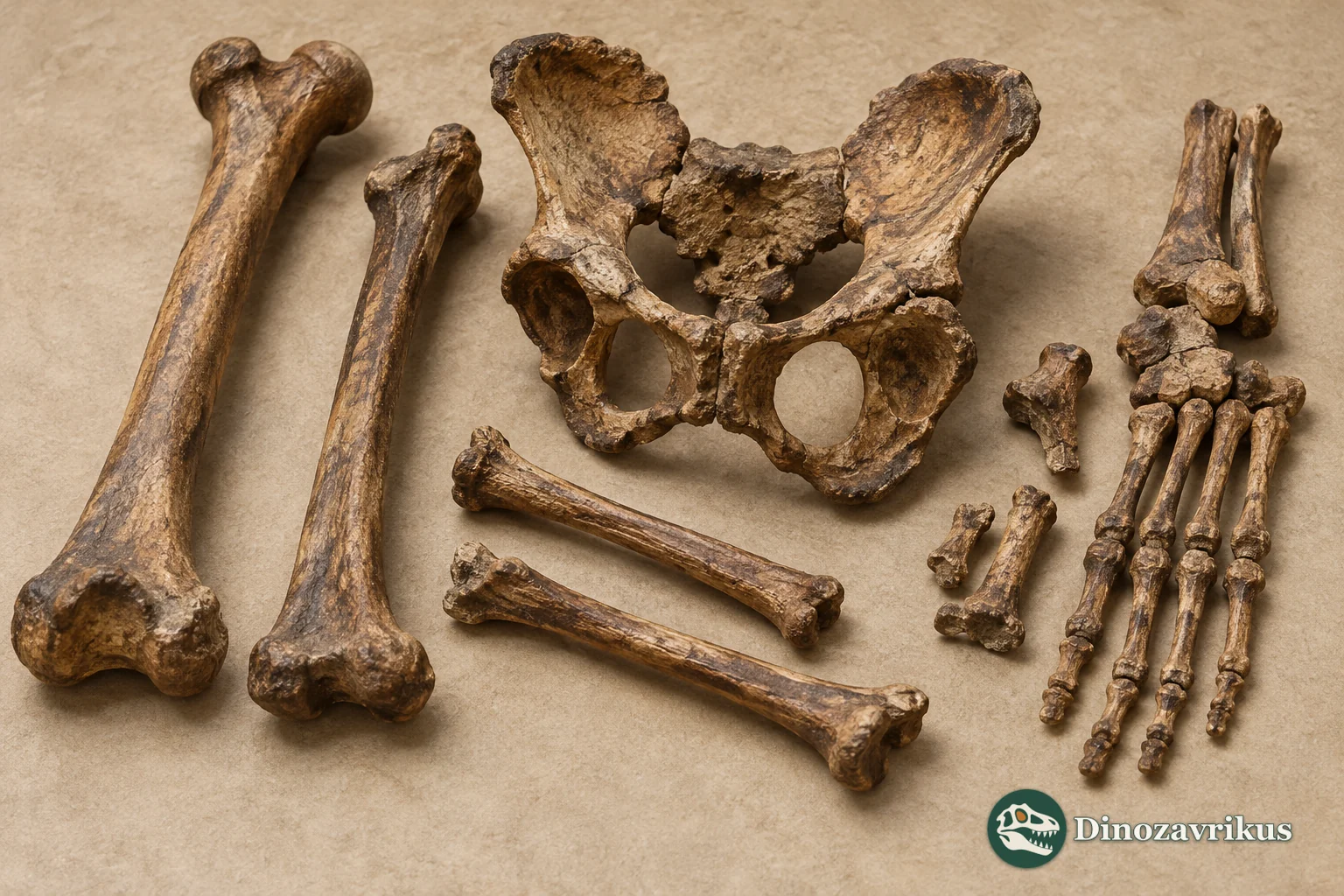
Leadu bones and African chronology
Frost and Delson described C. meaveae from Ethiopia in 2002. An associated partial skeleton from Leadu preserved postcranial evidence that they interpreted as adaptation to substantial terrestrial movement. The bones do not show that the monkey never climbed. They also caution against using the Leadu individual as a body plan for every southern African C. williamsi fossil.
A larger eastern African form, C. kimeui, is recorded from younger levels near Hadar and other sites. In South Africa, Drimolen Makondo yielded the partial mandible DNM 1 and upper jaw fragment DNM 95, assigned only to Cercopithecoides sp. Sterkfontein Member 4 and Swartkrans Member 1 have site-level age estimates of roughly 2.6–2.0 and 2.1–1.7 million years respectively in one recent biochronological synthesis. Neither range is a direct date on an individual skull. Fossil teeth and likely plant processing indicate a colobine diet, but do not identify exact meals. The cover's coat and setting remain artistic choices.
Frequently asked questions
Was Cercopithecoides a human ancestor?
No. It was an extinct colobine in the monkey family Cercopithecidae, not a member of the direct human lineage.
What does the Leadu skeleton show?
Associated limb bones of C. meaveae support substantial terrestrial locomotion, but do not rule out climbing or define every species' habits.
Why was STS 1039 scanned with neutrons?
Hard breccia obscured its anatomy. Neutron imaging revealed teeth and jaws that could be compared without fully removing the rock; the species assignment remained tentative.
Are all South African teeth identified to species?
No. Fragmentary jaws such as the Drimolen Makondo specimens can be assigned to the genus while their species remains undetermined.