

Egertonodus is an extinct hybodont shark genus. Its type species was first described from Isle of Wight mouth material in 1845 under Hybodus; later study of cranial material and teeth supported a separate genus. A second English species is known chiefly through its teeth. The cover is a reconstruction rather than a photograph of a preserved animal.
Quick facts
| Genus | Egertonodus Maisey, 1987 |
|---|---|
| Type species | Egertonodus basanus (Egerton, 1845) |
| Group | Hybodontiform cartilaginous fish |
| Original fossil | Mouth material from the Isle of Wight |
| Additional species | Egertonodus duffini from Bathonian England |
| E. duffini holotype | P. 66479, anterior tooth crown |
| Wessex teeth | Central cusps up to 4.5 mm high |
| Body length | Not established by these tooth fragments |
What can the fossils tell us?
Boscawen Ibbetson found mouth material on the Isle of Wight. Egerton described Hybodus basanus in 1845; Maisey later separated it as Egertonodus.
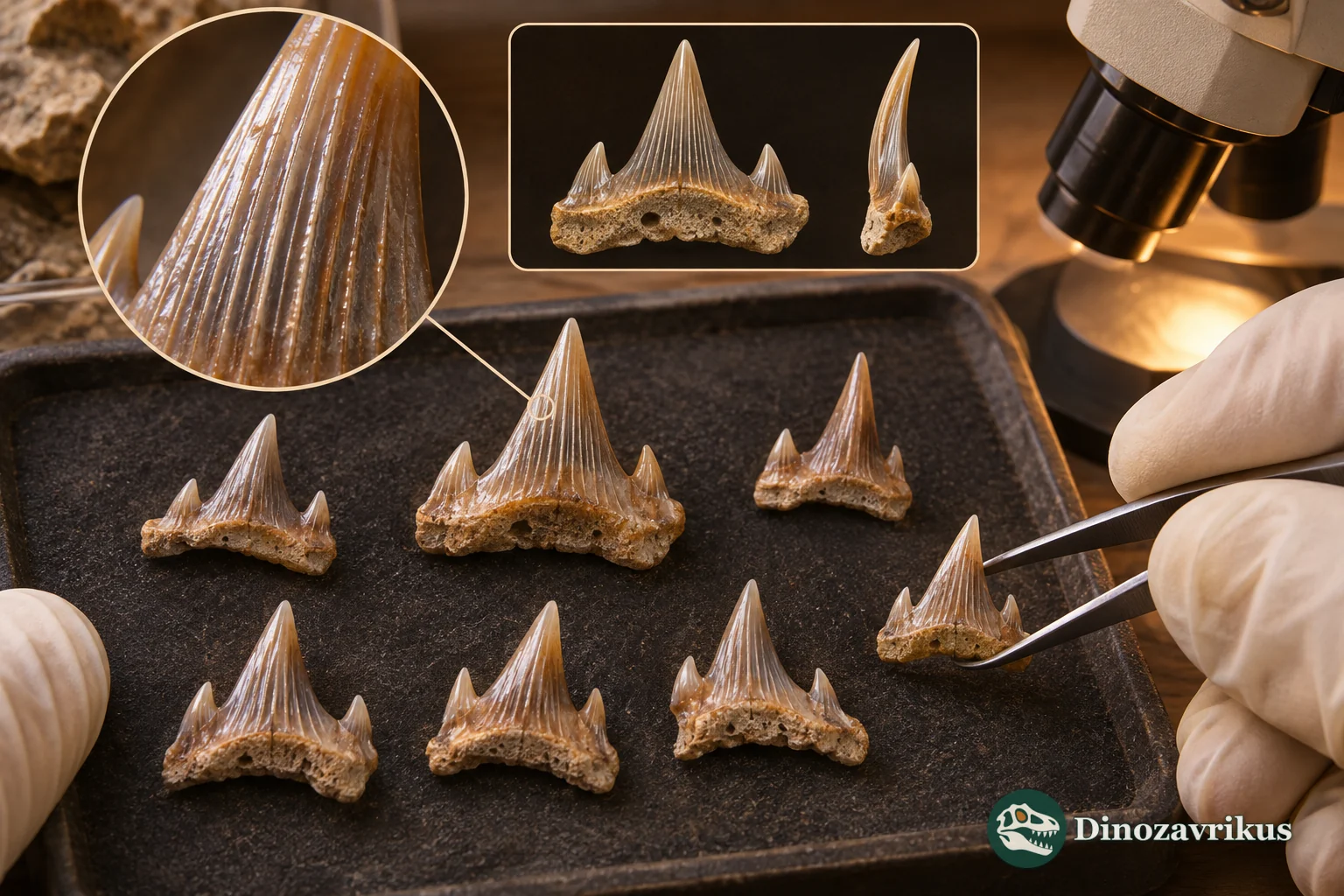
Seven fragmentary Barremian teeth, NHMUK PV P 73425 and P 73426, include central cusps up to 4.5 mm high with vertical ridges.
Rees and Underwood described P. 66479 from the Stonesfield Slate in 2008. The precise horizon within that unit is unknown.
Cranial material is known for E. basanus, whereas E. duffini is diagnosed chiefly from teeth. The measured cusp does not fix whole-body size or prey.
Ibbetson's find and a later genus
Boscawen Ibbetson found mouth material on the Isle of Wight near the boundary of Wealden deposits and Lower Greensand. Philip Grey Egerton described it in 1845 as Hybodus basanus. Later study of cranial material allowed John Maisey to compare the species more closely with other hybodonts; it was placed in Egertonodus in 1987.
The cranial evidence matters because many fossil sharks are represented only by shed teeth. Yet preservation differs among specimens and species: anatomy observed in the type species cannot be assumed for every isolated crown assigned to the genus.
Measured Early Cretaceous teeth
Seven fragmentary E. basanus teeth from the Barremian Wessex Formation of the Isle of Wight are represented by NHMUK PV P 73425 and P 73426. Their confidently identified central cusps reach 4.5 mm, incline lingually and bear sharp cutting edges. Fine vertical ridges rise from the crown base, extending farther on the lingual side.
More complete teeth from comparable English strata show low side cusplets beside the central cusp. These features aid identification, but a 4.5-mm cusp does not measure the whole animal. The much younger shark Foumtizia illustrates why similarly small isolated teeth from different ages must be diagnosed separately.
A Bathonian species from Stonesfield
Jan Rees and Charlie Underwood named Egertonodus duffini in 2008. Its holotype P. 66479 is a complete anterior tooth crown from the Stonesfield Slate of the Taynton Limestone Formation, Oxfordshire. The precise horizon within that unit was not recorded. The name honours researcher Christopher Duffin.
Its anterior tooth combines a tall slender curved central cusp, cutting edges and three pairs of spaced side cusplets. The diagnosis compares teeth from different jaw positions with other hybodonts. It does not establish a total body length from the holotype alone.
River setting and uncertain ecology
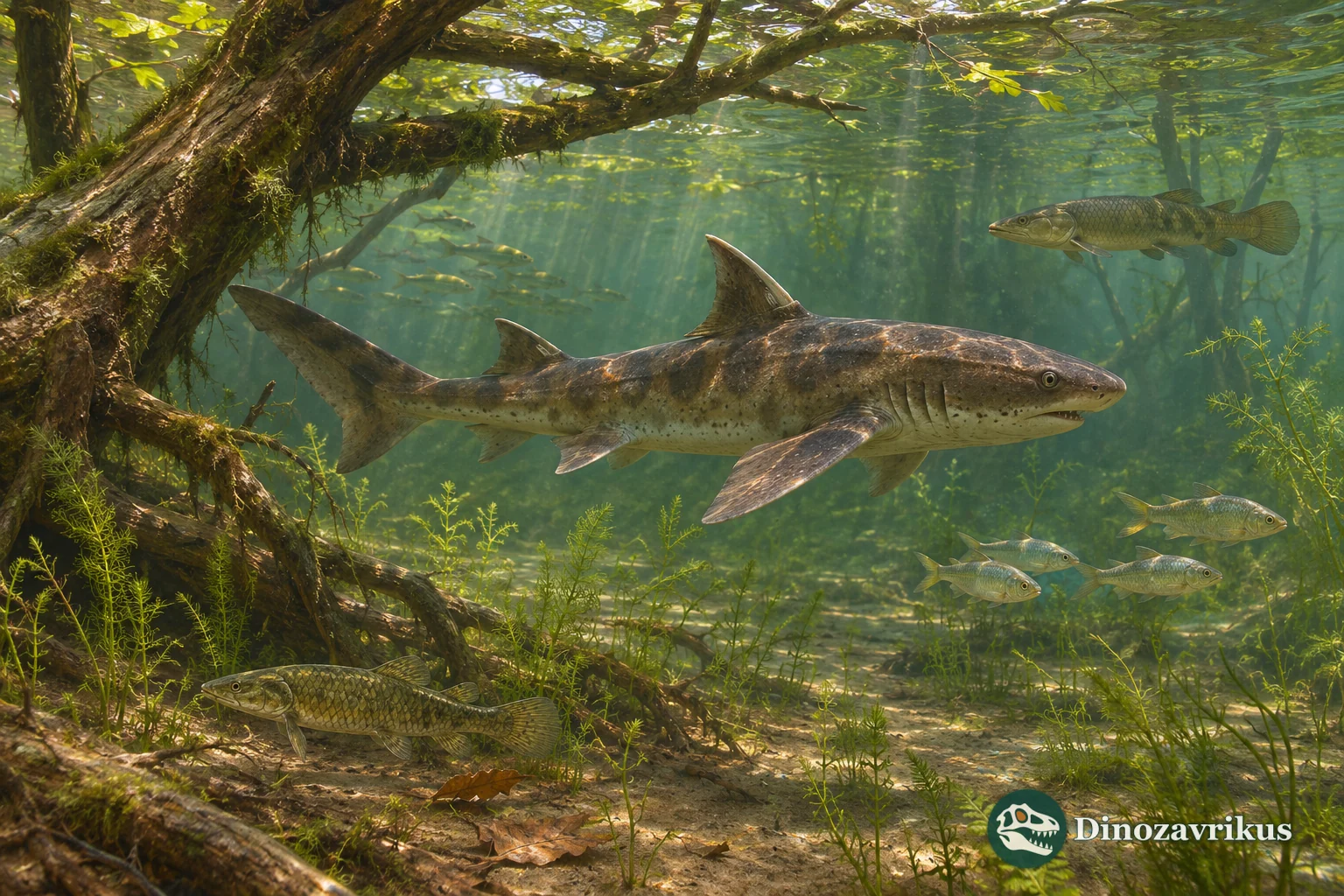
The Wessex Formation includes river and floodplain deposits of the Early Cretaceous. They inform the setting of the E. basanus teeth, but do not document a feeding event. Different hybodont tooth shapes can reflect different food processing; no direct stomach contents identify this species' menu. The later shark Premontreia provides another example of recognizable dental features without a secure body colour or behaviour.
The cover and river scene use comparative anatomy for the shark outline. Fin shape, colouring and other animals in the same frame are illustrative choices, not observations of one fossil individual.
Frequently asked questions
Why was the type species first called Hybodus basanus?
Egerton used Hybodus when describing the fossil in 1845. A later revision assigned the same species to Egertonodus.
Is a skull known for Egertonodus?
Cranial material of the type species E. basanus has been studied, although E. duffini is chiefly diagnosed from teeth.
How large are the Wessex tooth fragments?
The identified central cusps in the described sample reach 4.5 mm high. That is a cusp measurement, not shark body length.
Where did the E. duffini holotype come from?
The tooth crown P. 66479 came from Bathonian Stonesfield Slate in Oxfordshire; its exact level within the unit is unknown.