

Eosclerocalyptus is a genus of glyptodonts from South America, represented by armour plates and parts of the skeleton. Its species do not form one short-lived population: revisions place them in different Late Miocene and Early Pliocene faunas of Argentina. The genus also changed as paleontologists reassessed the relationship between Eosclerocalyptus and Hoplophractus.
The genus belongs in the ancient mammal catalogue. Fossil armadillos such as Proeuphractus and Prozaedyus provide comparisons among armored cingulates, but their plates do not imply that they shared the same lineage or age.
Quick facts
| Scientific name | Eosclerocalyptus C. Ameghino, 1919 |
|---|---|
| Group | Glyptodontidae; cingulate xenarthran |
| Species in the 2007 revision | E. lineatus, E. proximus and E. tapinocephalus |
| Age | Late Miocene to Early Pliocene, depending on species |
| Range | Argentina; species come from different regions |
| Known material | Osteoderms, skull parts, tail tubes and limb bones |
| Taxonomic change | Hoplophractus treated as a junior synonym |
| Body size | No single reliable genus-wide estimate |
What do the armour and bones show?
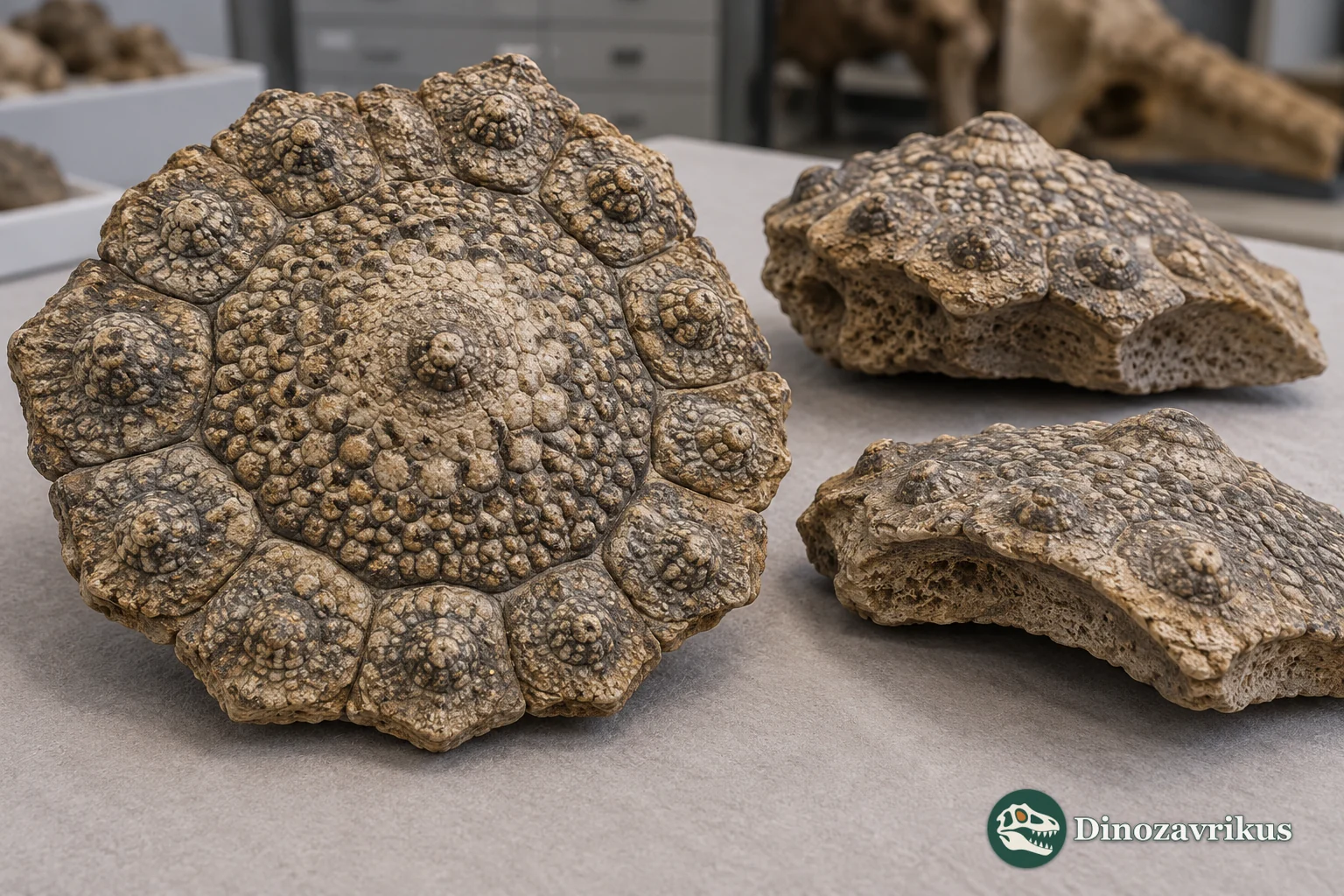
Hoplophorini osteoderms show a central figure surrounded by smaller peripheral figures. Revisions compare their relief and proportions across plates; no single pattern should be assumed for every region of a carapace.
A 2007 paper described a well-preserved E. tapinocephalus specimen, previously known mainly from type material. The caudal tube and limb bones allowed closer comparison with E. proximus and Neosclerocalyptus.
The revision distinguishes E. tapinocephalus from central Buenos Aires, E. proximus from northwestern Argentina and the later E. lineatus. These records do not mean the species lived together or shared one local environment.
Comparisons of skull and carapace morphology led researchers to treat Hoplophractus Cabrera as a junior synonym of Eosclerocalyptus. Hoplophractus tapinocephalus is therefore referred to as Eosclerocalyptus tapinocephalus in that classification.
The name and a taxonomic revision
Carlos Ameghino introduced the genus name Eosclerocalyptus in 1919. During the twentieth century, related glyptodont forms were described under several generic names. A 2005 study comparing skull and carapace morphology proposed that Hoplophractus was a junior synonym of Eosclerocalyptus. Under that arrangement, Hoplophractus tapinocephalus became Eosclerocalyptus tapinocephalus.
This synonymy is a taxonomic conclusion based on shared and differing characters, not a claim that two names refer to one specimen. Skull proportions, the arrangement of central and peripheral figures on osteoderms, and the structure of the tail tube all contribute to comparisons. Taphonomic distortion can alter skull proportions, so one apparent difference may not mark a separate genus.
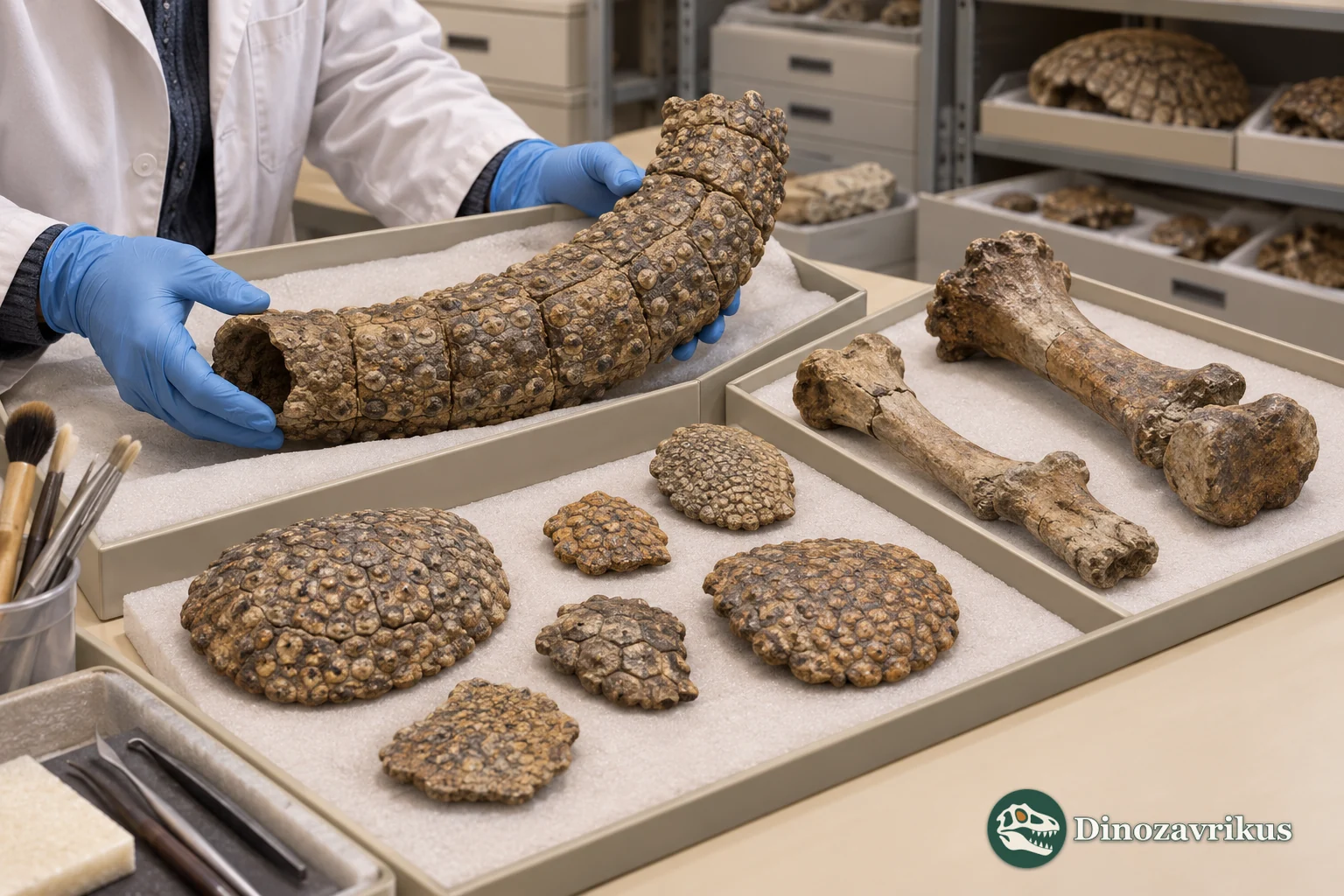
Carapace plates and the tail tube
Like other glyptodonts, Eosclerocalyptus had a body covered by a bony carapace. In Hoplophorini, osteoderms carry a central figure surrounded by smaller peripheral figures. Researchers compare the shape, relief and arrangement of these features. Plates from the side, centre and margin can differ, so a single osteoderm does not represent the full armour.
Tail elements can be particularly informative. In E. tapinocephalus, the caudal tube resembles that of E. proximus, but its small peripheral figures are less developed. Combined with the skull, carapace and femoral characters, this helps distinguish the species. It is the character combination, not one isolated plate, that supports the diagnosis.
Three species, separate faunas
Alfredo Eduardo Zurita's 2007 revision recognizes three species. Eosclerocalyptus tapinocephalus is reported from the Huayquerian Late Miocene of central Buenos Aires Province, with a cited interval of about 8.7–6.8 million years. The associated landscapes were interpreted as open settings including savannas, grasslands and herbaceous steppes.
E. proximus is associated with the “Araucanian” deposits of northwestern Argentina, spanning the Late Miocene to Early Pliocene. E. lineatus was reported from the later Montehermosan interval, about 6.8–3.9 million years in the cited synthesis. These regional stages are correlations, not exact dates for every bone.
The open-habitat interpretation refers to particular E. tapinocephalus localities and should not be transferred automatically to all three species. The record spans different provinces and faunas rather than one single herd or landscape.
What a better-preserved specimen added
Before the 2007 study, E. tapinocephalus was known mainly from its type material. A newly described specimen preserved, in particular, a caudal tube and limb bones. This added anatomical regions that could be compared with E. proximus and the Pleistocene genus Neosclerocalyptus.
The importance of the find is the combination of additional characters, not a complete articulated skeleton. A separate study described a carapace about 130 centimetres long in material referred as Eosclerocalyptus cf. E. lineatus. Because the identification is qualified with “cf.”, that measurement belongs to one cautiously assigned specimen; it is not a reliable body length for E. lineatus or a genus-wide average.
Limits of reconstruction
Osteoderms establish the presence of a bony carapace and preserve surface patterns that researchers can compare. Tail tubes and limb bones add evidence about other parts of the skeleton. The material is distributed among separate specimens and species, however, so the fossils should not be assembled into a single imagined skeleton and presented as one individual.
The cover is an artistic reconstruction of a glyptodont in an open landscape. Its colours, hair and exact soft-tissue proportions are unknown, and the plants do not represent one measured fossil locality. The image communicates the broad armored body plan rather than a documented portrait.
Frequently asked questions
When did Eosclerocalyptus live?
Its revised species span the Late Miocene and Early Pliocene. The age depends on the species and locality; the three are not assumed to have lived at the same time.
How many species are recognized?
Zurita's 2007 revision recognizes E. tapinocephalus, E. proximus and E. lineatus. Older sources may use other combinations because Hoplophractus was later treated as a synonym.
Why is Hoplophractus a synonym?
Comparisons of skull and carapace characters led researchers to include Hoplophractus within Eosclerocalyptus. This makes Hoplophractus tapinocephalus Eosclerocalyptus tapinocephalus in that classification.
How large was the animal?
There is no secure single size estimate for the genus. A roughly 130-centimetre carapace belongs to one specimen referred as Eosclerocalyptus cf. E. lineatus, not a measured body length for the species.