

Proeuphractus is an extinct South American armadillo genus whose type species, P. limpidus, was named from two separate armour plates. For nearly a century and a half, one of those plates was considered lost or doubtful. A 2025 museum revision located the fixed osteoderm in the collection of the Museo Argentino de Ciencias Naturales, sharpening the identity of the name-bearing material without adding a skull or skeleton.
The genus belongs in the ancient mammal catalogue. Its plates can be compared with those of other euphractine armadillos such as Prozaedyus and Proeutatus, but similarity between isolated osteoderms does not establish identical anatomy or ecology.
Quick facts
| Scientific name | Proeuphractus Ameghino, 1886 |
|---|---|
| Type species | Proeuphractus limpidus Ameghino, 1886 |
| Group | Cingulata; Euphractinae; Euphractini |
| Age of type record | Late Miocene; exact correlation is debated |
| Type series | Separate fixed and movable osteoderms; the movable plate is not relocated |
| Rediscovered type element | MACN-PV 13001, a fixed osteoderm |
| Body size | Cannot be reliably estimated from the type plates |
| Main limitation | No complete skull or skeleton securely tied to the type species |
What do the Proeuphractus plates show?
The original description included one fixed and one movable osteoderm. In 2025 the fixed plate was located as MACN-PV 13001; the second part of the type series remains uncertain.
Researchers described a central figure, peripheral fields and openings associated with the skin. These features help compare armour, but do not reveal the animal’s entire anatomy.
Material assigned to Proeuphractus has been published from several Argentine formations. Some remains are identified only to genus, and their ages rely on stratigraphic and faunal correlation.
Not every name once combined with Proeuphractus remains in its current scope. Proeuphractus recens became the type species of Chorobates; the similar Proeuphractus scalabrinii was transferred to Macrochorobates.
The name and original type series
Florentino Ameghino established Proeuphractus in 1886 for armoured remains from the “bone-bearing conglomerate” near Paraná, Entre Ríos Province. The type species is P. limpidus. The original series included a fixed osteoderm collected by Lelong Thévenet and a separate movable plate collected by Ameghino. They were not part of an articulated carapace.
The fixed osteoderm entered the National Museum of Argentina, now the Museo Argentino de Ciencias Naturales Bernardino Rivadavia. Later authors considered the type lost or associated it with specimens at La Plata. In 2025, Cruz and Fernicola located MACN-PV 13001 with an Ameghino handwritten label and identified it as part of the syntype series based on its provenance, measurements and anatomy. This clarifies the specimen’s identity; it does not add new skeletal regions to the animal.
What the osteoderm shows
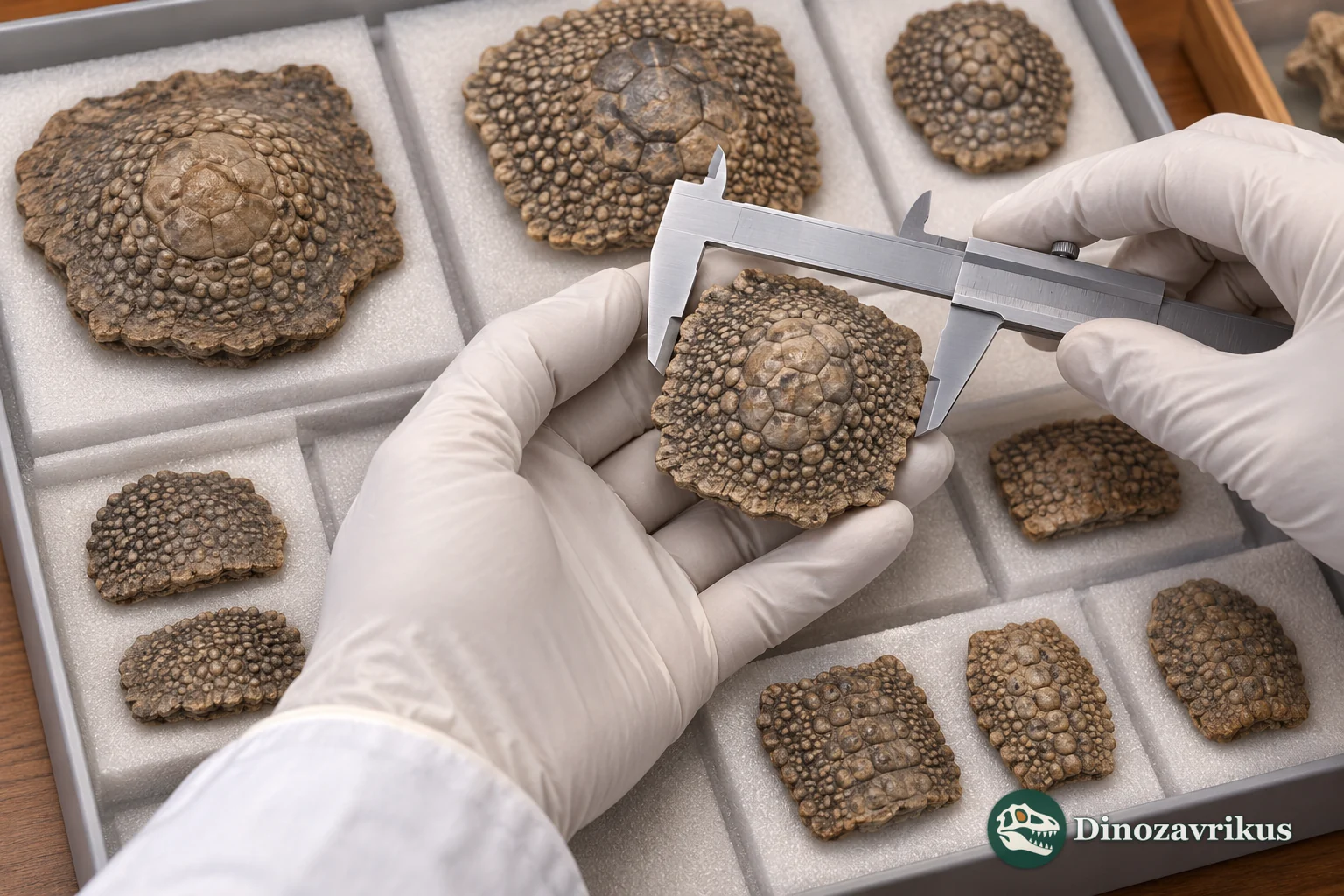
The exposed surface of the fixed plate has an elongated, bottle-shaped central figure. It covers much of the rear portion and is strongly raised near the posterior edge. Several peripheral figures are separated by grooves, and lateral and posterior openings form a pattern the authors associate with hair-bearing structures.
Movable plates previously referred to P. limpidus have been described with three lengthwise figures. Fixed and movable osteoderms come from different parts of an armour, so their shapes are expected to differ. Identification depends on comparing plate type, position and stable surface features rather than searching for one universal character.
Names, synonyms and revisions
Older literature assigned several species to Proeuphractus, but their combinations changed. Proeuphractus recens, named by Ameghino in 1887 from plates from Monte Hermoso, was transferred to the new genus Chorobates by Reig in 1958. Its historical combination does not make it a current species of Proeuphractus.
A similar issue concerns Proeuphractus scalabrinii, named by Moreno and Mercerat in 1891. Because Ameghino had already established the genus name in 1886 for a different species, later revisions transferred scalabrinii to Macrochorobates. Recent papers retain P. limpidus as the type species and often use Proeuphractus sp. for later material identified only to genus.
Age and geographic record
The type of P. limpidus comes from the Paraná “bone-bearing conglomerate”. Its age has been discussed within the history of the Ituzaingó Formation and neighbouring Neogene deposits. No radiometric date was taken from the type specimen: a Late Miocene age is inferred from mammals, stratigraphic relationships and associated fauna. Biostratigraphic estimates for the assemblage include roughly 9–6.8 million years, while alternative correlations may widen the interval.
Late Miocene finds identified as P. limpidus or Proeuphractus sp. have also been reported from the Salicas Formation in La Rioja, the Chiquimil and Andalhuala formations in Catamarca, and other Argentine localities. In some cases, similar plates do not decide whether the fossils belong to typical P. limpidus or to an undescribed form. The genus-wide map is therefore less secure than any one well-documented specimen.
Limits of reconstruction
Osteoderms directly establish that the skin contained bony plates and provide characters for comparing armour. They do not reveal limb length, skull shape, bite force, gait, diet or burrowing ability. Those questions require teeth, a skull and associated skeleton tied to the same taxon.
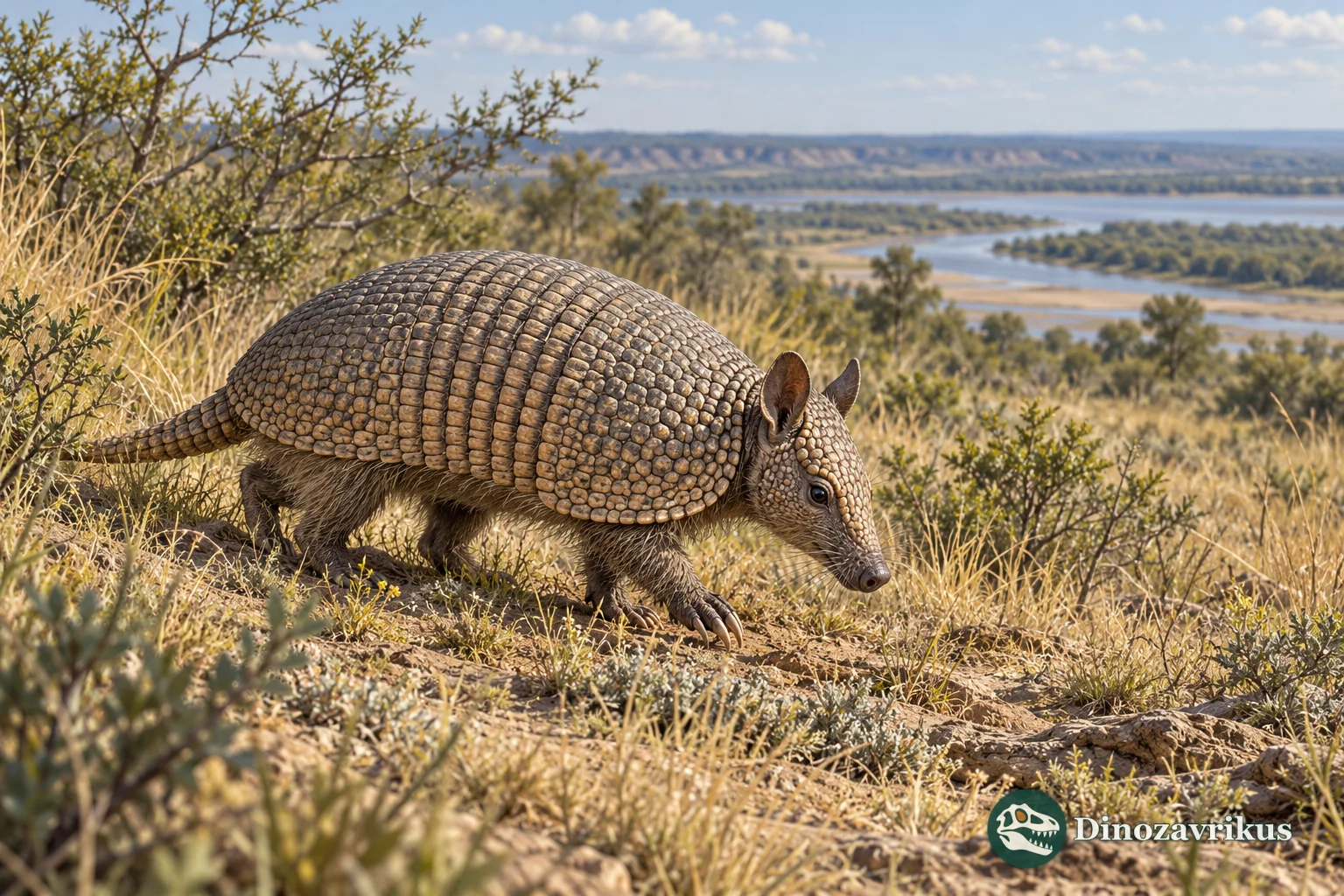
Life reconstructions use comparisons with other euphractine armadillos. Colour, hair, muzzle proportions and the precise arrangement of the carapace shields are not known for Proeuphractus. Differences from Prozaedyus help discuss taxonomy, but they do not justify transferring the behaviour of a living armadillo without further evidence.
Frequently asked questions
What was Proeuphractus?
It was an extinct South American armadillo genus. Its type species, Proeuphractus limpidus, is known chiefly from separate bony armour plates.
What is the type specimen?
The original series included a fixed and a movable osteoderm. In 2025 the fixed plate was located in the Buenos Aires museum collection as MACN-PV 13001 and assigned to the syntypes.
When did Proeuphractus live?
The type species is Late Miocene. The age of the Paraná bone-bearing conglomerate is based on biostratigraphic and stratigraphic correlation, not a radiometric date on the plate.
Can its size and way of life be reconstructed?
Not reliably from the type plates. They do not provide a body-length or mass estimate, gait or diet; associated skull and skeleton material would be needed.