

Proeutatus was a genus of cingulate mammals from Miocene South America. Its fossils include bony armour, skulls, jaws and limb bones, offering more anatomical evidence than a genus known from teeth alone. Yet the names of several species remain difficult to assess because their nineteenth-century type material is incomplete or uncertain.
The genus belongs in the ancient mammal catalogue alongside other fossil armadillos. A comparison with Prozaedyus helps place it among smaller Santacrucian cingulates, while the much later Chasicotatus shows how armour plates can dominate the fossil record of another armadillo.
Quick facts
| Scientific name | Proeutatus Ameghino, 1891 |
|---|---|
| Type species | Proeutatus oenophorus (Ameghino, 1887) |
| Group | Mammalia, Xenarthra, Cingulata; tribe Eutatini |
| Age | Early to Middle Miocene; best-known material is Santacrucian |
| Range | Patagonia, Argentina; some Chilean records are tentative |
| Main evidence | Osteoderms, skulls, jaws, teeth and limb bones |
| Estimated mass | A comparative mean of about 15 kg has been reported for the Santa Cruz sample |
| Taxonomic caveat | A 2026 review documented lost, ambiguous and mixed type material |
What can the fossils tell us?
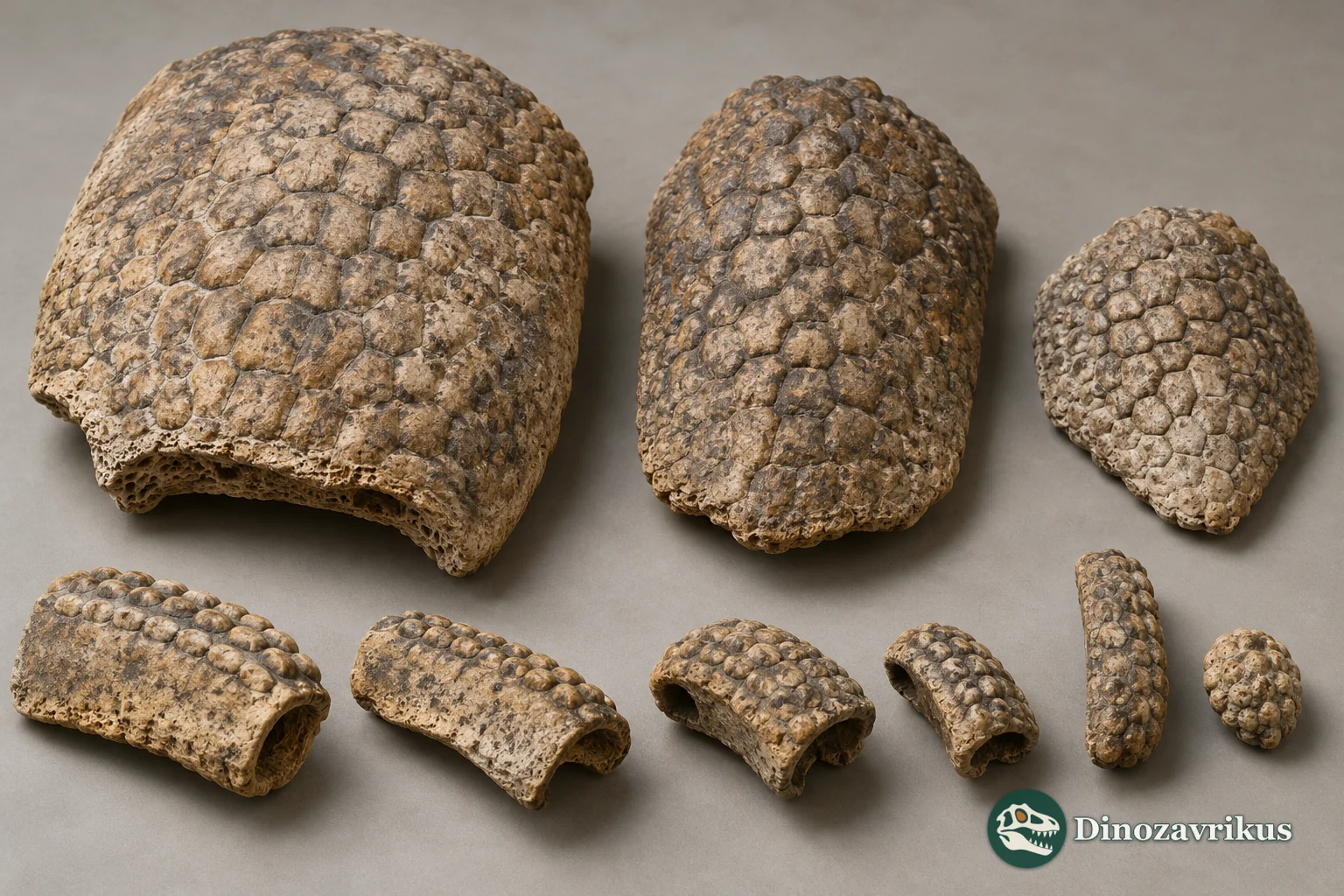
Researchers compare the surface figures, midline keel, foramina and shape of fixed and movable plates. Features can overlap among named species, so an isolated plate may not support a secure species-level identification.
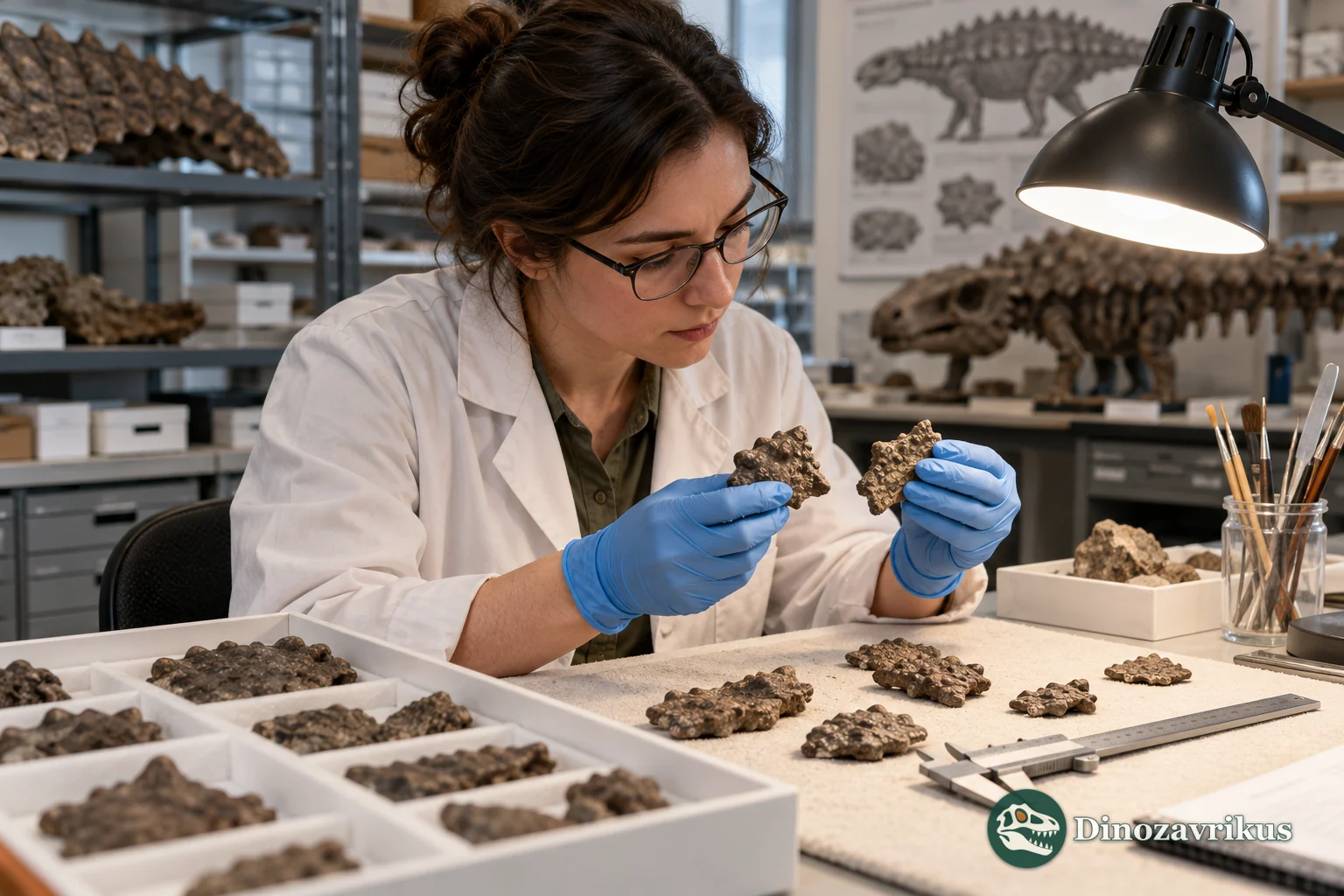
A 2026 review compared Ameghino’s descriptions and collection catalogue with specimens held in La Plata and Buenos Aires. It documented material that could be supported as part of a type series as well as cases of loss, ambiguity and mixing.
Measurements from the Santa Cruz fauna were compared with living armadillos. Forelimb indices were consistent with digging ability, but not extreme burrowing or cursorial specialisation. These are anatomical inferences, not observations of behaviour.
Jaw mechanics, the joint region and tooth form were used to infer a plant-focused diet. No stomach contents or direct feeding traces establish a specific menu.
Name and early collections
Carlos Ameghino collected fossil vertebrates along the cliffs of the Río Santa Cruz in Patagonia in 1887. His material helped his brother Florentino name more than a hundred fossil vertebrate taxa. Florentino erected Proeutatus in 1891; its type species is P. oenophorus, first named in 1887.
Early descriptions did not always provide collection numbers in the form used today. A 2026 review compared the original descriptions and drawings with the handwritten catalogue of Ameghino’s personal collection and specimens in the Museo de La Plata and the Museo Argentino de Ciencias Naturales “Bernardino Rivadavia”. Some specimens could be supported as part of type series, while other cases involve loss, ambiguity or mixed material. The review is a basis for future taxonomic work, not a final validation of every name historically assigned to the genus.
Species and identification
The historical literature placed six names in Proeutatus: P. oenophorus, P. deleo, P. carinatus, P. lagena, P. bipunctatus and P. distans. These were initially assigned to Eutatus and transferred as the genus was established. Later authors accepted different combinations, and some studies could not consistently distinguish species from osteoderms alone.
Identification compares the central surface figure, a possible longitudinal keel, the position of foramina and the plate outline. Published movable osteoderms assigned to P. oenophorus include examples roughly 28–33 mm long, but those measurements describe particular plates, not a complete carapace or animal. Tentative Chilean material has been reported as Proeutatus cf. deleo or Proeutatus sp.; “cf.” signals resemblance with an unresolved identification.
The 2026 review documents the condition of historical type material. It does not settle all species boundaries, so a list of old names should not be mistaken for a fully resolved modern classification.
Skull, limbs and body size
Skulls assigned to P. oenophorus have been reported at about 12 cm in condylobasal length and 7 cm in bizygomatic width. These are measurements of individual skull material, not a range for every species. The skull is smaller than that of the later Pleistocene Eutatus, and its jaw and front-of-skull anatomy show features used to compare eutatine armadillos.
Researchers estimated body mass from limb-bone dimensions using equations and indices calibrated on living armadillos. A comparative study reported a mean of 15.28 kg for Proeutatus in the Santa Cruz fauna. This is a model-based sample estimate, not the measured weight of a fossil individual or a universal value for every species.
Feeding and movement
Jaw mechanics, the temporomandibular region and tooth shape were used to infer that Proeutatus had a plant-focused diet. The study considered Santacrucian armadillos within broader omnivory and identified specialisations among different genera. The conclusion is based on anatomy and wear, not preserved stomach contents.
Forelimb proportions support an ability to dig. The indices did not indicate the extreme burrowing seen in some living armadillos, and the animals were not reconstructed as highly cursorial. A bone constrains possible movement; it does not show how often an individual dug or how it behaved in a specific setting.
Age, range and reconstruction
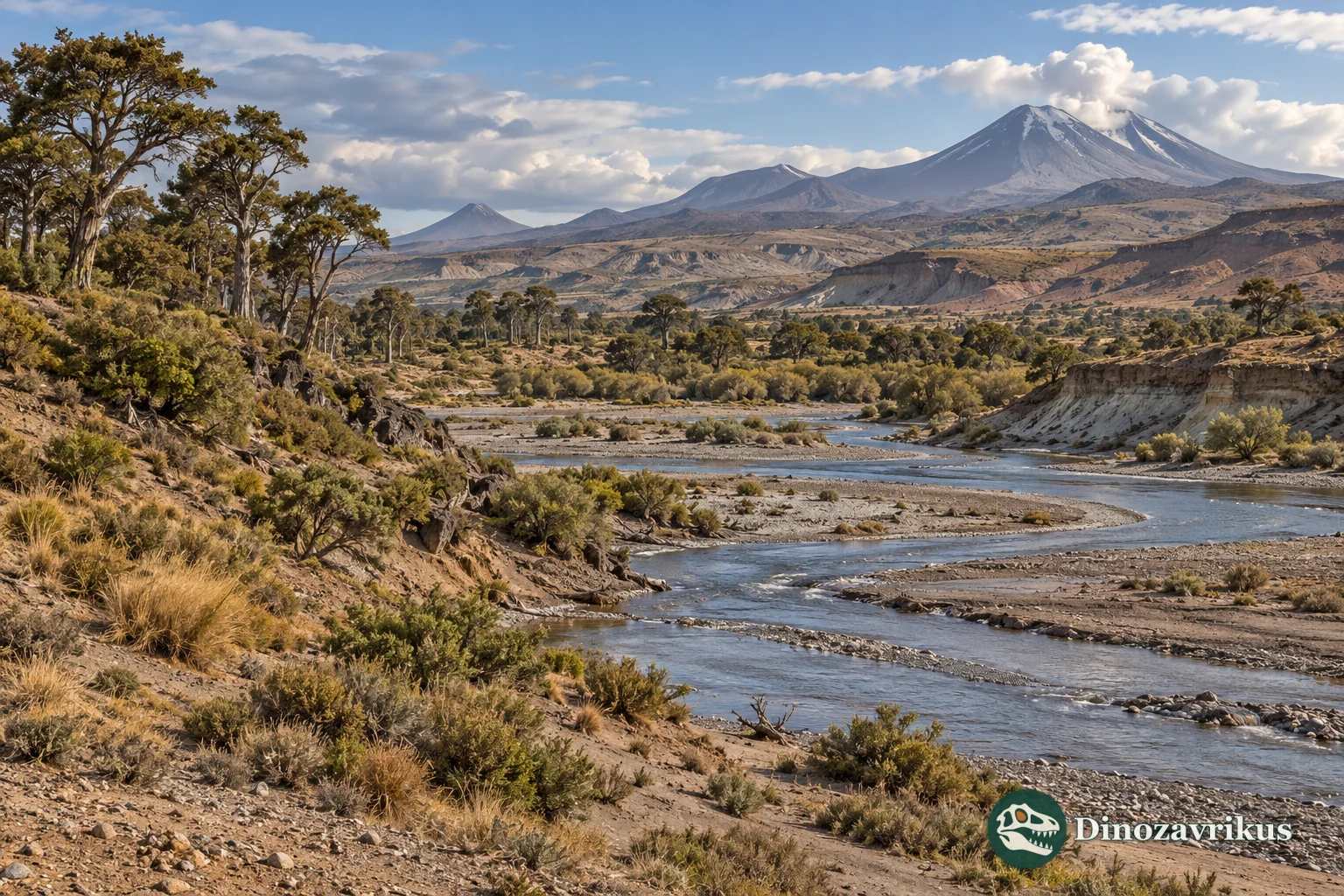
The best-known material comes from the Santa Cruz Formation, which spans multiple Early to Middle Miocene levels. A formation-wide age should not be treated as the exact age of each specimen. Fossils assigned to the genus have also been reported from other South American Miocene deposits; tentative identifications need to remain marked as such.
The armour confirms a bony carapace, while skulls and limb bones inform feeding and movement hypotheses. These parts come from separate fossils and localities, not one complete individual. The cover uses a generalized cingulate body plan; its fur, colour and soft tissues are artistic choices rather than direct fossil evidence.
Frequently asked questions
When did Proeutatus live?
Its best-known fossils are Early to Middle Miocene, especially from the Santa Cruz Formation of Patagonia. That formation spans multiple horizons, so the exact age depends on the specimen’s locality and layer.
What fossils have been found?
The record includes osteoderms, skulls, jaws, teeth and limb bones. These remains are not all parts of a single complete skeleton.
How heavy was Proeutatus?
A comparative study reported a mean estimate of about 15.28 kg for the Santa Cruz sample. It was calculated from limb-bone measurements and living-armadillo models, not weighed from a fossil.
Why are its species being reviewed?
Some historical type specimens are lost, ambiguous or mixed, and osteoderm traits may overlap among species. A 2026 review documented those issues so later work can stabilise the names.