

Hemihegetotherium was a small South American notoungulate in the family Hegetotheriidae. Its fossil record is best represented by teeth and skulls, which have been central to species diagnoses and changing taxonomic opinions. A smaller set of finds adds limb bones, but no single complete skeleton captures every feature known across the genus.
The genus is included in the ancient mammal catalogue. Its dental anatomy can be compared with the related Hegetotherium, while the older notoungulate Notopithecus provides a broader typothere context rather than a direct model for its appearance.
Quick facts
| Scientific name | Hemihegetotherium Rovereto, 1914 |
|---|---|
| Type species | H. achataleptum |
| Group | Notoungulata, Typotheria; Hegetotheriidae |
| Age | Middle to Late Miocene |
| Range | Argentina and Bolivia |
| Known remains | Skulls, jaws, teeth and isolated limb bones |
| Dental feature | High-crowned cheek teeth that continued growing |
| Key uncertainty | Species revisions and sparse associated postcranial material |
What do the Hemihegetotherium fossils show?
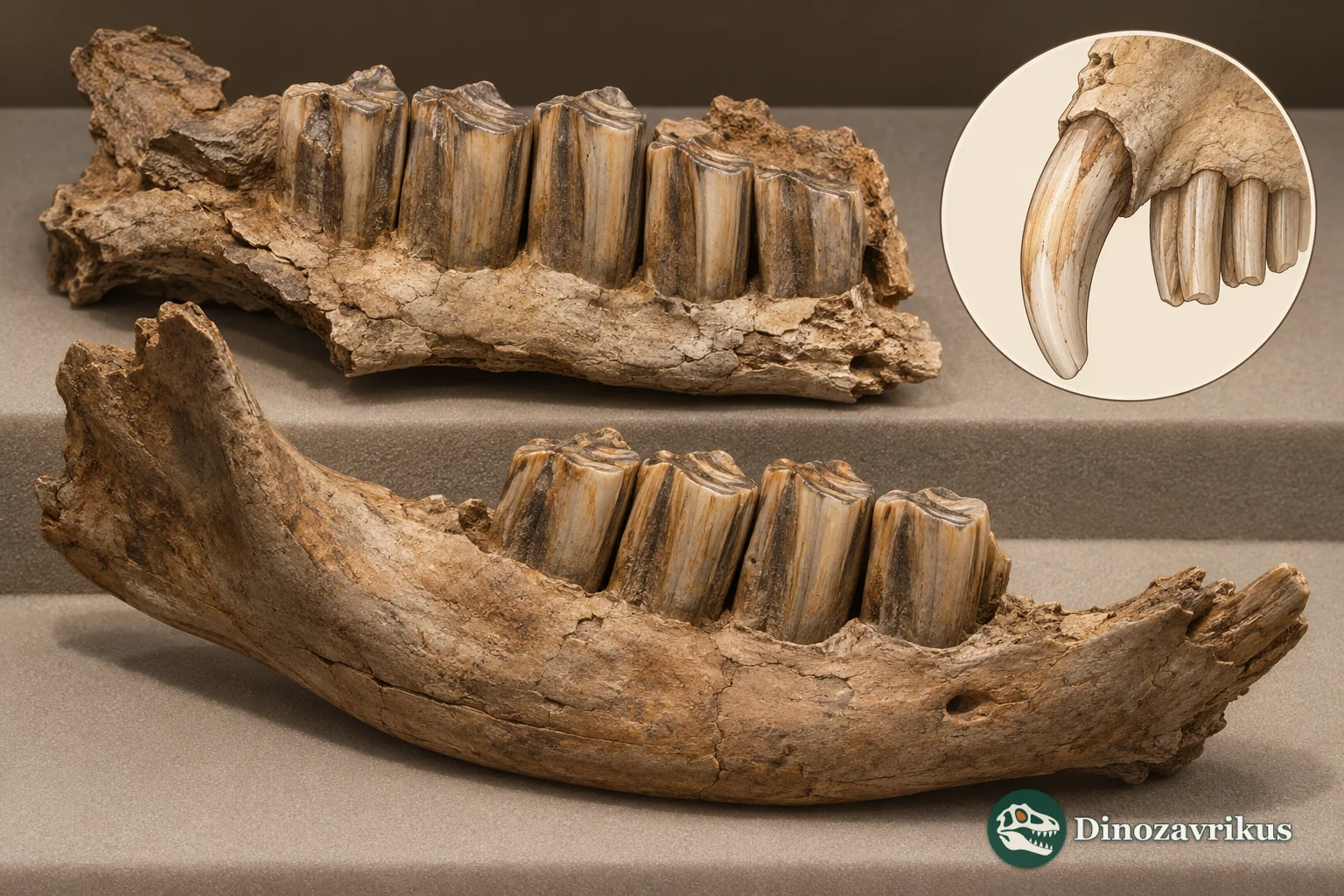
Premolar and molar shape, overlap and relative position distinguish species. Hegetotheriids had high-crowned, ever-growing cheek teeth, but isolated teeth do not identify an exact menu or prove that separated upper and lower elements belonged to one animal.
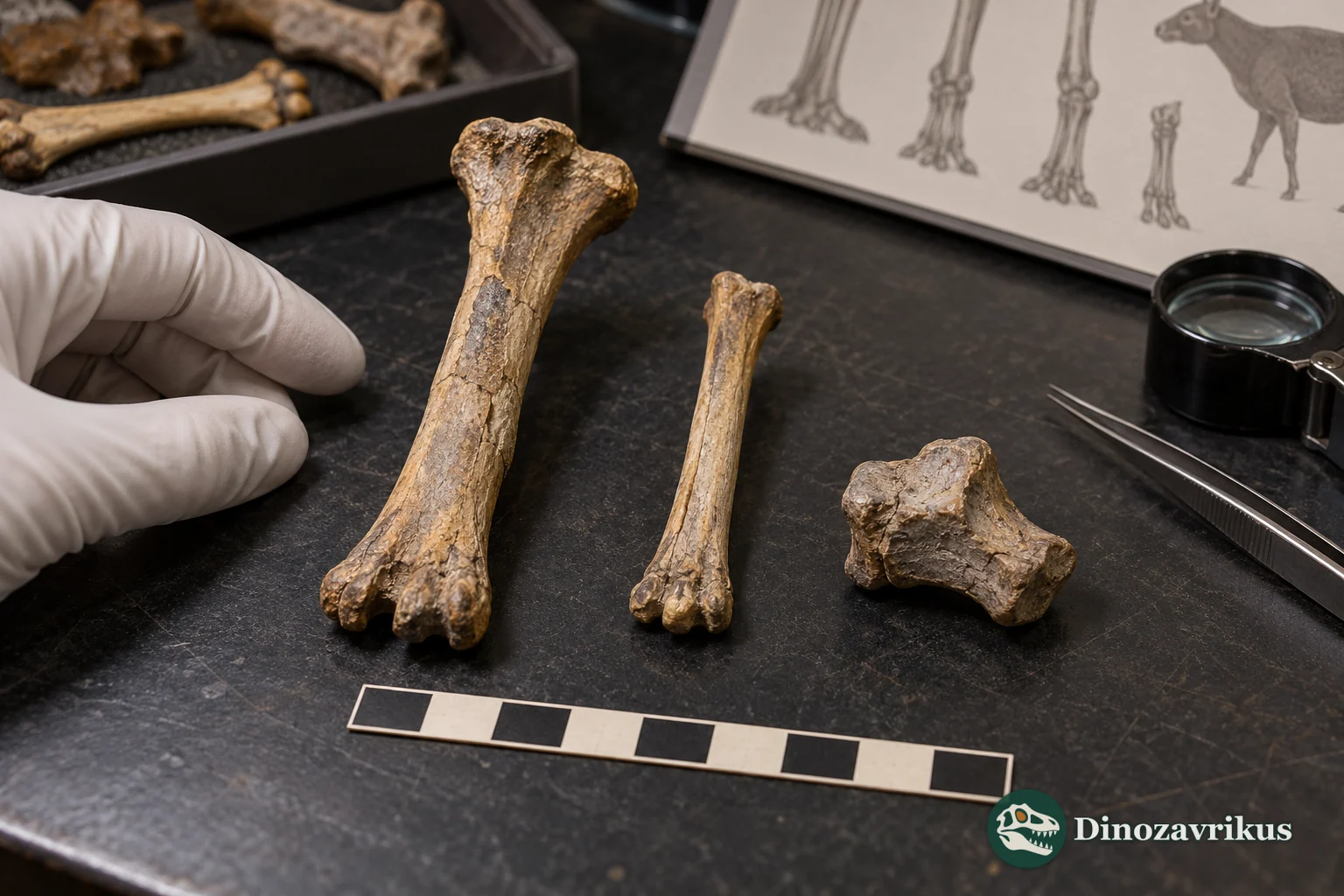
Postcranial material from places such as Puchuzum has been referred to H. achataleptum. It provides comparative information about support and proportions, but does not form a complete articulated skeleton for the genus.
Records include the Collón Curá and Arroyo Chasicó formations in Argentina and Quebrada Honda in Bolivia. These localities represent different species and ages, not one continuous population or migration route.
Pseudohegetotherium torresi was later transferred to Hemihegetotherium as H. torresi. Other early species names were combined or separated in later reviews by comparison with their type material.
The name and changing species list
Gaetano Rovereto established Hemihegetotherium in 1914 and designated H. achataleptum as its type species. The type material from Mendoza includes MACN-PV 8491, a nearly complete skull with teeth and a fragment of lower jaw. This is a substantial cranial specimen, but it is not a complete skeleton.
Rovereto also named H. affine, H. gracile and H. robustum. Later authors disagreed about how many of these represented distinct species. In 1931, Pseudohegetotherium torresi was named for material from the Arroyo Chasicó Formation in Buenos Aires Province. Subsequent taxonomic work treated Pseudohegetotherium as a synonym of Hemihegetotherium, giving the species its current combination, H. torresi.
Darin Croft and Federico Anaya described H. trilobus from Quebrada Honda, Bolivia, in 2006. Its name refers to the three-lobed third lower molar. In 2019, Bárbara Vera described H. tantillum from the Collón Curá Formation and reassessed related fossils, including the type of Propachyrukhos robustus, which she referred provisionally to Hemihegetotherium cf. tantillum. The abbreviation “cf.” signals a close but not definitive identification.
Teeth and species diagnosis
Teeth provide the most detailed evidence for many referred specimens. Hegetotheriids had high-crowned cheek teeth that continued growing, along with a relatively large first upper incisor. Researchers compare the position of the canine and first premolar, how closely the premolars overlap, the shape of P3 and P4, and the outline of lower molars.
Vera’s diagnosis of H. tantillum emphasizes its small size and a set of upper and lower premolar features. It shares similarities with the Bolivian H. trilobus, but the two names are not thereby synonyms: the comparisons include differences in diagnostic characters, and their material comes from separate regions and horizons.
High-crowned, continuously growing teeth support a general interpretation of plant-eating, as in other hegetotheriids. They do not identify the exact plants consumed by Hemihegetotherium. Dental microwear, mesowear or isotope measurements could provide additional evidence; crown shape alone is only one part of a dietary argument.
Age and geographic range
The genus occurs in middle and late Miocene faunas of South America. H. trilobus is known from Quebrada Honda in southern Bolivia. H. tantillum was described from the Collón Curá Formation in Chubut and Río Negro, Argentina; the 2019 study also considered whether related material from Neuquén belonged to the same species. H. achataleptum has been reported from late Miocene localities in Mendoza and other Argentine provinces. H. torresi is based on older material from the Arroyo Chasicó Formation in Buenos Aires Province.
These records should not be joined into one continuous range or migration route. They represent distinct species and regional faunas separated in time. The age of a specimen depends on the formation, locality and regional biochronology; a database-wide interval for the genus is not a direct date for each fossil.
What limb bones add
For a long time, descriptions of the genus relied mainly on skulls, jaws and teeth. A study of material from Puchuzum in San Juan Province expanded the postcranial record, assigning isolated limb bones to H. achataleptum through their morphology and the associated mammal fauna. These bones inform comparisons of support and limb proportions, but do not constitute a complete limb or articulated skeleton.
Separate functional work on H. trilobus has examined its limb anatomy and possible locomotor and digging capabilities. Those interpretations apply to the bones of that species and should not be transferred automatically to H. achataleptum, H. torresi or H. tantillum. One bone’s resemblance to a modern mammal cannot by itself establish running speed or a burrowing lifestyle.
Body size, habitat and behaviour
Hegetotheriids ranged from small to medium-sized forms. The 2019 description characterizes H. tantillum as small, but tooth dimensions alone cannot yield a precise body length. A mass near 10 kilograms has been estimated for H. trilobus from skeletal comparisons; it is a model-based estimate for that species, not a genus-wide measurement.
Hegetotheriids are often interpreted as feeding on low vegetation and living in relatively open environments, based on their dental and skeletal anatomy. Yet the pointed edges of some teeth suggest that at least some species may have eaten less abrasive plants than a strict grass-grazing model would predict. No preserved stomach contents, food remains or unambiguous feeding traces are known for Hemihegetotherium.
The cover therefore shows only a plausible small quadruped in a generalized landscape. Fur, colour, ears and exact body proportions are not preserved. The known fossils do not demonstrate group travel, burrowing or a specific foraging behaviour.
Systematic questions
Hemihegetotherium belongs to Hegetotheriidae, a family of typothere notoungulates. Phylogenetic analyses have supported the genus as a group in sampled datasets, while subsequent studies have refined species membership and character interpretations. The 2019 description of H. tantillum and the 2021 account of postcranial material revised how some Argentine fossils are understood.
Questions remain about several early names from Rovereto’s work, the taxonomic status of specimens from the Santa María Valley, and the placement of H. torresi, first described in another genus. A list of historical names is not the same as a count of secure biological species. Recent treatments recognize four species, but particular fossils still require comparison with their type material.
Frequently asked questions
When did Hemihegetotherium live?
The genus is known from middle and late Miocene South American faunas. The exact interval depends on the species and locality; H. trilobus and the Argentine species come from different assemblages.
Why is Pseudohegetotherium mentioned in older sources?
The species torresi was originally described as Pseudohegetotherium torresi in 1931. Later authors treated that genus as a synonym of Hemihegetotherium, producing the current combination H. torresi.
What did Hemihegetotherium eat?
Hegetotheriids are interpreted as herbivores from their teeth and skeletal anatomy. No direct food remains are known for this genus, so a precise menu is not established.
Has a complete skeleton been found?
The record includes skulls, jaws, teeth and separate limb bones. The sources reviewed here do not describe one complete articulated skeleton that combines all known features across the genus.