

Hippopotamodon is an extinct pig, not a hippopotamus despite its name. Richard Lydekker established the genus in 1877 for Siwalik material from South Asia, with H. sivalense as its type species. Skulls, jaws, canines and cheek teeth support its suid identity. The group has a long Eurasian history, but which older species belong in it remains disputed.
The cover portrays a possible member of the later Chinese species. Its skin, bristles and social behavior are not directly documented by the fossils.
Quick facts
| Genus | Hippopotamodon Lydekker, 1877 |
|---|---|
| Type species | H. sivalense |
| Family | Suidae, pig family |
| Earlier history | Late Miocene Eurasia |
| Latest well-studied species | H. ultimus, Early Pleistocene South China |
| Evidence | Skulls, jaws, canines and molars |
What can the fossils tell us?
The Chinese sample allows researchers to compare the muzzle and the gap between upper premolars, rather than relying on a single isolated molar.
A narrow third lobe of upper M3 and two main cusps on the third lobe of lower m3 help diagnose the South China species.
The Chinese form was once Dicoryphochoerus ultimus. Other Late Miocene fossils have been assigned to Microstonyx; genus limits require comparison of whole samples.
Why the genus names changed
Large Late Miocene pigs from Europe and Asia were given several generic names. Microstonyx and Dicoryphochoerus were introduced in the 1920s, with distinctions involving canines and tooth size. Martin Pickford's 2015 monograph compared new Spanish material from Batallones, La Roma II and Corral de Lobato with a wide Eurasian sample. It argued that both names are junior synonyms of Hippopotamodon. Other analyses have left some of those relationships unresolved, so a historic museum label cannot settle the modern identification on its own.
Characters of the snout, canine and last molars matter alongside body size. A large isolated jaw without a diagnostic combination cannot confidently identify every species. Omochoerus illustrates a separate fossil-pig naming history; it is not a synonym of Hippopotamodon.
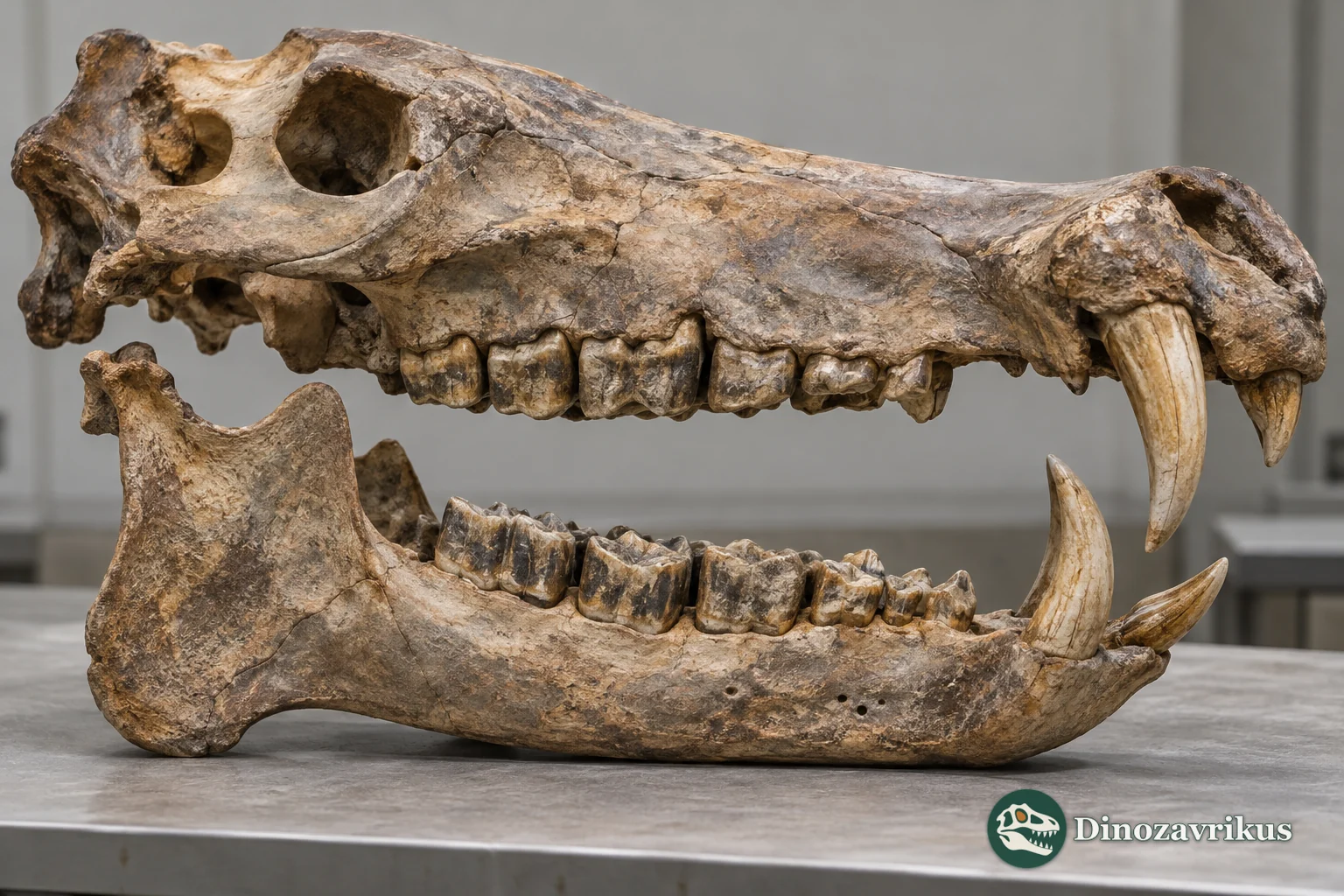
The South China H. ultimus
Systematic excavations around Chongzuo since 2004 recovered new large-suid fossils in Early Pleistocene deposits associated with Gigantopithecus. Dong Wei and Zhang Limin reviewed those and older finds from Guangxi, Guizhou and Chongqing in 2014. They transferred the former Dicoryphochoerus ultimus to Hippopotamodon and treated it as a valid species. Their result depended on a set of anatomical characters, not merely on large size.
The study described a long snout, a marked gap between upper P1 and P2, a relatively narrow third lobe of upper M3 and two principal cusps on the third lobe of lower m3. Lower canine form and the divided main cusp of lower p4 add evidence. The authors found the species larger than sampled living Sus but did not weigh a fossil animal. They placed H. ultimus only in South China during the earlier and middle parts of the Early Pleistocene.
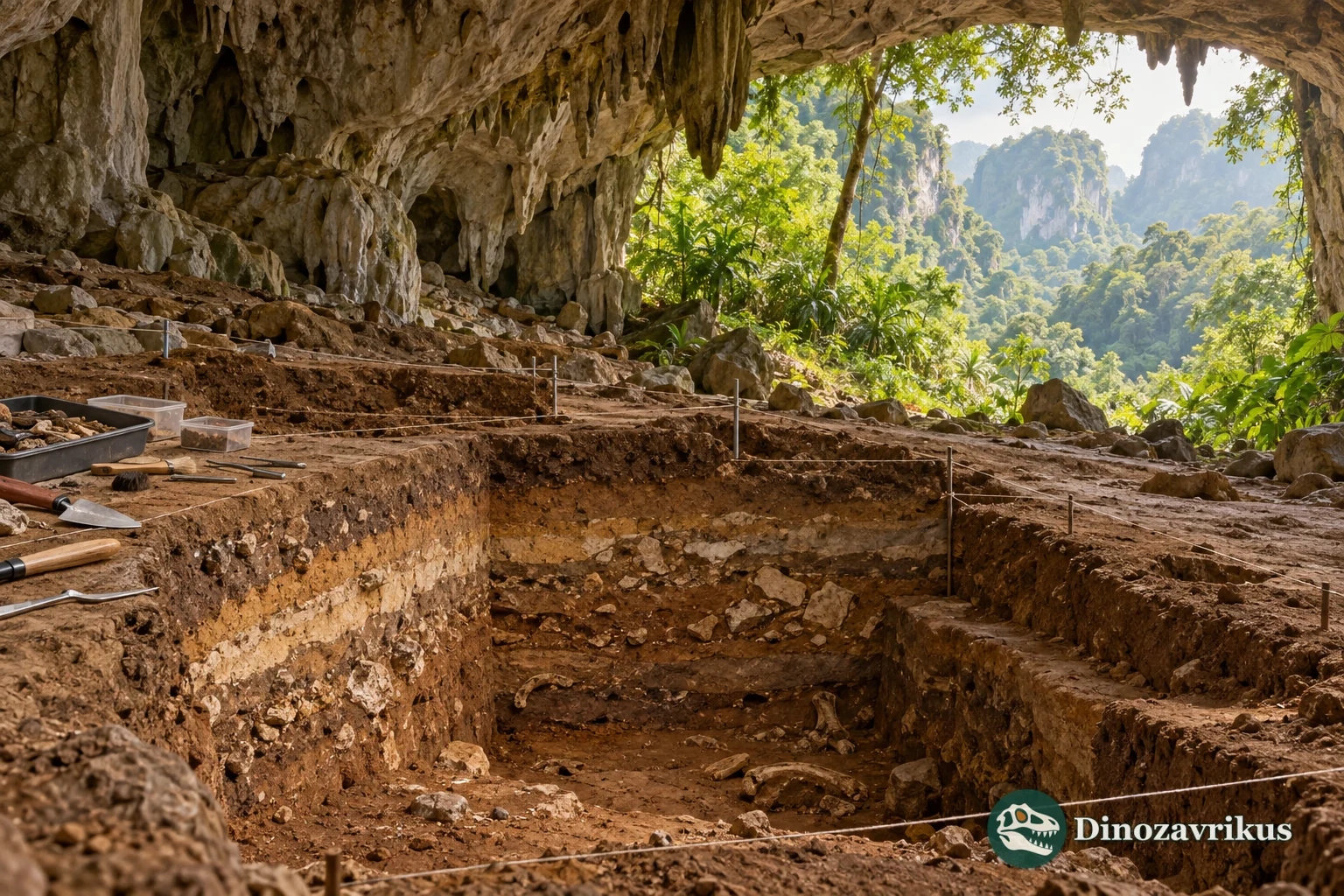
Karst deposits and dietary limits
Karst caves can accumulate remains from many animals and episodes. Regional assemblages include Gigantopithecus and the proboscidean Sinomastodon. Co-occurrence supports a regional faunal comparison; it does not prove that the animals met or died together. The age of the sediment and identity of each tooth must be tested separately.
Bunodont pig teeth suggest a broad feeding capacity by comparison with related suids, but no fossil record here specifies every food eaten by H. ultimus. Coat color, herd organization and running speed are also unknown. The karst landscape and anatomical images are educational artwork, not photographs of a Chongzuo excavation or a named museum specimen.
Frequently asked questions
Was Hippopotamodon a hippopotamus?
No. Its skull and teeth place it among the pigs, family Suidae.
Why was H. ultimus formerly Dicoryphochoerus?
That was an earlier generic assignment; a 2014 review of new and historic South China fossils transferred the species to Hippopotamodon.
Where is the late species known from?
H. ultimus is documented in Early Pleistocene South China, including Guangxi, Guizhou and Chongqing material.
Can its exact diet be read from its teeth?
The teeth support broad comparisons with other suids, but do not reveal an exact list of foods for an individual.