

Homalodotherium was a large South American notoungulate with powerful clawed forelimbs. Patagonian skulls and skeletal bones allow researchers to examine its posture and feeding. Rearing to reach branches is a functional interpretation supported by anatomy, not a witnessed act.
It appears in the ancient mammal catalogue. The older Rhynchippus was another notoungulate with a different body plan. The large Astrapotherium illustrates a separate Patagonian mammal lineage rather than a close duplicate of Homalodotherium.
Quick facts
| Scientific name | Homalodotherium cunninghami Flower, 1873 |
|---|---|
| Group | Notoungulata, Homalodotheriidae |
| Early name | Huxley used Homalodotherium in 1870 |
| Main region | Patagonia, Argentina |
| Age of studied skeletons | Early Miocene, Santa Cruz Formation |
| Evidence | Skulls, teeth and limb bones |
| Functional inference | Could rear up to reach vegetation |
What can the fossils tell us?
A skull collected near the Río Gallegos reached Huxley and Flower. It documents head and teeth; a skull alone cannot show how often the animal stood on its hind legs.
Measurements of the arm and leg joints support a strong forelimb and a possible temporary bipedal stance. This is a biomechanical inference, not a direct observation of a living animal.
Clawed forelimbs are consistent with pulling vegetation, while carbon isotopes in enamel accord with browsing in relatively open woodland. Neither method identifies a particular plant eaten by an individual.
Cunningham's skull and an unsettled spelling
Robert Oliver Cunningham collected a fossil skull by the Río Gallegos during the voyage of HMS Nassau. Thomas Henry Huxley used the genus name Homalodotherium in 1870. William Henry Flower published H. cunninghami in a short 1873 account and a longer description in 1874. The later text spelled the genus Homalodontotherium. A historical nomenclatural review disentangled the dates and spellings; current usage generally retains Homalodotherium.
The original skull and skeletons collected by later expeditions are distinct parts of this record. An exact museum accession number for Cunningham's skull should not be supplied without a verified collection catalogue. The historic descriptions establish the name and cranial anatomy, but not every detail of the animal's locomotion.
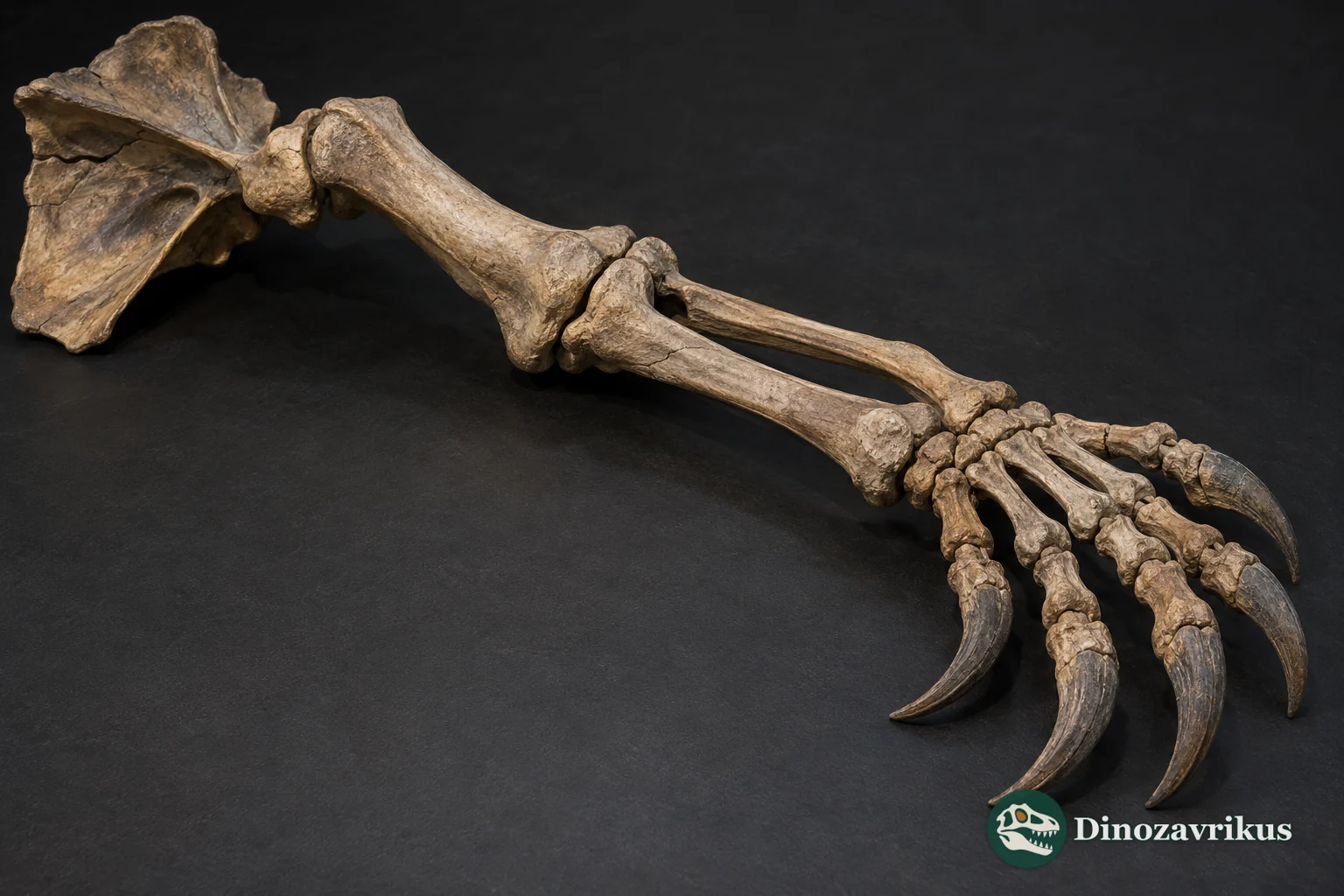
Skeletons, claws and a proposed posture
More complete Patagonian material became available through later expeditions. Elmer Riggs described a mounted Field Museum skeleton in 1937. A mount conveys proportions, but does not by itself establish that every assembled bone was recovered together. Functional comparisons must attend to the identity and preservation of individual elements.
Large claw-bearing phalanges and powerful forelimbs differ from the familiar image of a hoofed mammal. A 2010 biomechanical analysis compared proportions and joint mechanics with living mammals. The hind limbs could plausibly support a temporary upright stance while the forelimbs drew branches nearer. The same analysis did not support a specialized digging habit. This does not imply habitual walking on two legs.
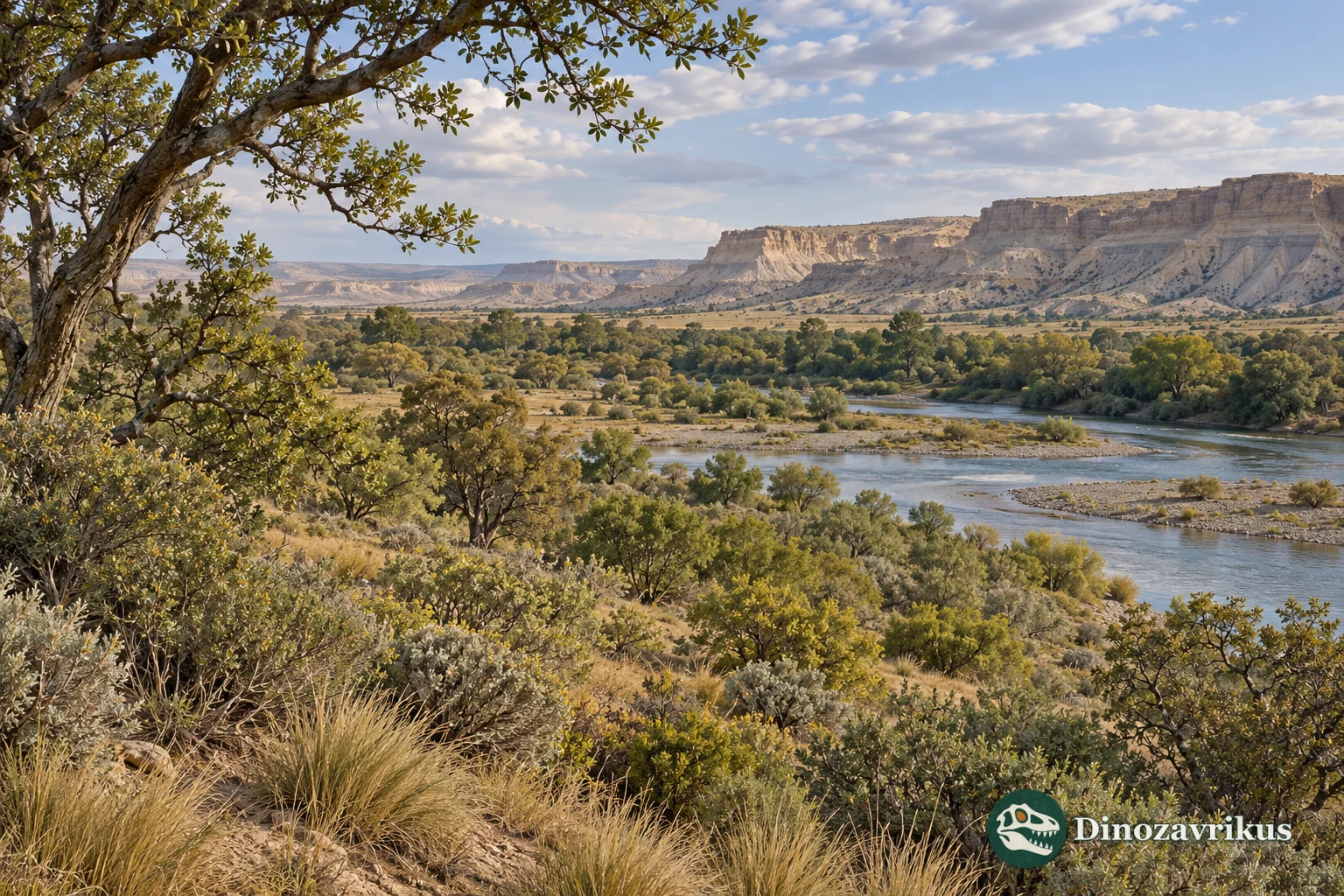
Food, strata and what remains unknown
Teeth and limb mechanics suggest feeding on vegetation. Carbon isotope measurements of tooth enamel from Santa Cruz Formation mammals are compatible with browsing in relatively open woodland or shrubland. Isotopes constrain broad food and habitat patterns; they do not name an individual tree or show the height of a branch.
Well-studied skeletons are from early Miocene Santa Cruz strata in Patagonia. The original Río Gallegos skull was found before modern stratigraphic recording, so the precise age of a later skeleton cannot simply be transferred to it. Coat colour, speed, social behaviour and a lifetime are not preserved. The cover illustrates a defensible feeding scenario with necessarily hypothetical soft tissue and colour.
Frequently asked questions
Was Homalodotherium a horse or a ground sloth?
No. It was a South American notoungulate. Similar claws or posture in other mammals are functional analogies, not proof of close kinship.
Why do sources use two genus spellings?
Huxley used Homalodotherium in 1870 and Flower used it in 1873, but his fuller 1874 account printed Homalodontotherium. Later authors reviewed this historical discrepancy.
Could Homalodotherium stand on its hind legs?
Biomechanical comparisons support a temporary upright stance to reach vegetation, not habitual bipedal walking observed directly.
Do fossils show exactly what it ate?
Dental and isotope evidence supports plant feeding in relatively open woodland, but does not identify particular plants eaten by an individual.