

Keresdrakon vilsoni was described in 2019 from a bonebed near Cruzeiro do Oeste in southern Brazil. Its long, low jaws lacked teeth, and the site preserved remains of at least three individuals. The fossils include parts of skulls, vertebrae and limbs, but no complete articulated skeleton. The age and precise formation assignment of these sandstones remain debated.
Quick facts
| Scientific name | Keresdrakon vilsoni, Kellner and colleagues, 2019 |
|---|---|
| Holotype | CP.V 2069, associated but mostly disarticulated partial skeleton |
| Locality | Near Cruzeiro do Oeste, Paraná, Brazil |
| Rocks | Caiuá Group; Goio-Erê versus Rio Paraná assignment debated |
| Age | Cretaceous; Aptian–Albian and Turonian–Campanian proposals |
| Jaws | Elongate low snout without teeth |
| Wingspan | Around 3 m by comparison, not a direct measurement |
What can the fossils tell us?
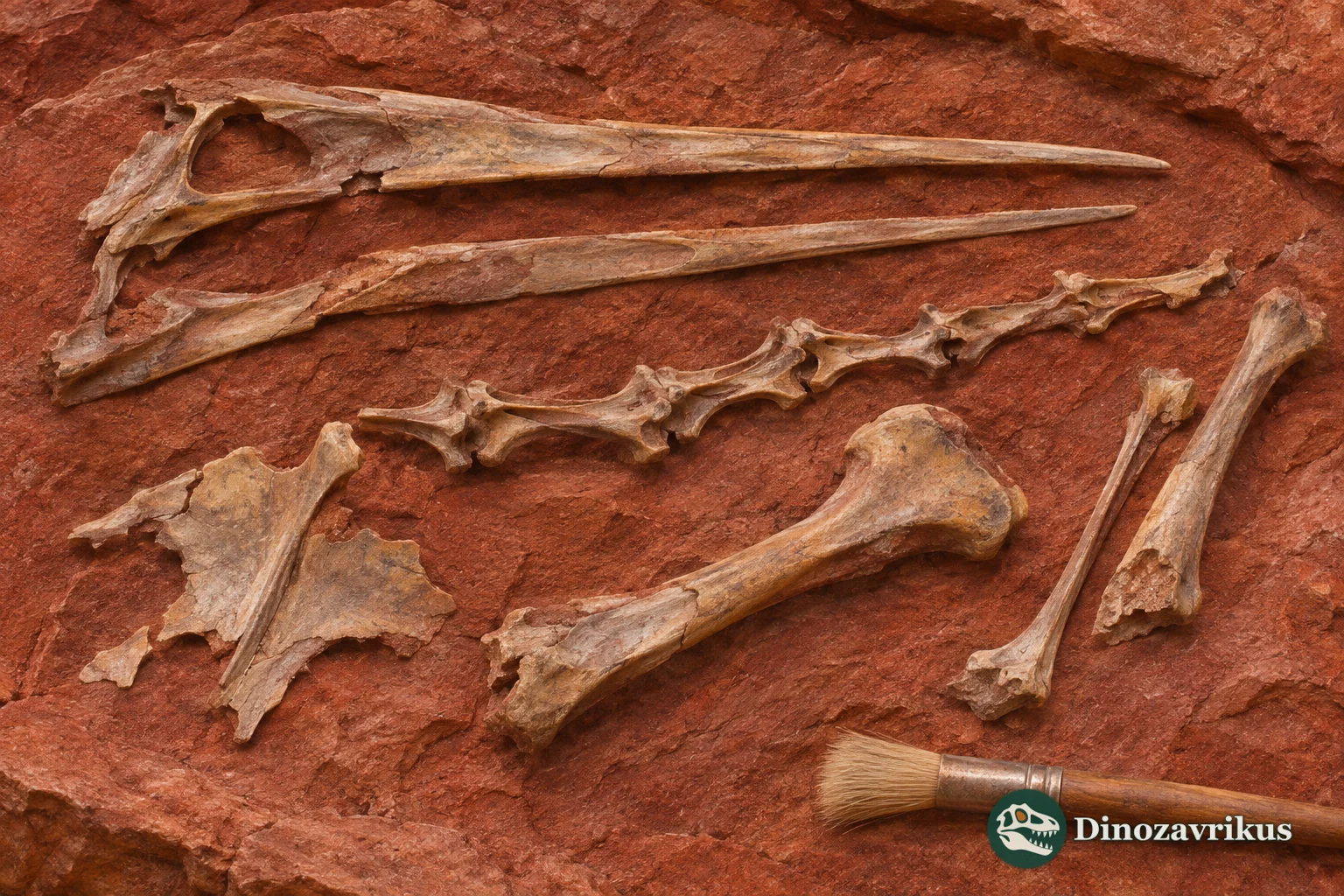
CP.V 2069 includes much of the lower jaw, a front snout fragment and parts of the neck, trunk and limbs. The jaws were associated; most other bones were disarticulated.
Differences between skull and first wing-finger material support a minimum of three individuals. This alone cannot establish group behaviour.
Bone fusion and histological observations suggest juvenile or subadult stages among the studied individuals. Adult size remains uncertain.
The bonebed has been linked to both an Aptian–Albian and a Turonian–Campanian age. Neither can be treated as a precise date for this species.
A bonebed in southern Brazil
The fossils came from bonebed C at a site near Cruzeiro do Oeste in Paraná. Its red sandstones formed among ancient dunes and damp interdune areas. The locality also yielded the crested pterosaur Caiuajara. Finding the two taxa together does not show that individual animals met during life.
Vilson Greinert, a volunteer who worked on the collection, is honoured in the species name. The holotype CP.V 2069 is held at CENPALEO. Its upper and lower jaw pieces were found together; much of the remaining skeleton was scattered nearby. Other fossils from the deposit raise the minimum number of Keresdrakon individuals to three.
A toothless snout and incomplete wings
The preserved rostrum is long, low and toothless. Cranial and postcranial characters distinguished this animal from Caiuajara in the original study. The identified wing bones suggest a wingspan of roughly 3 m by comparison with related pterosaurs, but the complete wing membrane is not preserved.
Some bones had not fused completely, and bone sections were also examined. These observations support juvenile or subadult stages in the sample, so the estimated span cannot define the maximum adult size. Caupedactylus provides another Brazilian pterosaur comparison, but its anatomy does not supply missing Keresdrakon measurements.
Rock names and dates remain debated
The fossils belong to the Caiuá Group, but the placement of the exposed rock within its formations has been disputed. The original authors discussed Goio-Erê rocks while geological mapping has used Rio Paraná for the area. Proposed age ranges include Aptian–Albian and Turonian–Campanian, far apart within the Cretaceous.
Its beak could have been useful for several foods. Feeding as an opportunistic hunter or scavenger is a proposal, not a stomach-content observation. The bonebed gives no direct evidence that this species lived alone or in flocks.
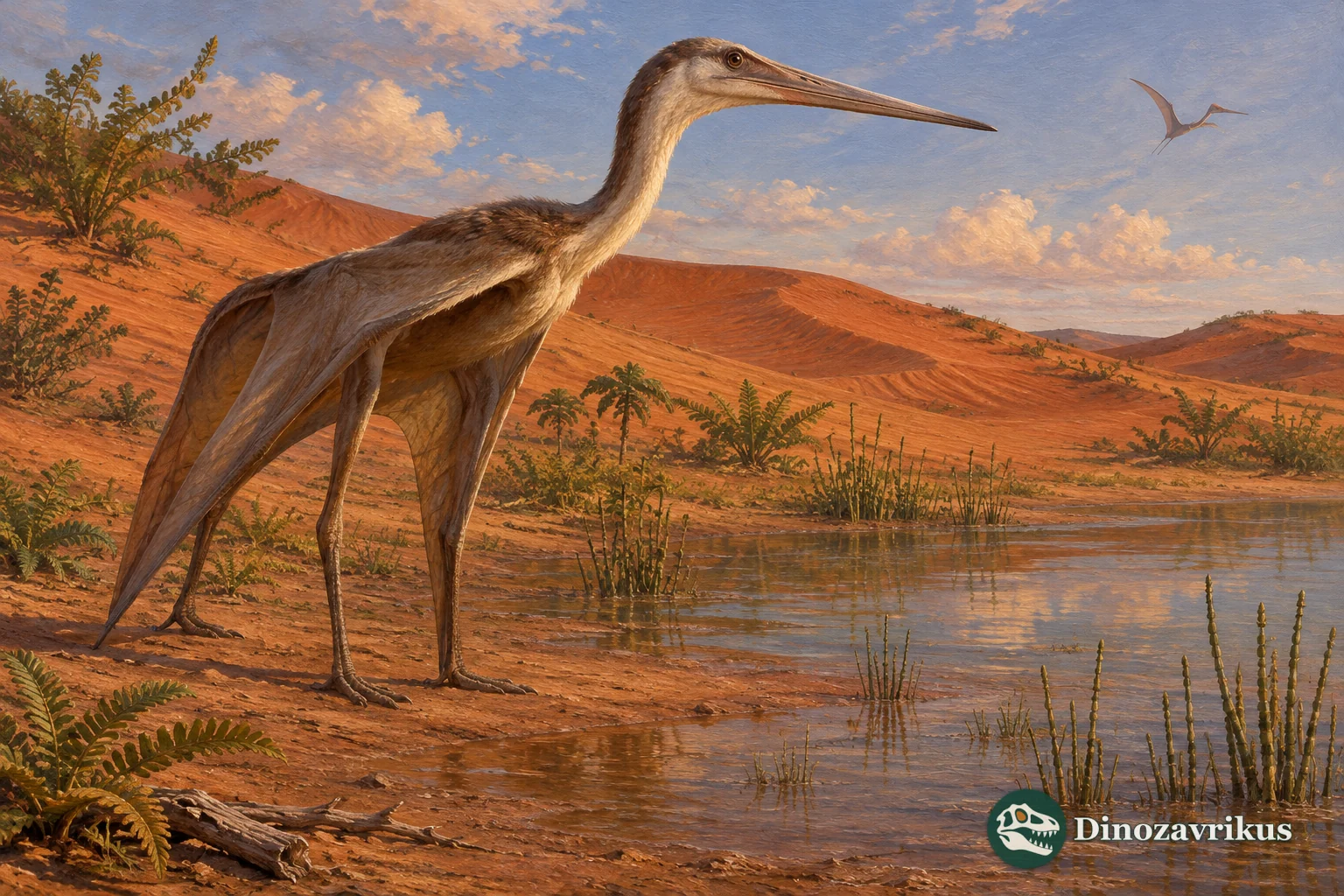
An interpretation of the dune setting
The second image combines a reconstructed pterosaur with dunes and a wet hollow suggested by sedimentology. Its colour and behaviour remain unknown.
Frequently asked questions
Where was Keresdrakon found?
Near Cruzeiro do Oeste in Paraná, southern Brazil, in a Caiuá Group bonebed.
How many individuals are known?
The original study identified material representing at least three individuals.
Exactly when did it live?
The precise age is unresolved; substantially different Cretaceous age ranges have been proposed for the rocks.
Do we know what it ate?
No direct dietary remains have been reported; proposed feeding habits rely on anatomical interpretation.