

Kimmerosaurus langhami is a cryptoclidid plesiosaur known from a small number of skull and jaw specimens in the Upper Jurassic Kimmeridge Clay of Dorset, England. In 2025, researchers described a new, mostly disarticulated specimen and used micro-computed tomography to reveal additional cranial anatomy, including the first hyoid material reported for the family. The discovery improves the skull record, but no complete articulated skeleton is known, so the animal’s total body proportions remain uncertain.
Quick facts
| Type species | Kimmerosaurus langhami |
|---|---|
| Group | Cryptoclidid plesiosaur |
| Age | Late Jurassic; Kimmeridgian |
| Locality | Kimmeridge Bay, Dorset, England |
| Formation | Kimmeridge Clay Formation |
| Holotype | NHMUK R.8431, fragmentary skull material |
| Body length | Not established from the known specimens |
Evidence guide
The holotype NHMUK R.8431, referred material NHMUK R.1798 and R.10042, and new specimen EC K2134 are chiefly cranial or limited cervical material. EC K2134 is mostly disarticulated; no complete articulated body is known.
The 2025 study reports eight premaxillary, 32 maxillary and an estimated 36 dentary alveoli. The teeth are sharply pointed and strongly recurved. These features do not identify a particular prey species.
This is a new anatomical observation for comparative research. A single hyoid element does not directly reconstruct the soft tissues, swallowing mechanics or exact diet.
EC K2134 was washed from an offshore shale reef onto the beach and is tentatively assigned to the Pectinatites pectinatus Zone of the Upper Kimmeridge Clay, around 147 Ma by cyclostratigraphic correlation. Its exact bed is not recorded in place.
A rare skull-based species
David S. Brown named Kimmerosaurus langhami in 1981 from the holotype NHMUK R.8431. The specimen preserves parts of the skull roof, braincase, lower jaw and dentition. Brown, Angela Milner and Michael Taylor described two additional specimens in 1986, adding more cranial and mandibular pieces and several vertebrae. Together they expanded the anatomical record without producing a complete skeleton.
The taxon is placed in Cryptoclididae, a group of plesiosauroids represented in Jurassic marine deposits. The 2025 phylogenetic analysis recovered a polytomy involving EC K2134, Tatenectes and previously described Kimmerosaurus material. That result leaves some relationships unresolved; it is not evidence that one named genus directly descended from another.
A new specimen revealed by preparation and scanning
The specimen EC K2134 was found almost entirely embedded in a block. Preparation exposed much of the skull, while micro-computed tomography helped reveal elements concealed within the matrix. The material includes parts of the rostrum, palate, braincase and several cervical vertebrae. Most bones are disarticulated, so their positions in the block do not represent the animal’s living posture.
The new specimen is held by the publicly accessible Etches Collection and owned by the Kimmeridge Trust. The 2025 study referred it to Kimmerosaurus after comparing its characters with the type and previously described material. Differences among specimens were not considered sufficient to name another species.
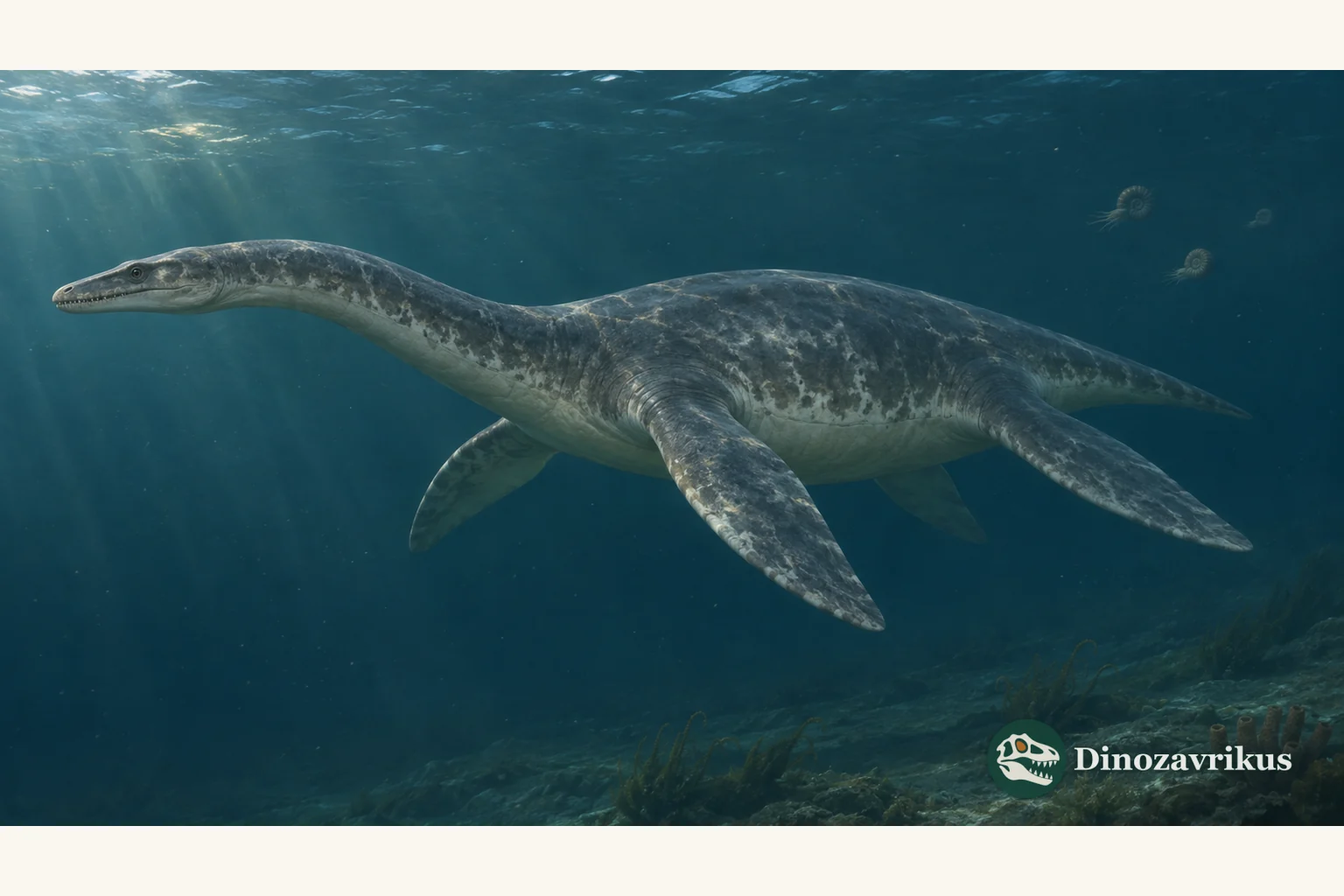
Many tooth positions, but no direct menu
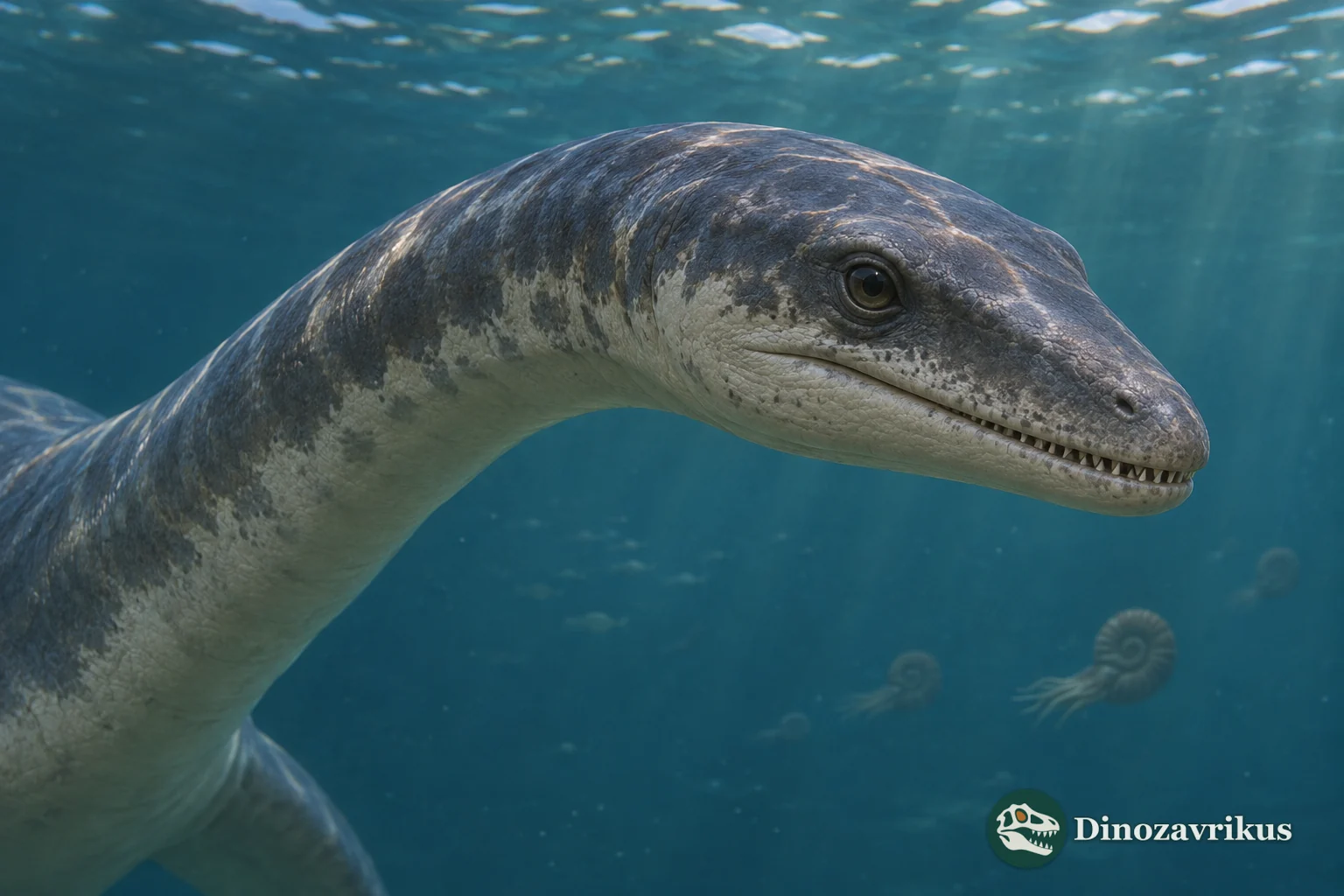
The authors report eight alveoli in the premaxilla, 32 in the maxilla and an estimated 36 in the dentary. The teeth are strongly recurved, pointed and compressed from side to side; the revised diagnosis also notes that tooth ornament is absent. The counts and shapes are observations from preserved bone and teeth, not a reconstruction of feeding behaviour.
A hooked, pointed tooth can be consistent with gripping animal prey, as expected for many plesiosaurs. The fossil record described for Kimmerosaurus does not include stomach contents or prey preserved in association, so the identity and size of its food remain unknown. A new hyoid element adds a comparative anatomical datum, but one bone does not reveal the mechanics of the soft throat or tongue.
Kimmeridge Clay and a beach-found block
The Kimmeridge Clay Formation records a Late Jurassic marine shelf in what is now southern England. The new EC K2134 block was collected ex situ after erosion carried it from an offshore shale reef onto the shore. The authors tentatively place it in the Pectinatites pectinatus Zone of the Upper Kimmeridge Clay; cyclostratigraphic work puts that zone at about 147 million years ago. Because the specimen was not collected in place, this is a reasoned stratigraphic assignment rather than a bed-level observation.
The sedimentary setting helps explain where the fossil-bearing rock formed, but not how the individual died or what depth it occupied while alive. For a comparison with another plesiosaur known from limited material, see Muraenosaurus. Similarities between taxa should not be used to fill in missing bones as though they came from the same animal.
What the whole animal may have looked like
The known bones do not give a complete outline of the body. A familiar plesiosaur silhouette with four paddles and a tail comes from comparisons with better-known relatives, not from one articulated Kimmerosaurus skeleton. Neither a reliable total length nor body mass has been established from the available specimens.
Skin, colour, soft tissues, growth, reproduction and swimming performance are also unknown. The illustrations on this page are explicitly artistic reconstructions based on the broader cryptoclidid body plan. The 2025 discovery substantially improves the skull record, while the overall appearance remains an informed but incomplete reconstruction. For a more distant Cretaceous comparison, see Eromangasaurus.
Frequently asked questions
Where was Kimmerosaurus found?
Its specimens come from the Kimmeridge Clay of Dorset, England. The new EC K2134 specimen was found in a block washed onto the shore, not in place in the cliff.
What did the 2025 study add?
Micro-CT and preparation revealed additional rostral, palatal and braincase anatomy, a revised tooth-position count and the first hyoid described for Cryptoclididae.
What do its teeth show about diet?
They are sharply pointed and strongly recurved, consistent with gripping animal prey. No specific prey or exact diet is directly established.
Is the complete body known?
No. The described fossils are mostly skull, jaw and limited neck material, so total length and whole-body proportions remain uncertain.