

Leptostyrax is an extinct lamniform shark known mainly through teeth. The German species L. stychi was described from three teeth recovered near Sarstedt. Those fossils support a dental diagnosis, but do not preserve a complete shark. The cover is an artistic reconstruction.
Quick facts
| Genus | Leptostyrax Williston, 1900 |
|---|---|
| Type species | Leptostyrax macrorhiza (Cope, 1875) |
| German species | Leptostyrax stychi, described in 2010 |
| Holotype | NLH 102.973, an anterior tooth |
| Holotype height | 14.5 mm |
| Locality | Gott clay pit near Sarstedt, Germany |
| Age of German species | Early Barremian |
| Whole-body length | Not measured from these teeth |
What can the fossils tell us?
Cope named macrorhiza in 1875 under a different genus. Williston introduced Leptostyrax in 1900; later comparison placed the older species in it.
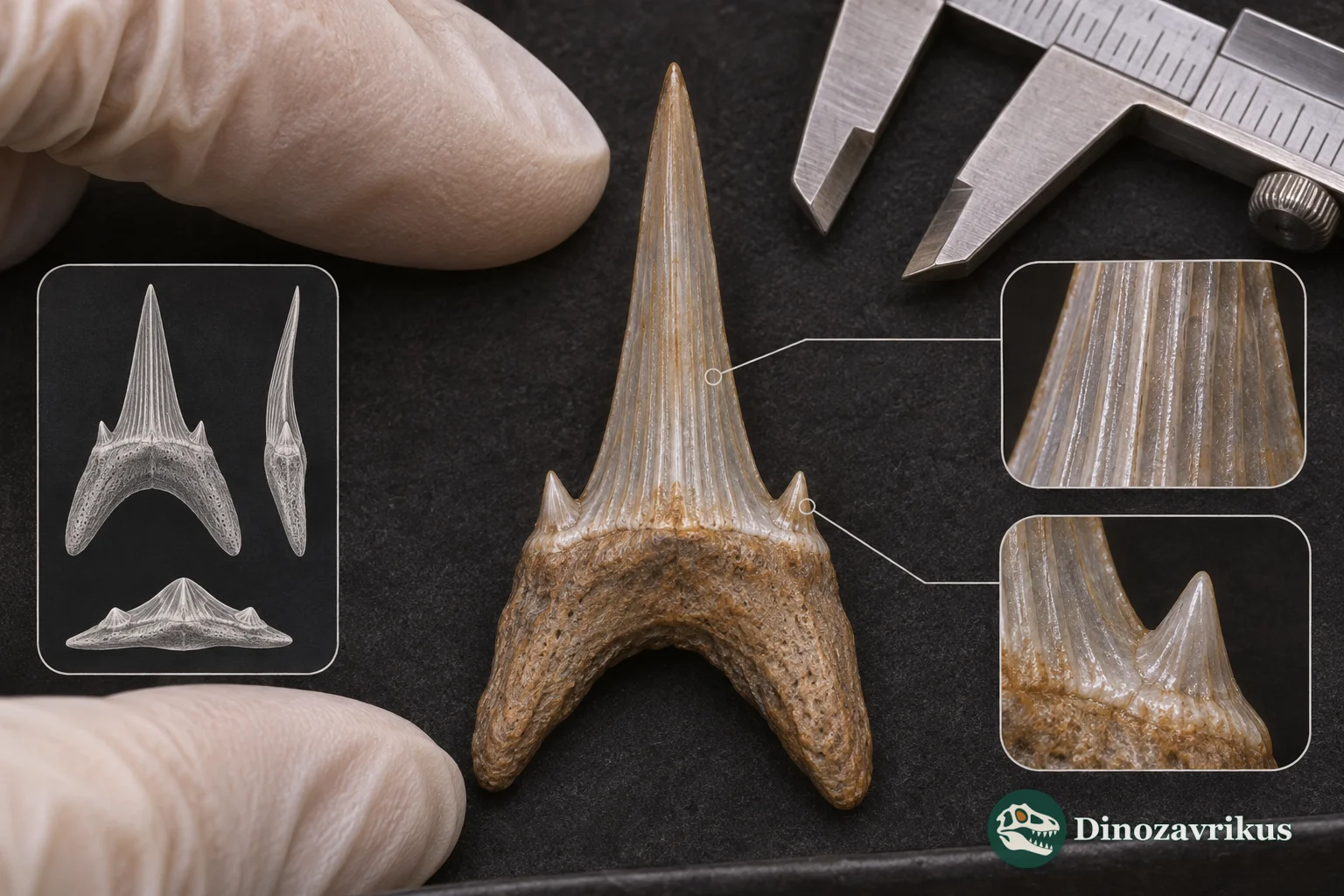
The L. stychi holotype NLH 102.973 is an anterior tooth 14.5 mm high. NLH 102.974 and 102.975 are paratypes from early Barremian clay near Sarstedt.
The German teeth were compared with L. macrorhiza using root shape and fine folds on the inner crown surface. Those are tooth characters, not body measurements.
The preserved teeth cannot establish body length, colour, fin shape or an exact hunting technique for the species.
A genus built from tooth comparisons
Cope introduced the species name macrorhiza in 1875; Williston established Leptostyrax in 1900. Historical combinations reflect changing comparisons of fossil teeth. They do not represent a sequence of evolutionary stages.
A tooth crown, root and cutting edges provide characters for identification. They give a narrower view of the animal than cranial material known for Egertonodus, another fossil shark in this catalogue.
The Sarstedt type series
Schmitz, Thies and Kriwet named L. stychi in 2010 from the Gott clay pit near Sarstedt in northwestern Germany. The deposits are early Barremian. The species honours collector Tobias Stych.
The holotype, NLH 102.973, is an anterior tooth 14.5 mm high and 5.7 mm wide. NLH 102.974 and 102.975 are paratypes. These identifiers refer to individual specimens, not a connected jaw or three measured sharks.
How the teeth differ
The authors compared the German teeth with L. macrorhiza. The root is relatively narrow, and fine folds on the inner crown surface reach roughly two thirds of the main cusp height. Tooth position within a jaw also changes shape, so comparisons must account for position and preservation.
Isolated teeth of Parotodus illustrate a similar limit: even a diagnostic crown does not itself measure a shark's length. No complete German Leptostyrax body was described with the type series.
A marine scene, not a measured body
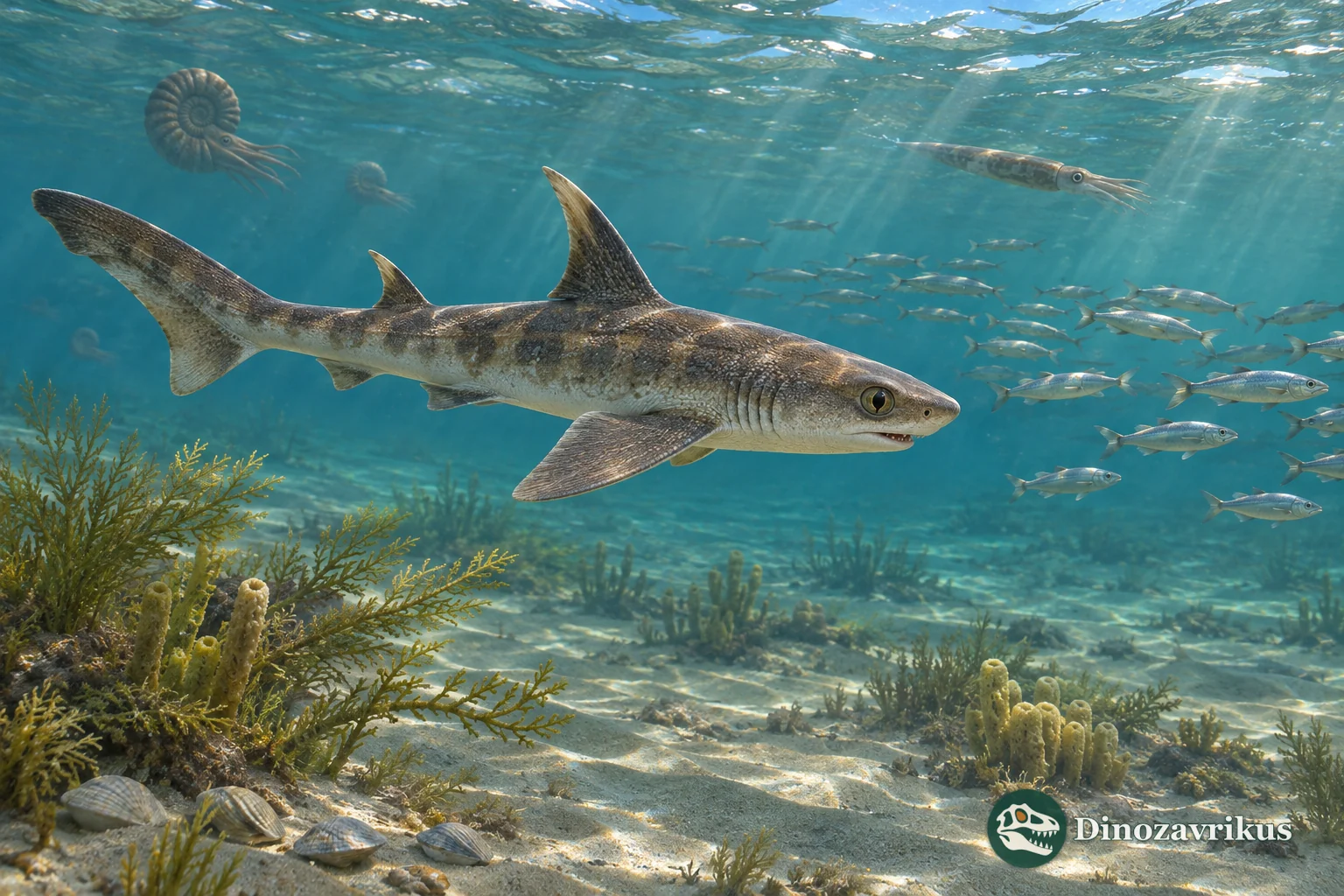
The Barremian marine setting follows the fossil-bearing clay. The exact colour, fin proportions, prey and swimming behaviour in the illustrations are artistic choices. The teeth establish that the shark existed there; they do not record a feeding event or the full silhouette.
Frequently asked questions
What fossils define Leptostyrax stychi?
Three teeth from the early Barremian Gott clay pit form the type series, including holotype NLH 102.973.
How large is the holotype tooth?
The anterior tooth is 14.5 mm high and 5.7 mm wide. Those figures do not measure the whole shark.
Why does macrorhiza have an older date than Leptostyrax?
Cope named the species in 1875 under another genus; Williston established Leptostyrax in 1900.
Is its body shape known?
No complete body accompanies the German type teeth. The published illustrations are reconstructions.