

Macgowania janiceps is a Middle Norian ichthyosaur from British Columbia. It was first named Ichthyosaurus janiceps, then placed in its own genus after researchers reconsidered its skull and forefin. The known fossils are incomplete, so the animal’s total length cannot be measured directly.
Quick facts
| Type species | Macgowania janiceps |
|---|---|
| Holotype | ROM 41992; also RBCM EH 91.2.5 |
| Age | Middle Norian, Late Triassic |
| Locality | Williston Lake area, British Columbia |
| Rock unit | Pardonet Formation |
| Known material | Partial skeleton, including skull and forefin |
| Total length | No secure complete-body estimate |
Evidence guide
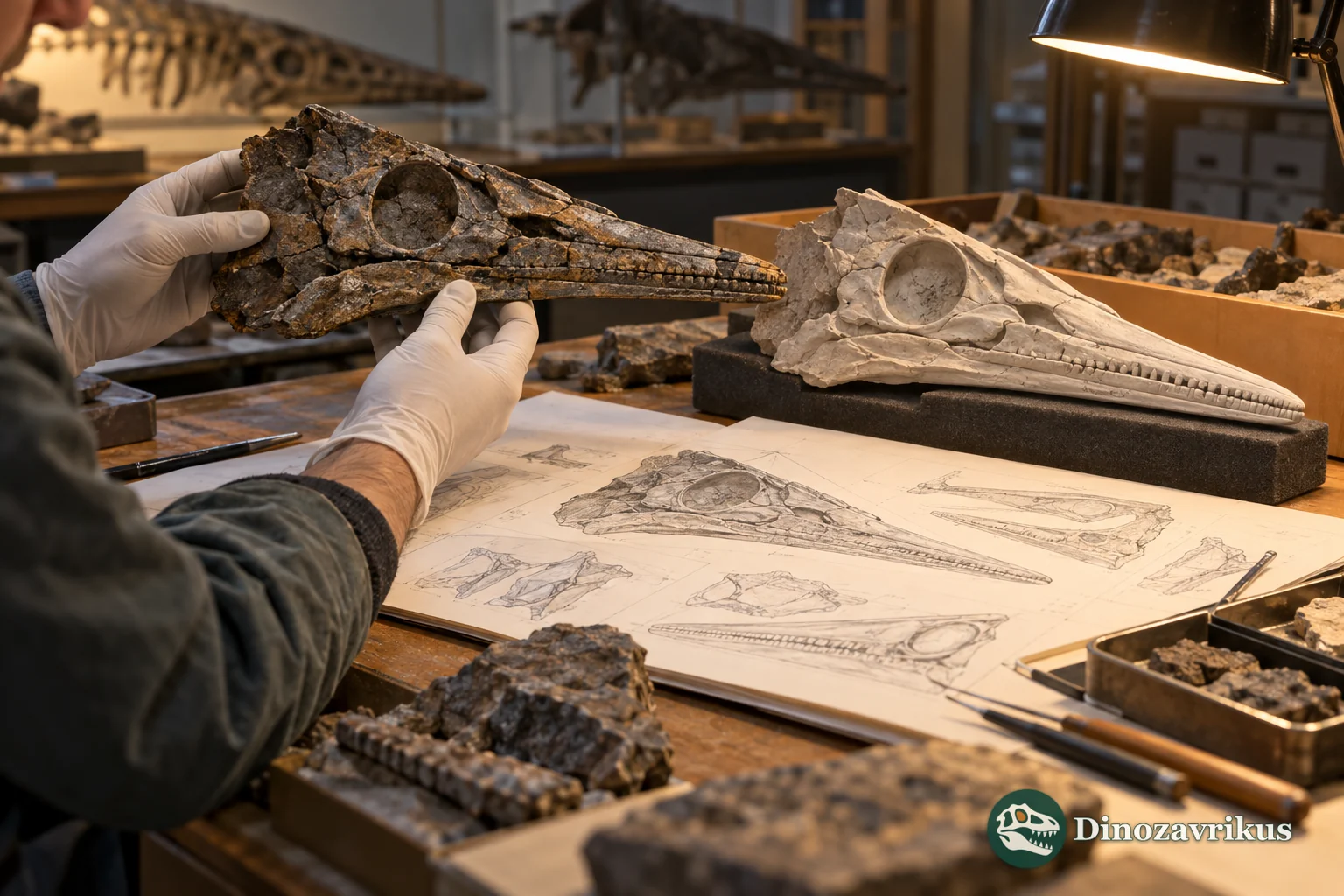
The holotype preserves a skull, an almost complete forefin and other bones. It documents anatomy, but not a complete life outline.
The forefin was compared with other ichthyosaurs. Its shape does not directly measure swimming speed or style.
The specimen comes from the Pardonet Formation near Williston Lake. This dates the rock, not a precise day in the animal’s life.
A 2015 description documented another partial skull and front body. It expands the record without completing the skeleton.
From Ichthyosaurus to Macgowania
Chris McGowan described Ichthyosaurus janiceps in 1996 from Middle Norian rocks of the Pardonet Formation near Williston Lake. The fossil was far older than the typical Jurassic record of Ichthyosaurus. McGowan noted its abbreviated snout and a distinctly different forefin, while retaining it in that genus.
Ryosuke Motani erected Macgowania in 1999, with M. janiceps as its type species. Later phylogenetic analyses have not always recovered early ichthyosaur relationships in the same way. The separate genus is a taxonomic decision based on anatomy; its precise position among early ichthyosaurs remains more sensitive to the characters and sampling used in each analysis.
The nearby Triassic ichthyosaur Hudsonelpidia shows that animals from neighbouring rock units could have very different proportions.
Related profiles: Hudsonelpidia · Callawayia · Californosaurus.
What the fossils preserve
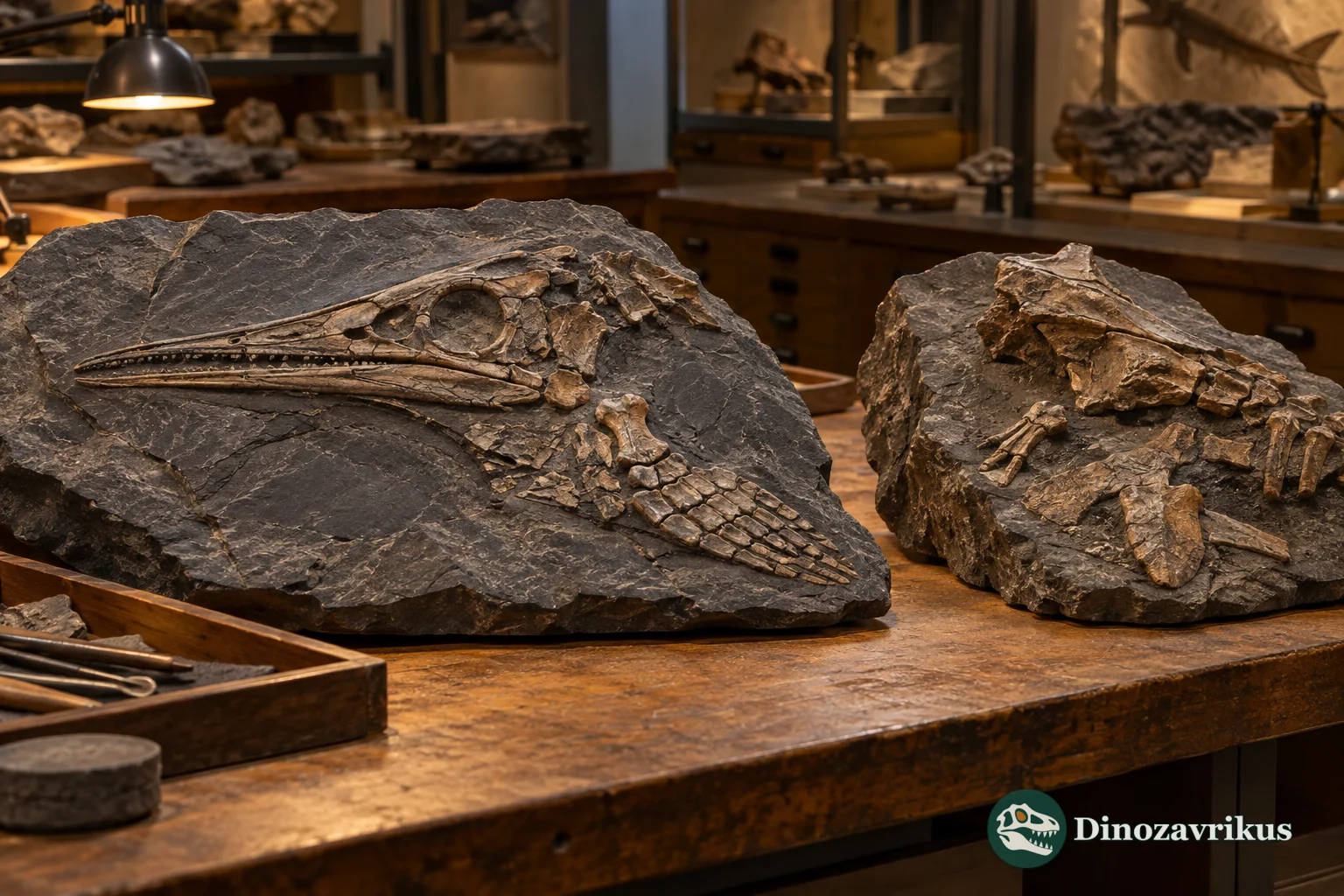
The holotype, ROM 41992 (also catalogued as RBCM EH 91.2.5), is a partial skeleton. The original description examined the skull and forefin in detail, along with other skeletal elements. These remains allow anatomical comparisons, but do not provide a direct measurement of the animal’s full length.
Donald Henderson described a second specimen, TMP 2009.121.1, in 2015. It preserves nearly three-dimensional parts of the skull and front body. The additional material provides another basis for comparison, but it too is incomplete. A reconstruction of the missing torso and tail must therefore be identified as an inference, not a fossil observation.
A short snout and a distinctive forefin
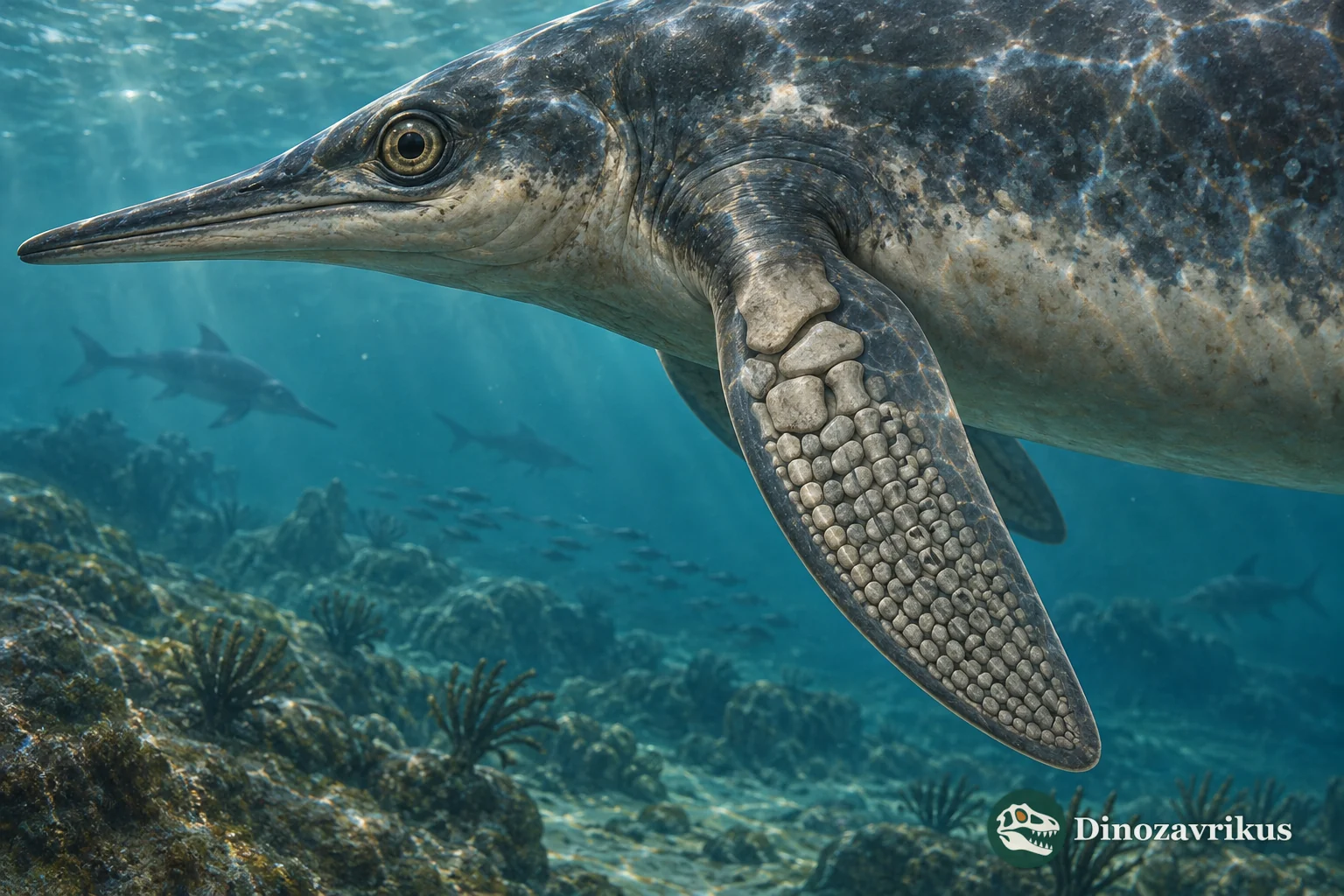
McGowan noted the abbreviated snout and forefin proportions when describing the species. The arrangement of the hand bones helps distinguish Macgowania from species of Ichthyosaurus. These are anatomical comparisons; they do not demonstrate direct ancestry from a particular Jurassic genus.
Published drawings and simplified diagrams can make ichthyosaur flippers look interchangeable. The fossil record of Macgowania supports specific observations about the preserved forefin, not every detail of a living flipper. The illustration below reconstructs the forefin region and does not show fossilized soft tissue.
The Norian sea
The fossils come from the Pardonet Formation near Williston Lake in northeastern British Columbia. McGowan assigned the relevant beds to the Middle Norian of the Late Triassic. This is the age of the geological unit, not a precise date for an individual animal.
Marine rocks establish the setting in which the animal was buried, but a partial skeleton does not reveal its exact depth, prey or swimming performance. A reliable diet, growth curve, reproductive strategy or colour pattern is not known. The cover is an artistic reconstruction, not a portrait of ROM 41992 or a record of the fossil locality.
Frequently asked questions
When did Macgowania live?
Its fossils come from Middle Norian rocks of the Late Triassic Pardonet Formation in British Columbia.
Why was it renamed from Ichthyosaurus?
McGowan named the species Ichthyosaurus janiceps in 1996; Motani erected the separate genus Macgowania in 1999 based on its anatomical combination.
What parts of Macgowania are known?
The holotype includes a skull, an almost complete forefin and other bones. A second specimen preserves parts of the skull and front body.
How long was Macgowania?
A secure total-length estimate based on a complete skeleton is not available. Both known specimens are incomplete.