

Maiaspondylus lindoei was an Albian ichthyosaur from what is now Canada's Northwest Territories. Its fossils preserve distinctive upper-jaw and forefin anatomy, and one specimen has embryonic remains beside articulated vertebrae. A 2020 study proposed adding another species to the genus and reclassifying a third name, so the current scope of Maiaspondylus depends on which taxonomic interpretation is followed.
Quick facts
| Type species | Maiaspondylus lindoei |
|---|---|
| Age | Albian, Early Cretaceous |
| Locality | Hay River area, Northwest Territories, Canada |
| Formation | Loon River Formation |
| Type specimen | UALVP 45635, an incomplete disarticulated skeleton |
| Reproductive evidence | Two embryonic remains associated with vertebrae in specimen UALVP 45639 |
Evidence guide
Holotype UALVP 45635 is an incomplete three-dimensionally preserved skeleton. Other specimens preserve jaw fragments, teeth, vertebrae and forefin elements; they are associated by anatomical comparison, not as one skeleton.
Two small embryonic remains occur beside articulated vertebrae in UALVP 45639. This is direct evidence of embryonic material in the body region, but it does not establish gestation length, total litter size or parental behaviour.
The humerus bears three distal articular facets, with a smaller medial facet associated with the intermedium. Upper-jaw and tooth characters provide additional evidence used to distinguish the material.
In 2020, Zverkov and Grigoriev transferred cantabrigiensis to Maiaspondylus and treated Platypterygius ochevi as its junior subjective synonym. This is a later taxonomic proposal, distinct from the genus's original 2006 definition.
Canadian fossils and the genus name
The material came from the Hay River area of Canada's Northwest Territories and is associated with the Albian Loon River Formation. Erin Maxwell and Michael Caldwell named the genus and type species in 2006. Maiaspondylus combines Greek words for a good mother and a vertebra, referring to embryonic remains found beside the vertebral column of one specimen. The name points to the fossil discovery; it does not demonstrate a particular kind of parental care.
The holotype, UALVP 45635, is an incomplete disarticulated skeleton preserved in three dimensions. The original description also discussed other specimens, including jaw fragments and forelimb material. These fossils represent several individuals, not parts of one complete animal. Different specimens preserve different portions of the anatomy.
Specimen UALVP 45639 preserves two embryonic remains associated with a string of eight articulated vertebrae. Their position supports an association with an adult ichthyosaur's body region. The fossils do not reveal the individual's sex, gestation length or the original number of embryos. They also provide no direct evidence of social behaviour.
Jaw, teeth and a distinctive forefin
Upper-jaw fragments help identify Maiaspondylus through the extensive overlap between the jugal and maxilla and the shape of their contact. The teeth were set in a dental groove. Described crowns are smooth, while the cementum has fine vertical striations. Differences among specimens, including the presence or absence of a small basal ridge, were discussed as possible individual or growth-related variation rather than automatically treated as evidence of separate species.
The humerus is short and flattened, with its proximal and distal ends similarly expanded. In the holotype it has three distal articular facets: two larger lateral surfaces for the radius and ulna, and a smaller medial surface associated with the intermedium. This arrangement distinguishes it from some other Cretaceous ichthyosaurs in which the intermedium does not contact the humerus.
The forefin also includes a large ulna and polygonal phalanges that become shorter and more nearly equal in length toward the tips. These observations come from preserved bones. They do not, by themselves, establish swimming speed or a specific swimming style.
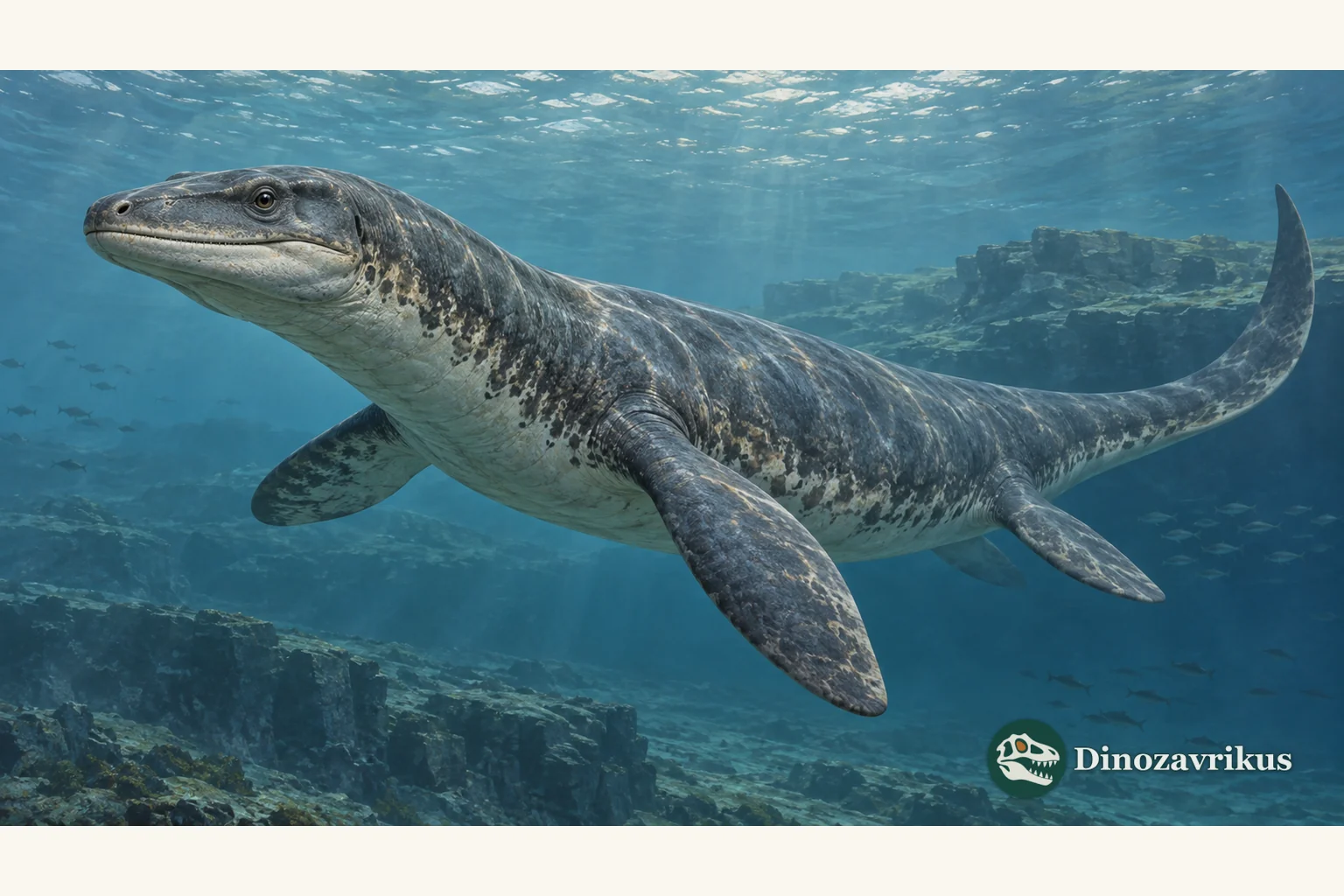
Age, size and changing classification
The collection includes specimens in different size classes, including the juvenile holotype and larger adults. That variation helps researchers compare growth stages, but it does not yield one precise body length for the genus. A complete adult skeleton with confirmed proportions has not been described, so numerical estimates should identify the specimen and assumptions behind them.
The Albian age comes from the Loon River Formation, not a direct measurement of the bones. The original authors placed Maiaspondylus among ophthalmosaurian ichthyosaurs based on its anatomy. Later phylogenetic work has treated it as part of a derived platypterygiine lineage, but inferred relationships depend on the taxa and characters included in an analysis. Similarity does not establish that one named genus was the direct ancestor of another.
In 2020, Nikolay Zverkov and Dmitry Grigoriev compared the type materials of three mid-Cretaceous ichthyosaurs. They proposed the new combination Maiaspondylus cantabrigiensis for the species previously called Ophthalmosaurus cantabrigiensis, and treated Platypterygius ochevi as its junior subjective synonym. Their interpretation expands Maiaspondylus beyond its Canadian type species. It is a taxonomic hypothesis based on comparative anatomy, and should be identified as such rather than presented as part of the original 2006 description.
Comparison with Jabalisaurus illustrates the diversity of ophthalmosaurids, while Platypterygius is central to the classification history of Cretaceous ichthyosaurs. The more fragmentary skull of Leninia shows how unevenly the group is represented in the fossil record. These comparisons do not imply direct ancestry.
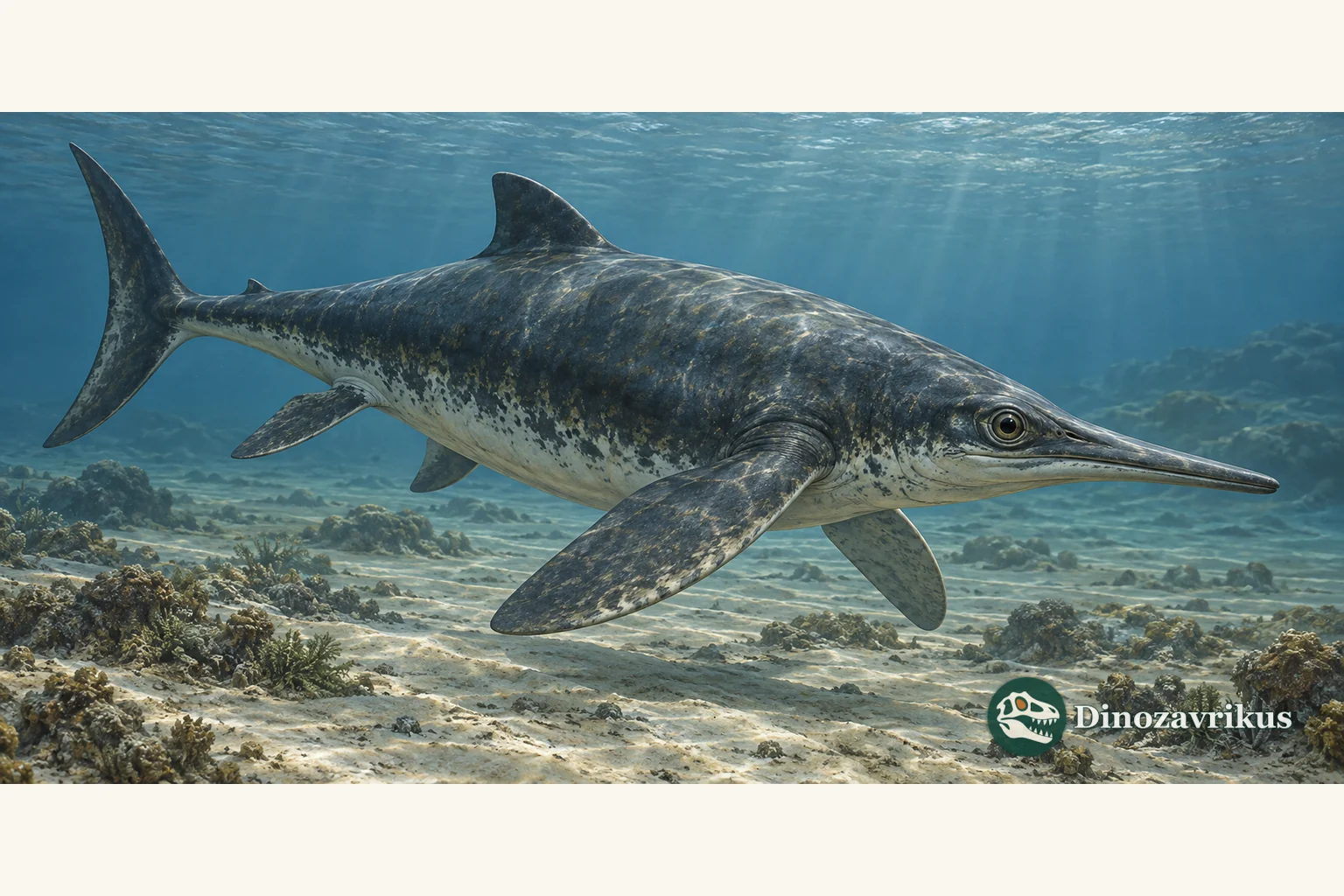
Frequently asked questions
Where did Maiaspondylus live?
Its known fossils came from the Hay River area of Canada's Northwest Territories and the Albian Loon River Formation.
Why is the genus name linked to embryos?
Two embryonic remains were found beside articulated vertebrae in specimen UALVP 45639. The name refers to that discovery, not to demonstrated parental behaviour.
What is unusual about its forefin?
The humerus has three distal articular facets, including a smaller medial one associated with the intermedium. Jaw and tooth characters also help distinguish the fossils.
Which species belong to Maiaspondylus?
The 2006 description established M. lindoei. A 2020 study proposed M. cantabrigiensis and treated Platypterygius ochevi as its junior subjective synonym; that broader scope is a later taxonomic interpretation.