

Mesotherium was a South American notoungulate in the family Mesotheriidae. Its accepted Pleistocene species in a recent revision is M. cristatum, represented by skulls, teeth, jaws and limb bones from Argentina. Its sturdy limbs inspired a digging hypothesis, but no burrow has been securely attributed to this species. Fur and full-body appearance in the cover are artistic reconstruction.
Earlier mesotheriids such as Trachytherus and Typotheriopsis illustrate the family's longer history. Similar teeth do not make them Mesotherium individuals. Identifying the Pleistocene species requires anatomy, growth stage and a reliable geological context.
Quick facts
| Order | Notoungulata |
|---|---|
| Family | Mesotheriidae |
| Accepted species in recent revision | Mesotherium cristatum Serres, 1867 |
| Region | Argentine Pampas |
| Age | Early to middle Pleistocene; Corralito fossils around 220 ka |
| Material | Skulls, teeth, jaws and limb bones |
What can the fossils tell us?
A revision compared skulls, jaws and dentitions across the Buenos Aires sample. Some differences once used to split taxa fall within growth and individual variation.
Forelimb and pelvic proportions are consistent with powerful digging movements. Bones cannot tell us how often an animal dug or prove a particular burrow belonged to it.
A horizon with Mesotherium remains dates to about 220 ± 13 ka. Carnivore and other marks record events after death, not the extinction cause.
Name, type and a revised species count
Serres established the name Mesotherium cristatum in 1867. The older historical name Typotherium appears in accounts of the same research history; names and combinations cannot simply be counted as separate animals. The M. cristatum holotype is held by the National Museum of Natural History in Paris.
Some large and small skulls were once placed in separate species or genera. A recent analysis of Buenos Aires fossils compared cranial, mandibular and dental variation while considering growth. Its authors concluded that the studied Pleistocene material fits one species and treated Mesotherium as monotypic. That conclusion concerns this genus and sample, not every member of the wider family.
What the limbs can and cannot show
High-crowned cheek teeth and front incisors indicate plant processing without identifying exact plants. Functional comparisons of mesotheriid forelimbs and pelvis with living mammals support a strong digging capability. This is an anatomical inference; the skeleton alone cannot tell whether an individual spent most of its time underground.
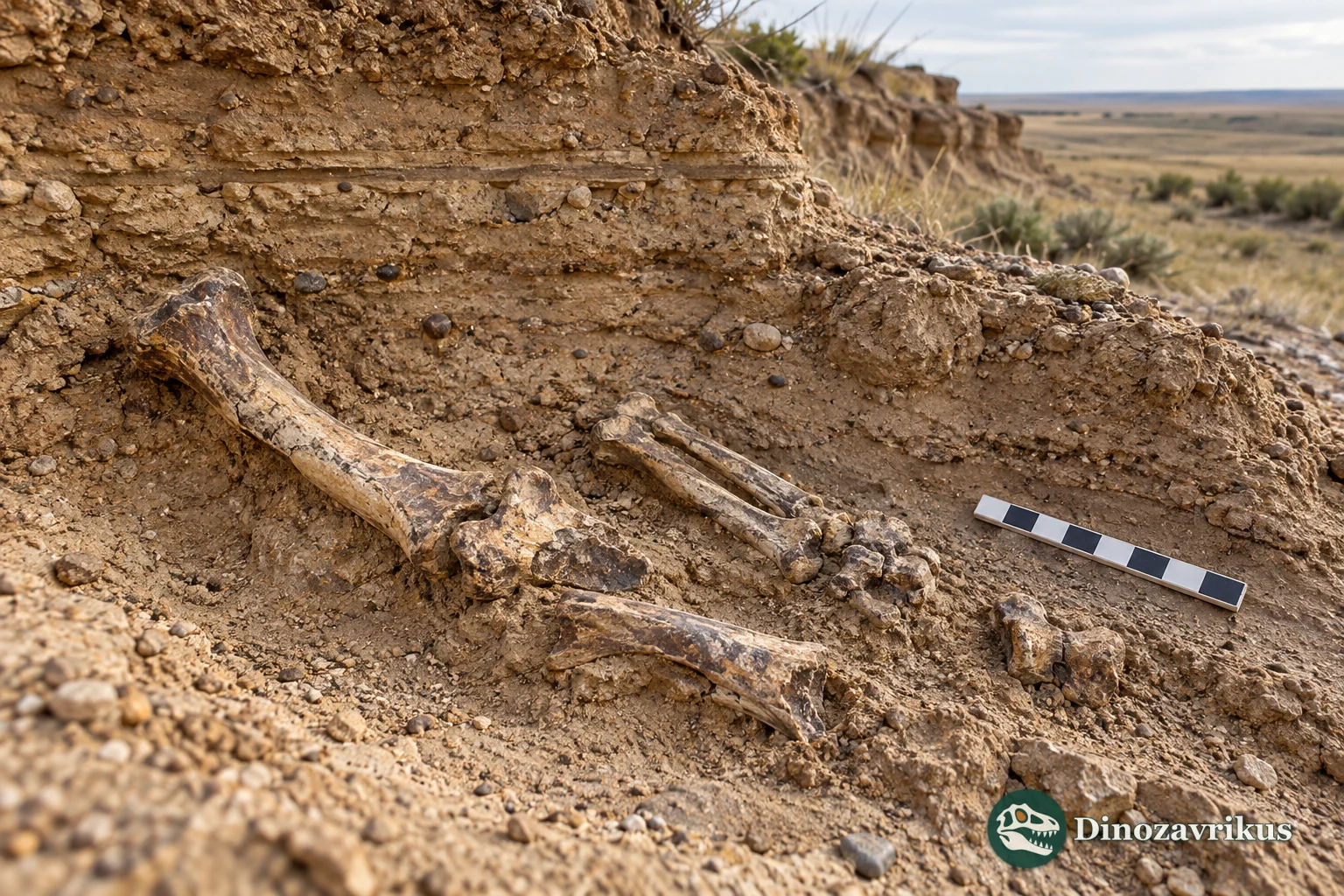
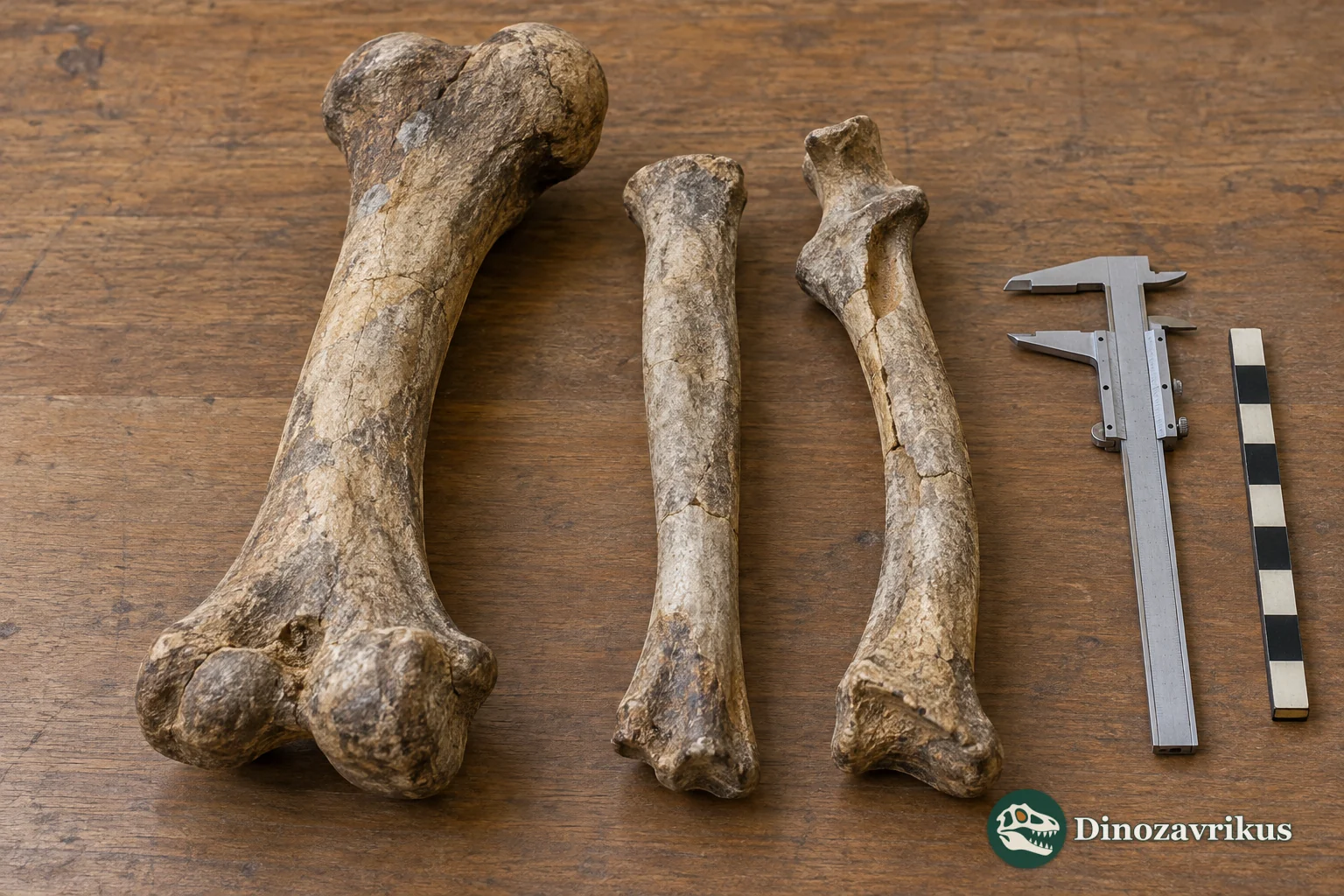
At Corralito, one specimen preserves an articulated humerus, ulna and radius. Their relative position helps study the limb more directly than isolated teeth do. Some margins were damaged after death, so functional analysis must separate original joint shape from bites and breaks. The field and study-table illustrations are general educational scenes, not images of the Corralito fossils.
A later occurrence and the afterlife of bones
M. cristatum long served as a characteristic fossil of the Ensenadan interval. A Corralito horizon in Córdoba Province containing the species dates to about 220 ± 13 thousand years ago and extends its known record into younger deposits. This is a date for that horizon, not for the disappearance of the last Mesotherium.
A taphonomic study examined a jaw fragment from one individual and limb bones from another. Carnivore tooth marks, root etching and later rodent gnawing reveal a sequence of events after death. A long bone may have been broken to reach marrow. Such marks cannot identify which predator killed the animal or explain the extinction of its species.
Frequently asked questions
Was Mesotherium a rodent or a marsupial?
No. It belonged to the extinct South American notoungulates. A similar silhouette does not imply close relationship.
Is it proven to have built burrows?
Its forelimbs and pelvis support a digging function, but no burrow has been securely assigned to M. cristatum.
Why does a recent revision accept one species?
Part of the skull and tooth variation formerly used to split species is consistent with growth and individual differences in the studied sample.
When did the last known Mesotherium live?
A dated Corralito horizon with M. cristatum remains is about 220 ± 13 thousand years old. This is not an exact extinction date.