

Montanazhdarcho minor is known from a partial wing and other bones from the Campanian Two Medicine Formation of Montana. Its approximately 2.5-metre reconstructed wingspan is modest compared with many Late Cretaceous azhdarchoids. Bone histology helped identify the small individual as mature, while later analyses challenged its original placement within Azhdarchidae.
Quick facts
| Scientific name | Montanazhdarcho minor, Padian, de Ricqlès and Horner, 1995 |
|---|---|
| Holotype | MOR 691, partial left wing and associated fragments |
| Locality | Glacier County, Montana, United States |
| Rock unit | Two Medicine Formation, Campanian |
| Wingspan | Roughly 2.5 m reconstructed from an incomplete wing |
| Maturity | Bone microstructure supports an adult individual |
What can the fossils tell us?
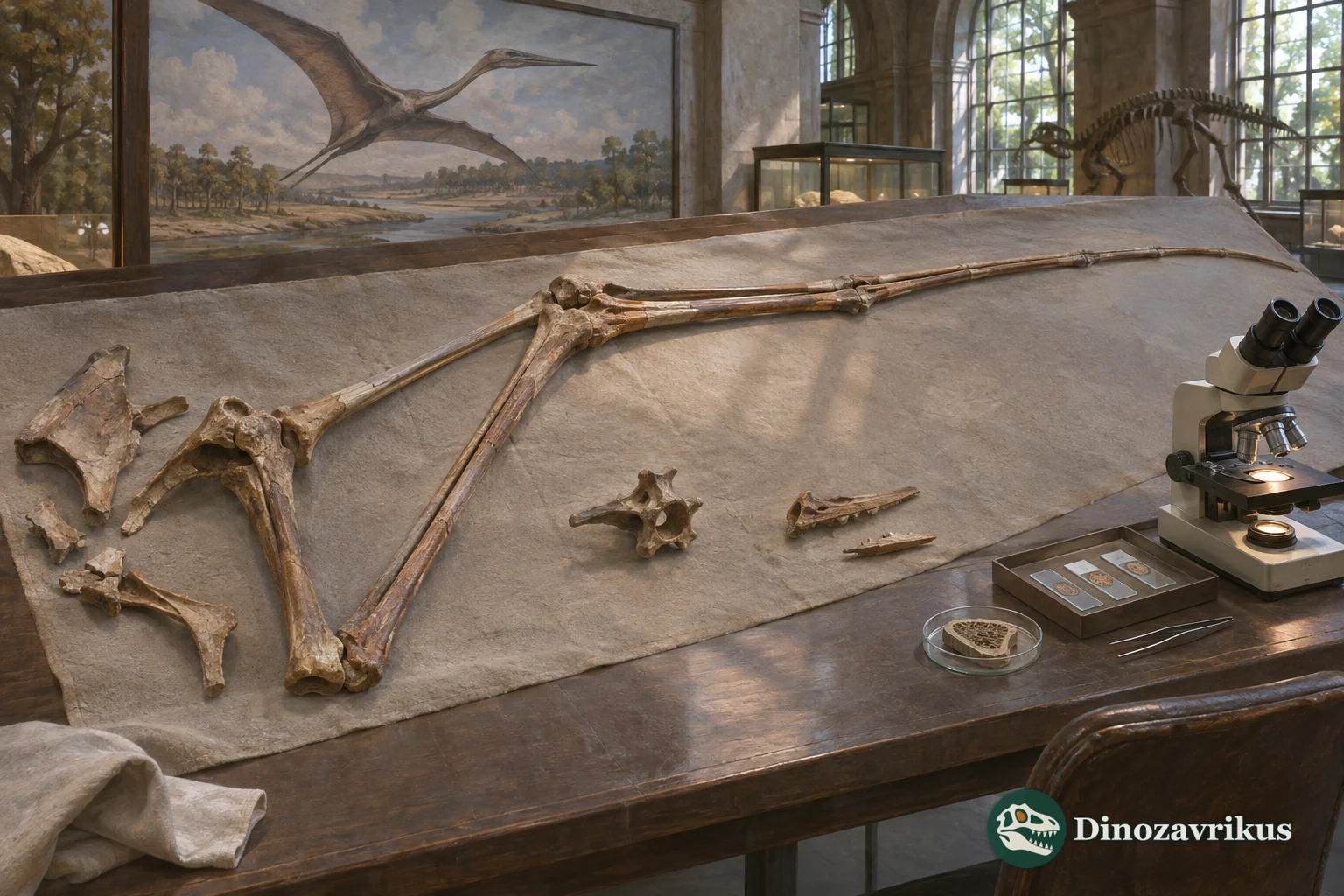
MOR 691 preserves much of the proximal left wing, shoulder material, a damaged cervical vertebra and small jaw fragments; no complete skull.
Bone microstructure did not show the rapid growth expected of a young juvenile. It informs this individual's age, not every adult's exact size.
The approximate 2.5-metre span includes missing distal wing elements and is not a direct full-wing measurement.
Initially described as an azhdarchid, the genus has appeared beside but outside Azhdarchidae in later analyses.
The Two Medicine specimen
MOR 691 came from the Campanian Two Medicine Formation of Glacier County in northwestern Montana, on Blackfeet land. Kevin Padian, Armand de Ricqlès and Jack Horner formally named the taxon in 1995 after examining bone tissue. Michael McGowen and colleagues provided a fuller osteological account in 2002. The epithet minor recalls its small size relative to the better-known giants, not a claim that the specimen was juvenile.
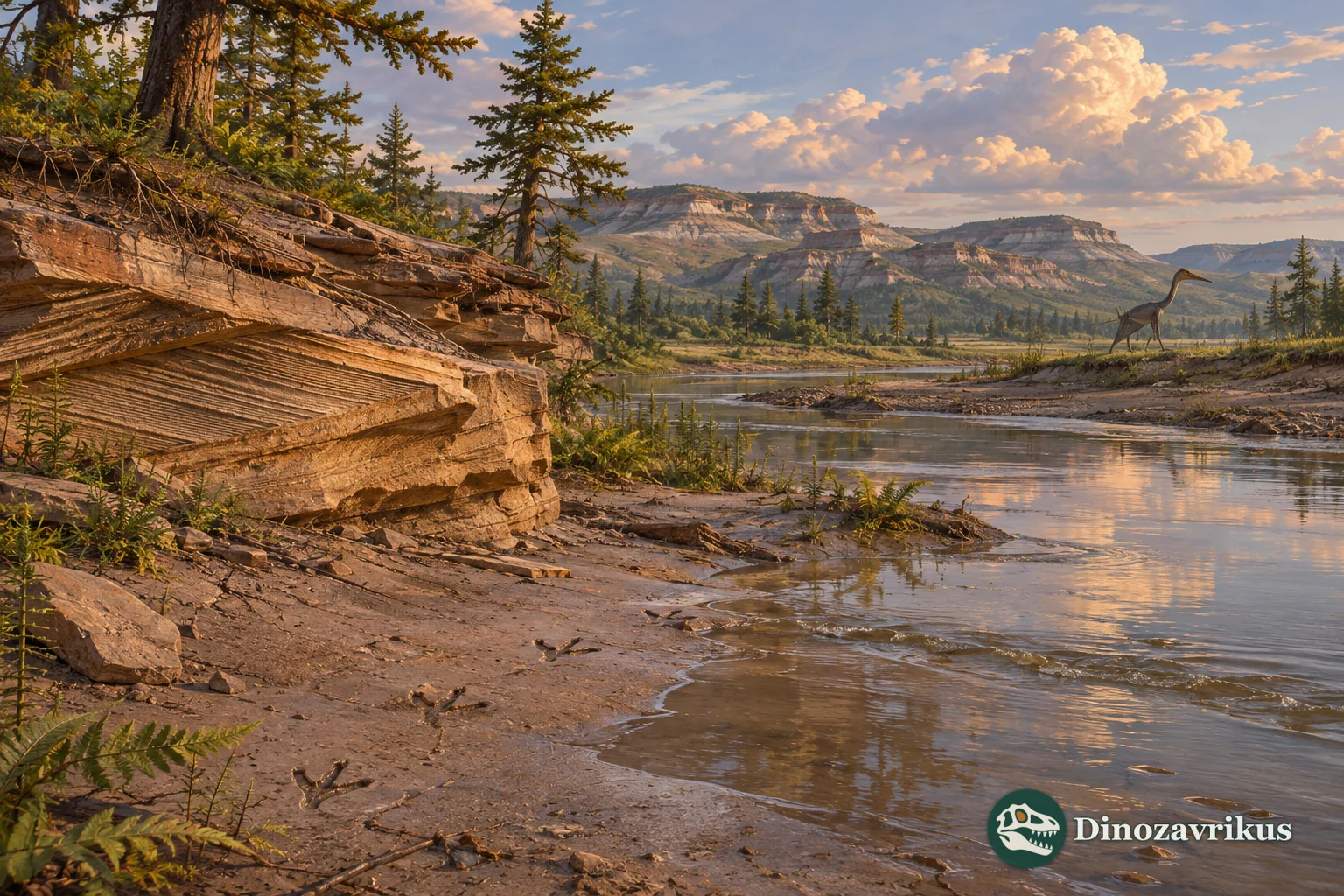
The formation includes river and floodplain deposits. They establish an inland geological setting for the find, but the specimen does not document a colony, prey species or a particular daily activity.
What remains of the skeleton
The type includes elements of the shoulder girdle and left wing: humerus, ulna, radius, wrist and metacarpal parts and a first wing-finger phalanx. A crushed cervical vertebra and small fragments of the joined front of the lower jaws are also known. Distal wing phalanges and most of the skull are missing.
The relative lengths of ulna and wing metacarpal featured in early comparisons. A roughly 2.5-metre wingspan reconstructs missing outer parts rather than measuring a complete wing. Navajodactylus is a separate incomplete-wing taxon whose span has also been estimated by comparison, including with Montanazhdarcho proportions.
Why maturity mattered
A small wing could belong to a juvenile of a larger species. Bone histology provided a way to test that possibility. Padian and colleagues found features inconsistent with rapid juvenile growth and considered MOR 691 an adult, perhaps late in development. Its small size therefore cannot be explained away simply as a hatchling's size.
That evidence does not show that every adult measured exactly 2.5 metres across. Missing outer phalanges and individual variation still constrain the span estimate.
Its changing place in the family tree
The species was originally assigned to Azhdarchidae. Later phylogenetic analyses in 2021 and 2025 recovered it near that family within broader azhdarchiforms, rather than securely within it. Different character samples and an incomplete skull help explain the disagreement. Eurazhdarcho offers a comparison from separate partial neck and wing material, not a ready-made head for this Montana species.
The cover reconstructs a living animal on a riverbank. Wing anatomy follows general pterosaur evidence, while its full head, colour and behaviour remain artistic choices because MOR 691 lacks those details.
Frequently asked questions
Was Montanazhdarcho just a young giant pterosaur?
Bone histology of MOR 691 supported a mature individual. Its small size is not explained simply by juvenile growth.
How certain is its wingspan?
About 2.5 metres is an estimate from an incomplete wing. Missing outer phalanges prevent a direct complete-span measurement.
Is its head known?
Only small fragments of the lower-jaw symphysis survive, not a complete skull. Its detailed head shape is unknown.
Why is its family assignment disputed?
It was originally called an azhdarchid. Later analyses have placed it near, but outside, that family within broader azhdarchiforms.