

Morenelaphus was an extinct deer recorded from Pleistocene deposits across eastern South America. Long, branching antlers make its fossils conspicuous, yet many finds are only pieces of antler. A fragment may establish the genus while leaving the species uncertain. Skulls and teeth add information that an isolated branch cannot supply.
The animal on the cover is an artistic reconstruction. Fossils support branching antlers; coat colour, soft tissues and the exact setting are not preserved. A large rack does not by itself provide a measured body mass. The North American Cervalces is a useful reminder that impressive antlers are not proof of a close relationship between fossil deer.
Quick facts
| Family | Cervidae, deer |
|---|---|
| Genus | Morenelaphus Carette, 1922 |
| Traditional species | M. brachyceros and M. lujanensis; distinction contested |
| Age | Middle and late Pleistocene, with later regional contexts |
| Range | Pampas and other eastern South American regions |
| Fossils | Antlers, partial skulls, teeth and some skeletal bones |
What can the fossils tell us?
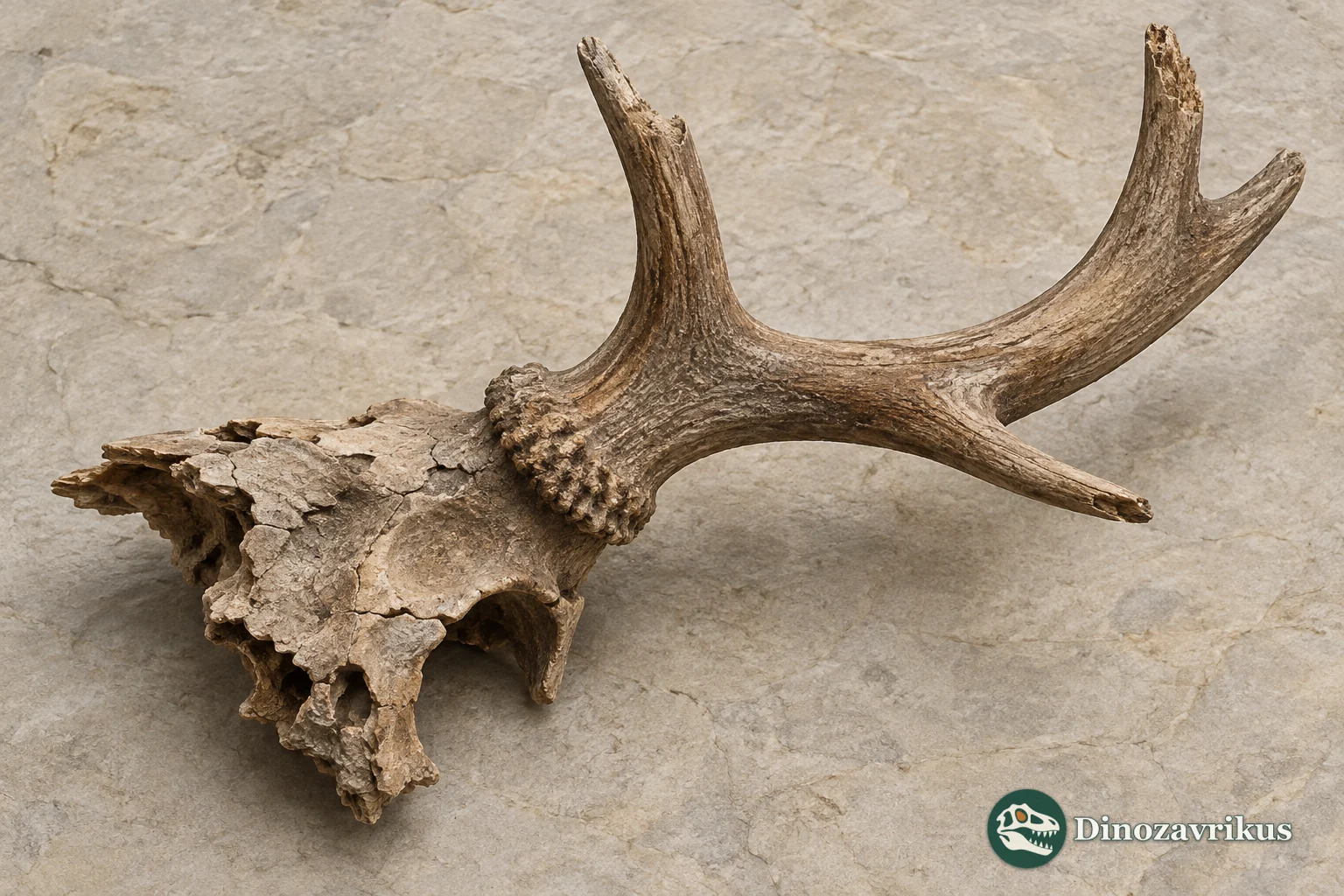
Large branched antlers are common finds. An incomplete piece such as PIMUZ A/V 4162 lacks enough diagnostic features for a secure species identification.
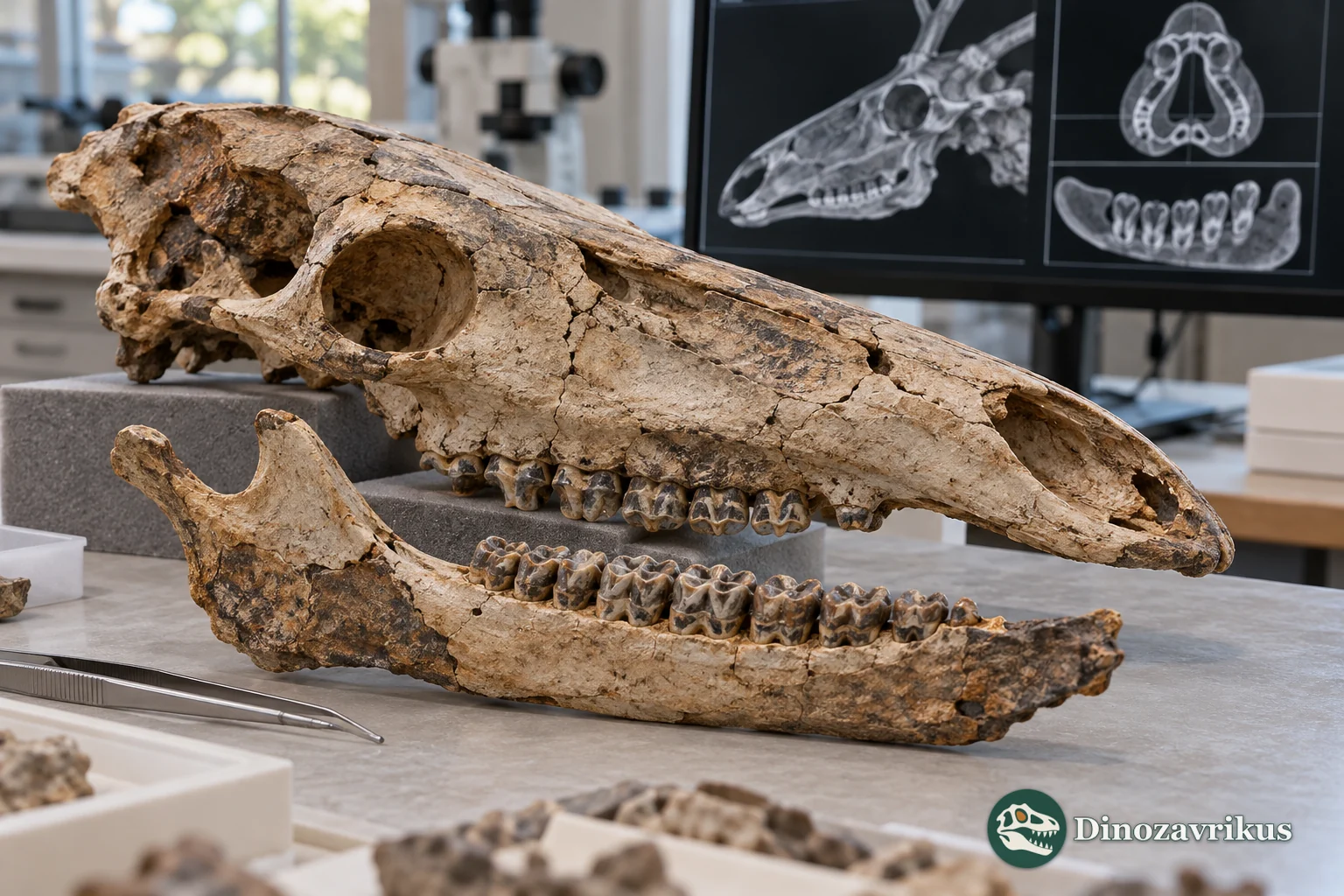
A late Pleistocene snout was described and CT-scanned. A phylogenetic analysis placed Morenelaphus among Cervinae; this is a model-based result, not an identity stamped on every antler.
Eight of eleven available second upper molars were suitable for enamel microwear study. Their surface marks support mixed feeding with considerable grass use, not the last meal of an individual deer.
Historical names and incomplete antlers
The name M. brachyceros reaches back to Gervais and Ameghino in 1880; M. lujanensis follows another name introduced by Ameghino. Carette established Morenelaphus in 1922. Traditionally the two species were distinguished largely by antler branching and curvature. Some revisionary work proposed uniting them, while other authors retain both. Thus two familiar names should not be presented as an uncontested count of biological species.
Santiago Roth's nineteenth-century Pampas collections are now held in Swiss museums. Their antler fragment PIMUZ A/V 4162 can be identified as Morenelaphus, but its surviving parts do not permit a species assignment. Historical labels also sometimes give only a broad stratigraphic interval. The Corrientes record of M. lujanensis in the Toropí Formation supplies a more local context, but the age of one deposit cannot date every antler from another site.
What a well-preserved snout changed
A 2025 study described a relatively complete late Pleistocene snout from the Pampas, scanned its internal and external anatomy and compared it with other deer. In one phylogenetic analysis, those additional characters placed Morenelaphus within Cervinae. That result matters because earlier work relied heavily on antlers and associated cranial scraps. It is an inference from selected characters and a comparative matrix, not a direct observation of ancestry.
The new snout does not turn every partial antler into a named species. Other South American animals, including Palaeolama, shared broad regions with this deer, but regional overlap does not establish the same diet or a direct encounter. The snout illustration below shows the kind of comparative anatomy involved, not the actual published specimen.
Diet and the limits of the fossil clock
An enamel microwear study selected eight suitable second upper molars from eleven available in collections. Scratches and pits placed the sample among mixed plant feeders with substantial use of grasses, perhaps with abrasive grit on food. Tooth-surface marks are evidence of feeding patterns in a small sample, not a preserved menu of one animal or a single diet throughout its whole geographic range.
Open and partly open habitats are consistent with these observations, but the fossil range spans more than one environment. Uruguayan antlers in dated sediment document late regional occurrence near the Pleistocene–Holocene boundary; they do not set a continent-wide extinction date. Nor does coexistence with predators such as Arctotherium demonstrate a particular attack without marks on the bones. Fur, antler soft covering and precise behaviour in a life scene remain uncertain.
Frequently asked questions
How many Morenelaphus species are recognized?
Traditional accounts list M. brachyceros and M. lujanensis, but some revisions unite them; the answer depends on the taxonomy adopted.
Can an antler fragment identify the species?
Not always. Missing diagnostic branches may permit genus-level identification only.
What did Morenelaphus eat?
Microwear on eight studied molars supports mixed plant feeding with considerable grass use; exact plants remain unknown.
Why is the newly described snout important?
It provides skull characters rarely available alongside antlers and supported a Cervinae placement in a phylogenetic analysis.