

Oldfieldthomasia is a genus of early South American notoungulates known chiefly from teeth and fragmentary material. Its history illustrates how taxonomy changes when researchers compare old collections again: Florentino Ameghino initially named several species, and later revisions reduced and reconsidered that set.
The genus belongs in the ancient mammal catalogue and is traditionally associated with Oldfieldthomasiidae. The family’s boundaries and position among early South American ungulates remain debated. Other notoungulates, including Notopithecus and the later Nesodon, show the order’s diversity but are not close stand-ins for Oldfieldthomasia.
Quick facts
| Scientific name | Oldfieldthomasia Ameghino, 1901; one described species is O. furcata |
|---|---|
| Group | Notoungulata; traditionally placed in Oldfieldthomasiidae |
| Age | Eocene of South America |
| Main evidence | Tooth rows and fragmentary cranial material |
| Diagnostic traits | The combination of ridges and cusps on cheek teeth |
| Taxonomic caution | The historical species count is not a settled modern consensus |
| Body size | No secure genus-wide estimate established from the material summarized here |
What do the teeth and revisions show?
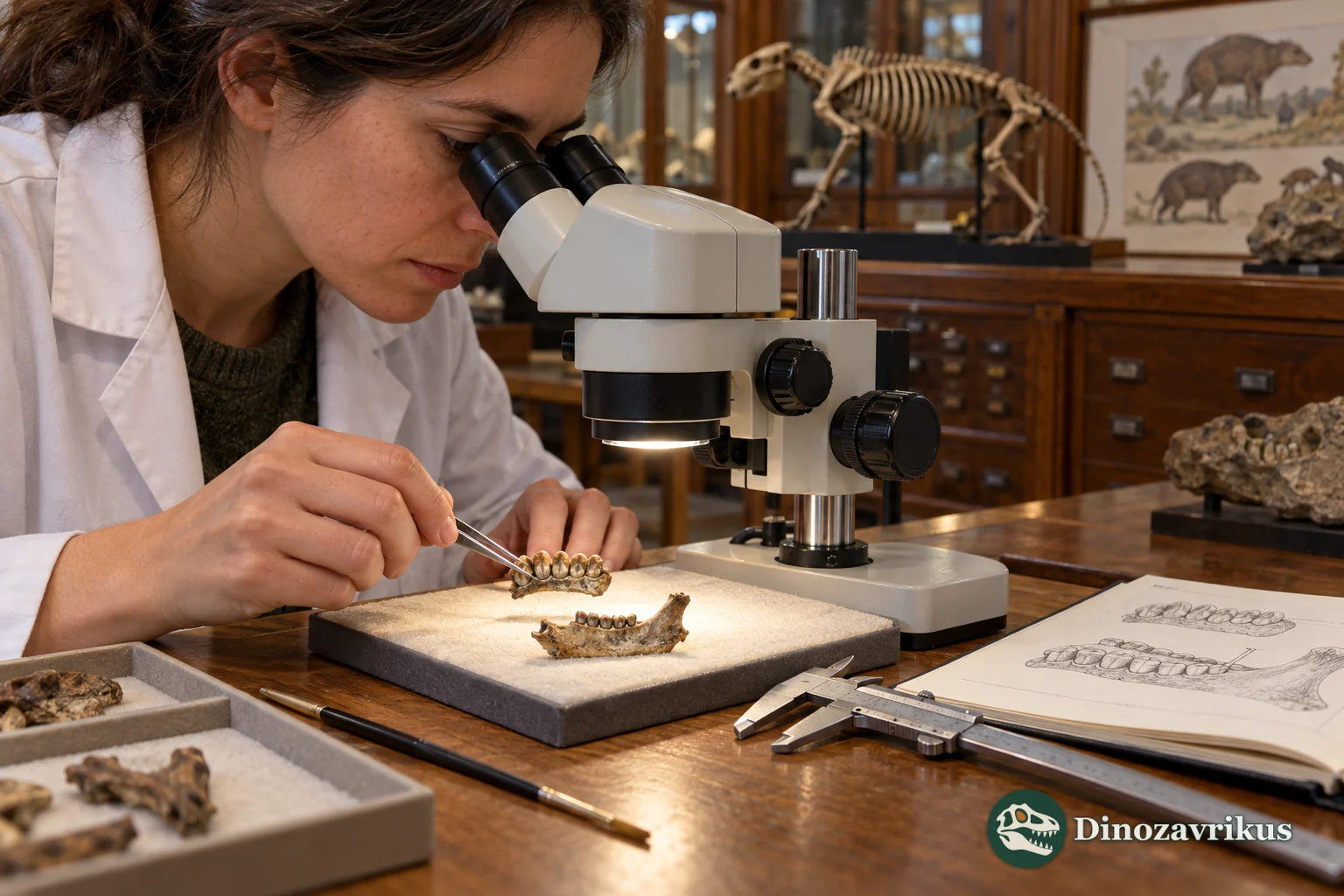
In his description of Oldfieldthomasia furcata, Florentino Ameghino emphasized upper molar ridges, the relative size of inner lobes and a reduced posterior lobe. These are traits of tooth crowns, not a complete portrait of the skull or animal.
Ameghino originally referred ten species to Oldfieldthomasia. Later treatments changed the composition; Simpson recognized four species, while subsequent reviews revisited their distinctions. A historical list is not the same as a stable modern count.
Oldfieldthomasia is traditionally associated with Oldfieldthomasiidae, a family of early South American notoungulates. Phylogenetic analyses differ in how some early groups relate to Typotheria and other notoungulates; results depend on the taxa and characters sampled.
Tooth crowns provide comparable anatomical traits and help identify jaws. By themselves they do not establish body mass, an exact diet, locomotor speed or social behaviour. The body and setting shown here are artistic interpretations.
Ameghino and the genus name
Ameghino described Oldfieldthomasia in 1901 in a work on new fossil ungulates from Patagonia. The genus name honours British zoologist Oldfield Thomas, a mammal specialist. Ameghino’s initial list included ten species assigned to the new genus, with diagnoses based chiefly on differences in tooth form.
For O. furcata, Ameghino described a combination of upper molar characters: four transverse ridges on the outer wall, inner lobes of some molars that were similar in size, and a reduced rear inner lobe on the last molar described. He also discussed basal cingula and the shape of the upper canine. Such details allow comparison of individual teeth and jaws, but cannot recover soft tissues or behaviour.
How the species list changed
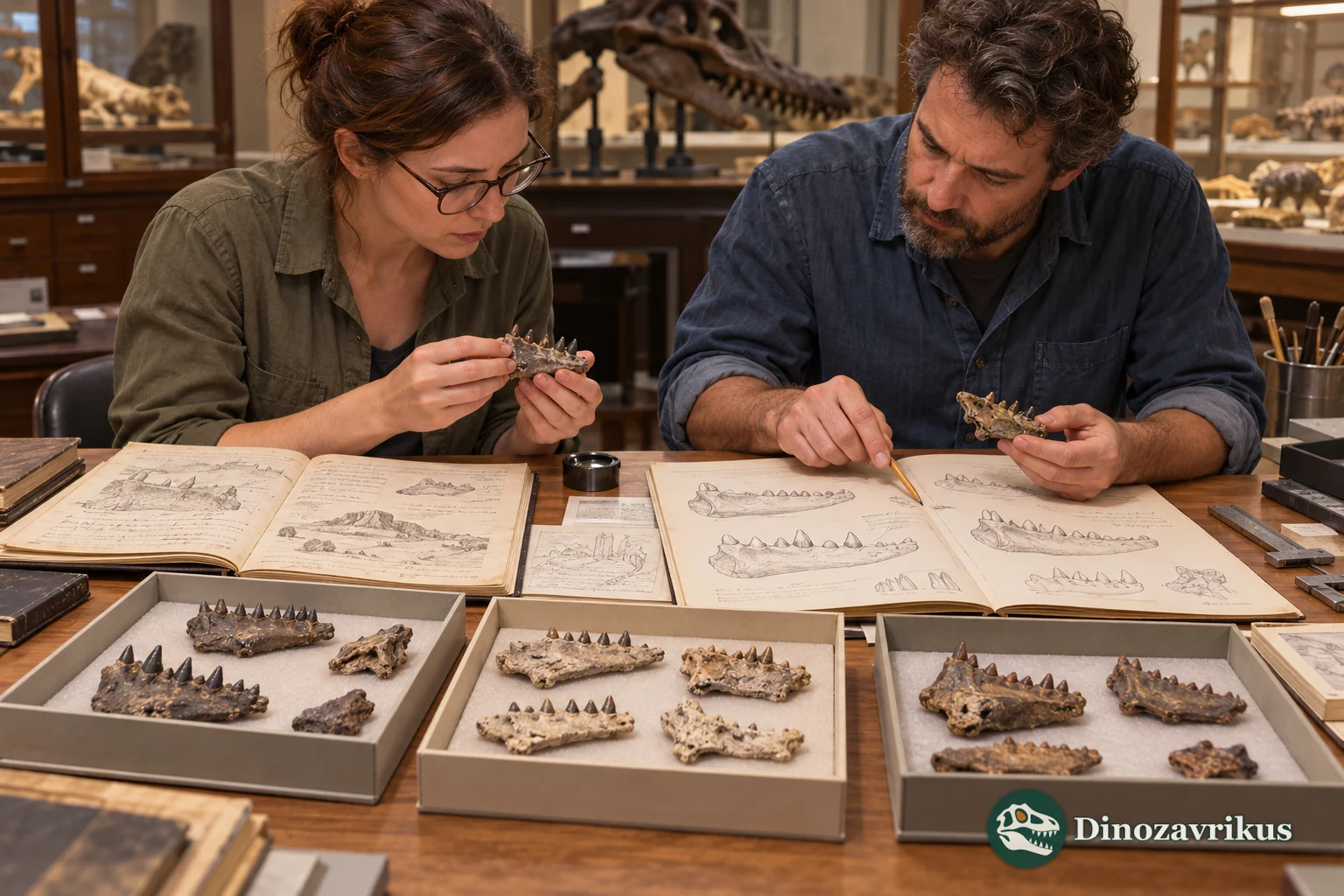
The ten names in the original account did not remain a fixed species list. In the mid-twentieth century, George Gaylord Simpson recognized four species in the genus. Later systematists revisited diagnostic characters, compared tooth rows and asked whether the named forms could be distinguished from the material that survived. These arguments involve not only Oldfieldthomasia but the boundaries of the family as well.
It is safer to discuss a particular species name and its diagnostic evidence than to repeat an early list without context. O. furcata remains a prominent named species in the genus and appears in later reviews. Yet recognized species counts depend on systematic treatment; incomplete material or a lack of comparable series can make it difficult to separate some names reliably.
Age and provenance
Ameghino’s early descriptions associated forms with the “Couches à Notostylops”, a historical label for beds he discussed within the Patagonian Paleogene fauna. Later stratigraphic and biochronological work refined the ages of South American localities and altered how older horizons are matched to current units. The early wording should not be translated mechanically into one exact numerical age.
The family Oldfieldthomasiidae includes taxa from different parts of South America and several parts of the Eocene. A record of another genus from Brazil or another formation is not automatically a locality for Oldfieldthomasia. The available evidence supports an Eocene South American context for the genus, not one site or one layer for every species name.
Relationships and limits of reconstruction
Oldfieldthomasia is traditionally placed in Oldfieldthomasiidae among early notoungulates. Phylogenetic studies do not always recover the same arrangement of early branches: some support inclusion of such forms in Typotheria, while others place them differently relative to major notoungulate groups. This is a debate about relationships based on anatomical character matrices, not doubt that the fossils represent a South American ungulate.
Teeth document crown form and may inform chewing mechanics, but the available evidence does not establish an exact diet for Oldfieldthomasia. A general expectation of plant feeding should not be turned into a precise menu. A reliable body-mass estimate and a complete skeleton are not established in the descriptions summarized here. The page’s reconstruction shows a small form in a woodland setting as paleoart, not a fossil photograph or an outline based on an articulated skeleton.
Frequently asked questions
When did Oldfieldthomasia live?
The genus is known from the Eocene of South America. Historical bed names and modern age frameworks differ, so one exact date cannot be assigned without a specific specimen.
What fossils underpin its diagnosis?
The most important diagnostic features concern teeth and tooth rows; the original description also discussed cranial features. The evidence is not equivalent to a complete articulated skeleton.
Why did the number of species change?
Ameghino initially named ten forms, while later systematists reassessed how clearly the preserved dental characters distinguish them. A historical list does not mean every name is equally secure under later criteria.
How certain is its position in the family tree?
The genus is traditionally associated with Oldfieldthomasiidae among early notoungulates. The family’s position and some early branches have shifted among phylogenetic analyses, so finer relationships remain debated.