

Palaeobrachaelurus is an extinct shark genus described mainly from isolated teeth found in European Jurassic and Cretaceous rocks. Researchers compare the number of lateral cusplets, crown apron and root form to distinguish tooth positions and named species. No articulated skeleton establishes the animal's body proportions, length or exact ecology, and some younger specimens are only tentatively assigned to the genus.
Quick facts
| Type species | Palaeobrachaelurus bedfordensis, from the Callovian of England |
|---|---|
| Genus established | Detlev Thies, 1983 |
| Proposed group | Orectolobiformes; family placement and genus boundaries remain debated |
| Known material | Isolated teeth with variable cusplets and crown aprons |
| Main record | Jurassic and Early Cretaceous European deposits |
| Younger referral | A Maastrichtian Danish tooth was assigned only tentatively |
| Body size and diet | Not established by the known teeth |
What can the fossils tell us?
Reported teeth vary in the number of lateral cusplets and shape of the labial apron; posterior teeth may lose cusplets. A single tooth cannot establish a complete dental row.
The type species is P. bedfordensis from the Callovian. Later descriptions added Bathonian and Barremian species, while a Danish Maastrichtian specimen is reported only as Palaeobrachaelurus sp. These records have different levels of certainty.
The genus is often placed among orectolobiform sharks and assigned to Brachaeluridae. Published comparisons also discuss possible synonymy with Paraginglymostoma and difficulty separating it from Cretorectolobus.
The name and the type species
Detlev Thies established Palaeobrachaelurus in 1983 while describing Jurassic neoselachian teeth from Germany and southern England. He designated P. bedfordensis as the type species, based on Callovian teeth from Bedford, southern England. Other named forms came from different Jurassic horizons; later authors added further species from the Bathonian and Lower Cretaceous.
These names record successive comparisons among isolated crowns. The history resembles that of Protospinax, another shark whose fossil identity and relationships have been debated. A name can summarise a useful hypothesis without proving that all assigned teeth belonged to one stable lineage.
A variable tooth row
Descriptions of teeth assigned to the genus mention a smooth crown, a central cusp, one or more pairs of smaller lateral cusplets and a labial apron that projects over the root. Anterior teeth may be more symmetrical. Along the jaw, the apron can change shape and cusplets may diminish or disappear toward posterior positions. The root in referred teeth is commonly hemiaulacorhize, a vascular pattern visible in its openings and groove.
A Callovian tooth from Poland referred to Palaeobrachaelurus? differs from the more typical examples: it has one pair of cusplets but lacks the usual apron. Its authors considered whether it represented an unrecognised species or a different genus. The question mark preserves that uncertainty rather than disguising it as a settled identification.
A record that reaches beyond the Jurassic
The earliest described material includes Toarcian and Aalenian teeth from continental Europe; other species are known from Bathonian and Callovian deposits in England. The 2004 description of P. mussetti added a Bathonian form, and Underwood's 2004 study named P. mitchelli from Barremian Speeton Clay in Yorkshire. These finds extended the English record of the genus into the Early Cretaceous.
Adolfssen and Ward later reported a tooth identified as Palaeobrachaelurus sp. from Maastrichtian chalk at Stevns Klint, Denmark. It is a tentative genus-level referral and does not establish that one named species persisted across the entire interval. Each tooth is dated through the bed in which it was collected; isolated crowns alone cannot provide the age.
Relationships still under discussion
Thies and later researchers commonly placed the genus among Orectolobiformes, the order containing carpet sharks, and often within Brachaeluridae. Yet the same crown features overlap with those of other fossil genera. Researchers have noted difficulty distinguishing Palaeobrachaelurus from Cretorectolobus and have discussed whether the genus might be a junior synonym of Paraginglymostoma.
Those are taxonomic proposals, not a consensus that one name should replace another. A later study of a Polish tooth warned that the specimen may be better placed elsewhere because it lacks a typical apron. Similar caution applies to forms labelled Palaeobrachaelurus sp. or with a question mark. Better associated teeth, jaws or skeletons could test the competing interpretations.
The shark beyond its teeth
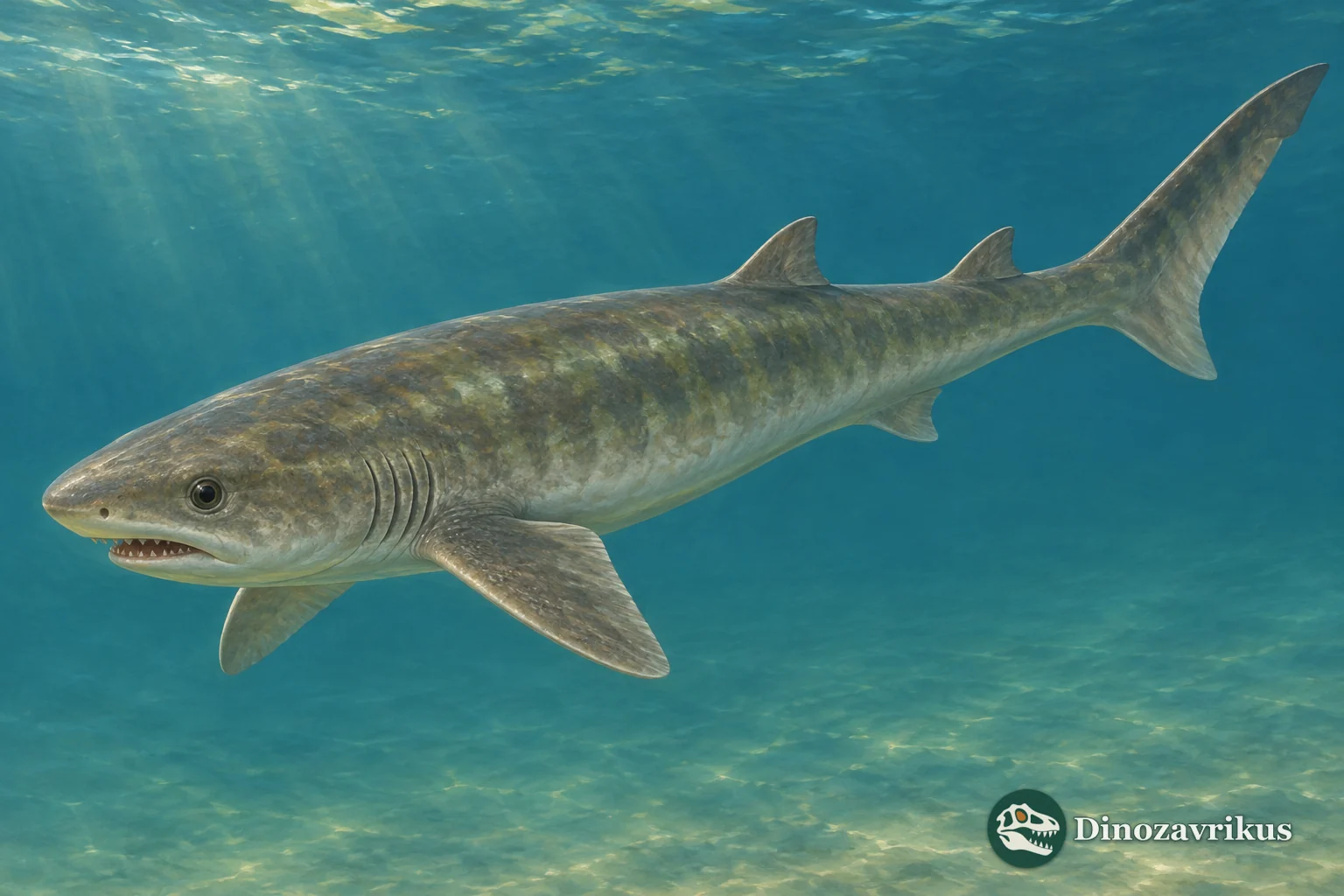
The fossils do not establish total body length, head shape, fin proportions, colour, swimming speed or prey. A general comparison with living carpet sharks may help an artist make a plausible scene, but it does not mean the fossil genus copied any living species. The body shown with this article is therefore a labelled artistic analogy.
Other tooth-only sharks such as Restesia show how crown morphology can support species descriptions while leaving whole-animal anatomy unknown. For Palaeobrachaelurus, the main evidence concerns tooth variation, stratigraphic occurrences and the history of classification; behaviour and precise ecological role remain open.
Frequently asked questions
What is the type species of Palaeobrachaelurus?
Palaeobrachaelurus bedfordensis, described from Callovian teeth found near Bedford in southern England.
Why do its teeth differ in shape?
Teeth from different positions can vary in cusplets and in the shape of the crown apron. Wear, breakage and uncertain assignments can also affect comparisons.
Did the genus live from the Jurassic to the Cretaceous?
Securely named species occur in Jurassic and Early Cretaceous material. A Maastrichtian Danish tooth was assigned tentatively at genus level, so the full range is not equally certain.
Do the teeth reveal its size or diet?
No. The material does not provide a reliable total length or direct prey evidence. Those traits should not be inferred solely from the proposed family placement.