

Parapapio was a fossil African papionin known from skulls, jaws and teeth. Trevor Jones named its type species, P. broomi, in 1937 from a partial Sterkfontein skull. Later South African fossils were also assigned to P. jonesi and P. whitei, largely by dental size. New comparisons question whether those names identify three stable anatomical groups. The cover is an artistic reconstruction; its coat and behavior are not preserved.
Sterkfontein also yielded australopithecines, but occurrence in a large cave complex does not make Parapapio their ancestor. Other African fossil monkeys, including Cercopithecoides and Paracolobus, are compared through anatomy rather than a generic monkey silhouette.
Quick facts
| Group | Cercopithecidae, Papionini |
|---|---|
| Type species | Parapapio broomi Jones, 1937 |
| Type fossil | Partial skull Sts 564 from Sterkfontein |
| Fossil span | Late Miocene to early Pleistocene across assigned African forms |
| South African names | P. broomi, P. jonesi and P. whitei; boundaries disputed |
| Main evidence | Skulls, jaws and teeth |
What can the fossils tell us?
Sts 564 anchors P. broomi, Sts 565 P. jonesi, and Sts 563 P. whitei. Historical tooth-size groups may not equal biological species.
In a recent study 16 crania did not consistently match the old labels. This concerns the examined sample and does not prove that no biological differences existed.
Micro-CT found strong similarity between Sts 564 and Sts 565. The authors proposed conspecificity as a hypothesis.
Jones, Broom and the three type fossils
Jones named P. broomi for Robert Broom using the incomplete Sterkfontein skull Sts 564. In 1940 Broom placed smaller fossils in P. jonesi and larger ones in P. whitei, retaining medium-sized material in P. broomi. Their South African type specimens are usually cited as Sts 564, Sts 565 and Sts 563. They are real specimens, but their allocation to three biological species remains testable.
Parapapio faces generally have a straight or slightly concave profile, a relatively weak brow ridge and modest jaw ridges. Its teeth resemble those of other papionins. One large molar therefore cannot securely diagnose P. whitei, and one small molar cannot by itself diagnose P. jonesi. Sex, growth and population differences may also affect size.
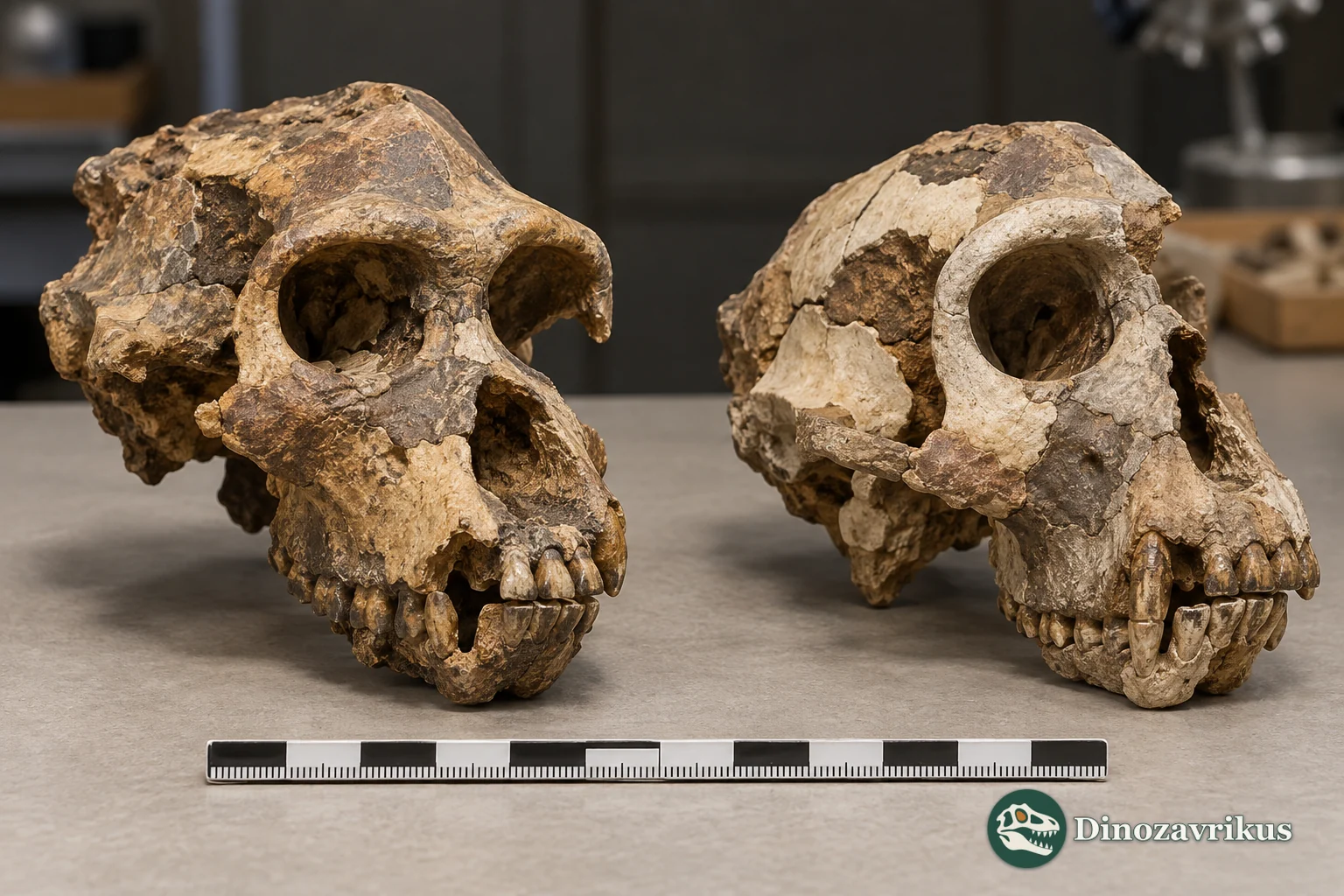
Testing skull shape and inner-ear anatomy
A study published in 2025 in a 2024 journal volume first sorted 16 relatively complete crania without their old species labels. The traits did not form three consistent groups. The authors then compared 64 fossils with 310 living papionins and found that the South African variation did not require three species. They proposed grouping the examined South African sample under the senior name P. broomi. This is a testable taxonomic interpretation, not direct observation of past breeding populations.
A separate micro-CT study compared the semicircular canals in Sts 564 and Sts 565. The strong similarity led its authors to propose that the two type skulls could belong to one species. Those skulls are incomplete, and a two-specimen comparison cannot settle every name in the genus. Earlier East African forms such as P. ado and P. lothagamensis need their own assessment rather than automatic reassignment after the South African revision.
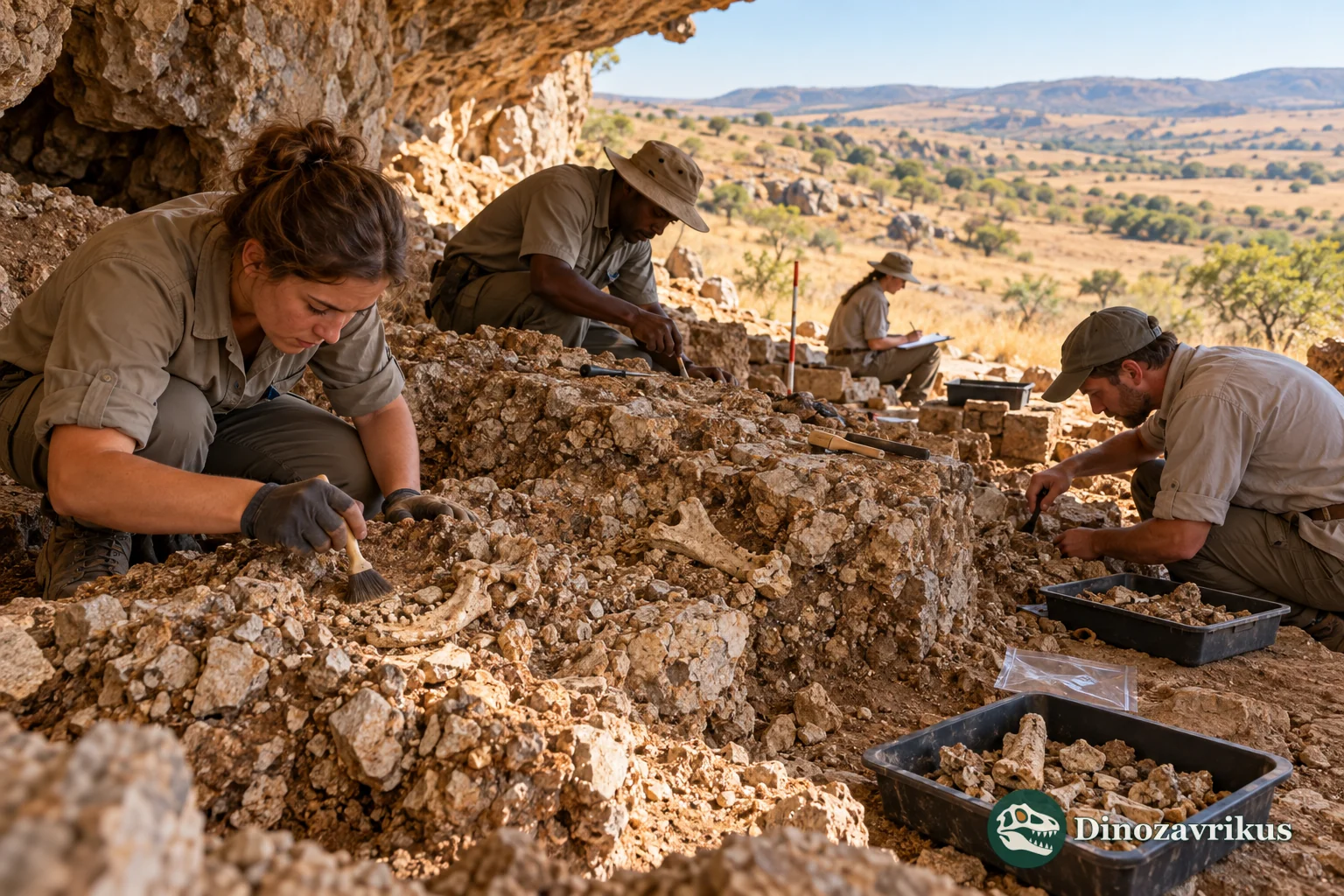
Localities, age and ecological limits
Sterkfontein and Makapansgat yielded important South African series. Sts 564 and Sts 565 are linked to Sterkfontein Member 4, often placed around 2.5 million years ago. That is a geological estimate for a unit, not a direct date of each skull. Some older finds from Bolt's Farm and Langebaanweg are fragmentary, making their genus assignment cautious.
East African material assigned to Parapapio reaches earlier deposits, including late Miocene to earliest Pliocene Lothagam finds attributed to P. lothagamensis. Thus the broad genus span describes different fossils and assignments, not one unchanged population. Isotope studies at Makapansgat discuss food-resource differences, but disputed species labels prevent every dietary difference from being tied confidently to a separate species. The cave and cranium images illustrate methods rather than named fossils or excavations.
Frequently asked questions
Was Parapapio a living baboon?
No. It was an extinct papionin genus related to, but distinct from, living Papio.
Why are its three South African species disputed?
They were largely separated by tooth size, but new cranial and variation analyses did not recover three consistent groups in the examined sample.
What did Sts 564 and Sts 565 reveal?
Micro-CT showed very similar inner-ear canals. The authors proposed, but did not prove, that the two type skulls represent one species.
Did the South African revision also merge all East African forms?
No. Its examined sample was South African; older East African assignments require separate tests.