

Parastrapotherium was an extinct South American astrapothere known mainly from teeth and fragments of jaws. Those fossils allow comparisons with related mammals and extend the genus from the late Oligocene into the early Miocene. The precise length of its soft snout, skin texture and full body outline remain reconstructions.
The genus belongs in the ancient mammal catalogue. The younger Astrapotherium offers a useful dental comparison, while Granastrapotherium illustrates a later large-bodied branch of the group.
Quick facts
| Type species | Parastrapotherium holmbergi Ameghino, 1895 |
|---|---|
| Group | Astrapotheria, Astrapotheriidae |
| Fossil interval | Late Oligocene to early Miocene |
| Region | Patagonia, Argentina |
| Direct evidence | Teeth and jaw fragments |
| Cerro Bandera sample | Several separate MOZ specimens |
What can the fossils tell us?
P. holmbergi is the type species. Historical collections contain cranial and dental pieces, not preserved skin or a complete model of its body.
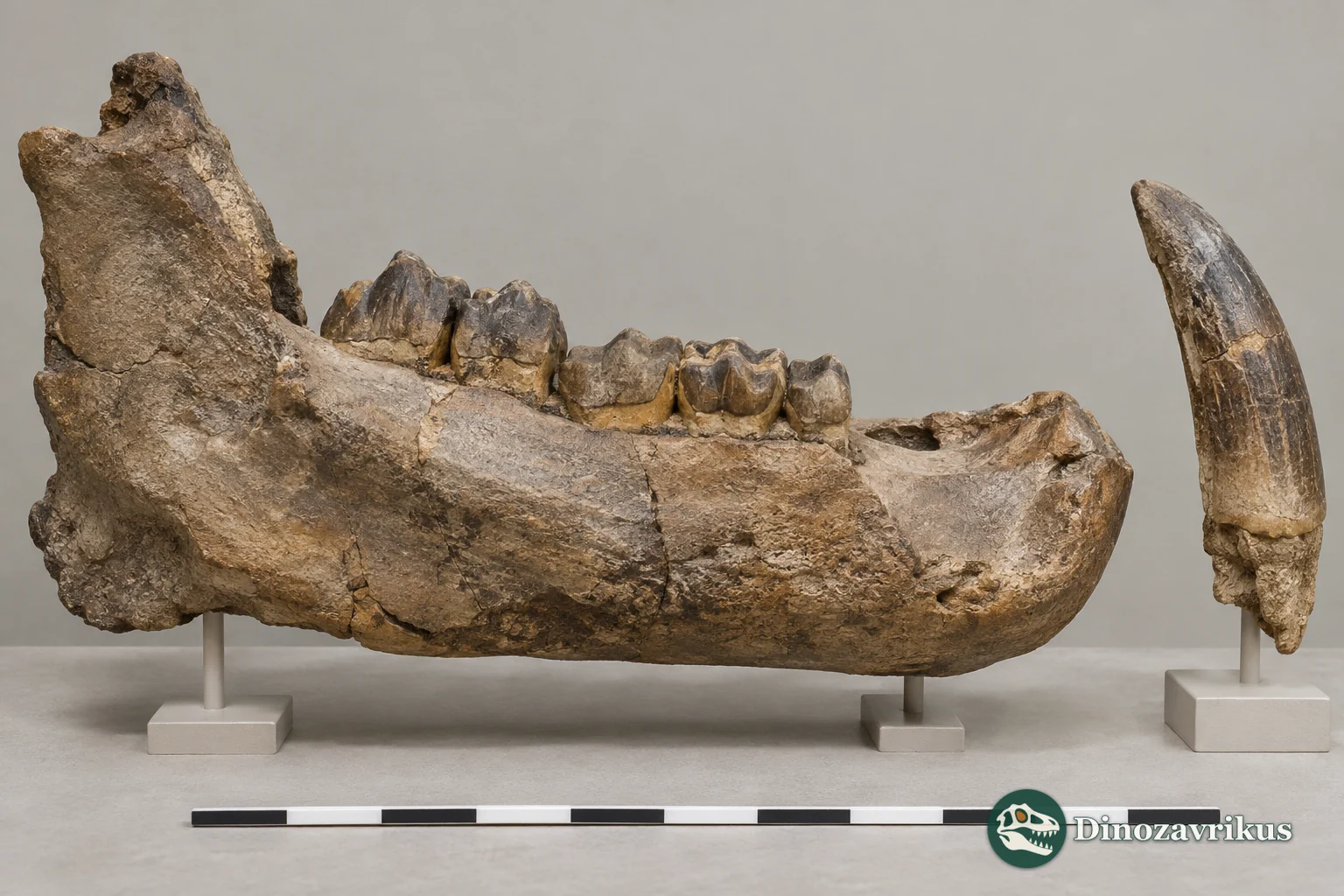
Cerro Bandera specimens include jaw fragments, p3, p4, molars, incisors and canines. A broad incisor base and the presence of p3 were used in comparison with other astrapotheres.
The type species belongs to the late Oligocene Deseadan record; Cerro Bandera yielded early Miocene material. This is a range of fossil occurrences, not the lifespan of an individual.
A name from Patagonian collections
Florentino Ameghino established Parastrapotherium holmbergi in the 1890s. The type species is associated with the late Oligocene Deseadan South American land mammal age. Historic determinations and locality labels need to be assessed specimen by specimen. The Paris natural history museum, for example, lists MNHN.F.DES110, part of a cranium and upper jaw, under P. holmbergi. That is one identified collection item, not evidence that all referred remains form a single skeleton.
Other large Patagonian forms have been named P. martiale and P. herculeum. Their comparison depends on particular tooth characters and the provenance of each specimen. Similar large canines do not by themselves establish that disconnected bones represent the same species.
What the teeth actually record
A study of the Cerro Bandera Formation reports separate fossils assigned to Parastrapotherium sp. They include right mandibular fragment PV 6331 MOZ with part of p3, an incomplete p4 and m1, plus distinct canine, incisor and molar specimens. The open species designation means the authors recognized the genus without assigning those pieces to a named species.
The authors highlighted the presence of a third lower premolar and very broad incisor bases. The fossil teeth and jaws compare in size with large named species of the genus and exceed some Astrapotherium specimens. These are comparisons of preserved parts, not direct measurements of shoulder height or body mass.
Large canines would have affected the living profile, but an isolated tooth does not establish their exact behavior or role. Plant feeding is inferred from astrapothere relationships and cheek teeth. The named Patagonian fossils preserve no list of food plants or stomach contents.
Cerro Bandera and the age of the genus
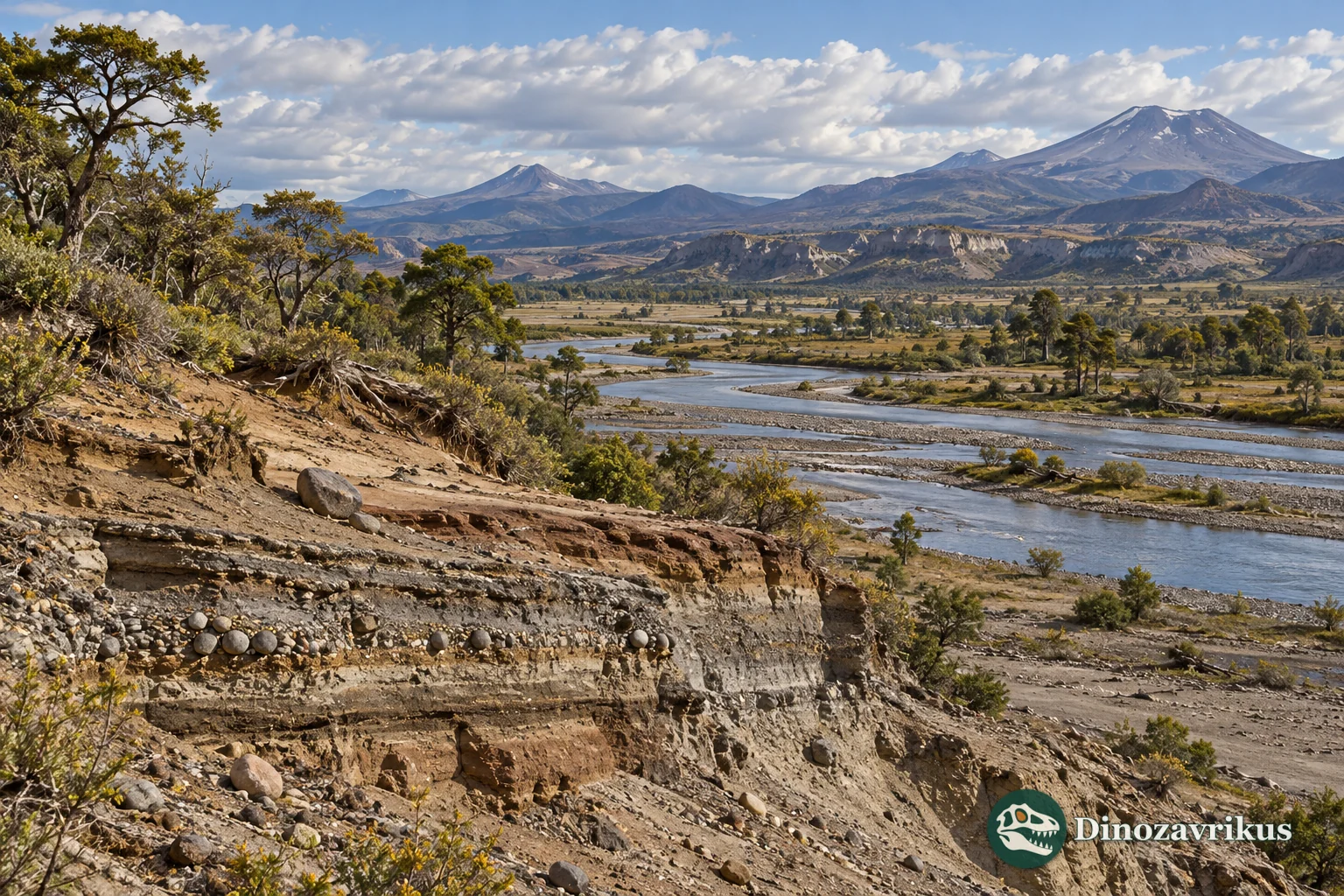
The Cerro Bandera sample comes from several sites in Neuquén Province, including Barda Negra and the upper fossil horizon at Cerro Bandera. Their separate collection numbers and positions matter: bones from these localities cannot be merged into one individual.
Researchers assign the formation to the early Miocene. Combined with late Oligocene Patagonian records, it places the genus from the Deseadan to the Colhuehuapian land mammal ages. These correlations describe fossil-bearing sequences, not a direct clock reading from each canine.
The cover imagines a heavy terrestrial astrapothere with a prominent head. Its possible mobile upper lip follows comparisons with other astrapotheres; a trunk's length, skin color and behavior at water are not recorded by the Cerro Bandera teeth.
Frequently asked questions
What is the type species of Parastrapotherium?
P. holmbergi, named by Florentino Ameghino from Patagonian fossil material.
Which parts were found at Cerro Bandera?
Separate jaw, premolar, molar, incisor and canine fragments were reported as Parastrapotherium sp. without a secure species assignment.
How much did Parastrapotherium weigh?
Large teeth and jaws are documented, but the published Cerro Bandera sample does not provide a tested body-mass measurement.
Did it have an elephant-like trunk?
Soft tissues are not preserved. A mobile upper lip or short proboscis is a comparative reconstruction, not a direct fossil observation.